1. Early life
John George Walker was born on January 12, 1952, in Papakura, New Zealand. He stands 72 in (183 cm) tall and weighed 163 lb (74 kg) during his athletic career. He is married to Helen Walker, and together they have four children.
2. Athletic career
Sir John Walker's athletic career was marked by significant achievements, including breaking world records and winning an Olympic gold medal, solidifying his status as a world-class middle-distance runner.
2.1. Early achievements and rise to prominence
Walker first gained international prominence at the 1974 British Commonwealth Games held in Christchurch, New Zealand. In one of the most memorable 1500 metres races in history, he finished second to Filbert Bayi of Tanzania, with both athletes breaking the existing world record. Walker's performance earned him a silver medal in the 1500 metres, with a time of 3:32.52. At the same games, he also secured a bronze medal in the 800 metres with a lifetime best time of 1:44.92, a record that still ranks him as the third-fastest New Zealander for that distance, behind James Preston and Peter Snell.
Throughout his career as a world-class miler, Walker was coached by Arch Jelley, a school principal and former middle-distance runner. Jelley was known for his meticulous, scientifically based training programmes and effective personal communication with his athletes.
2.2. World record-breaking runs
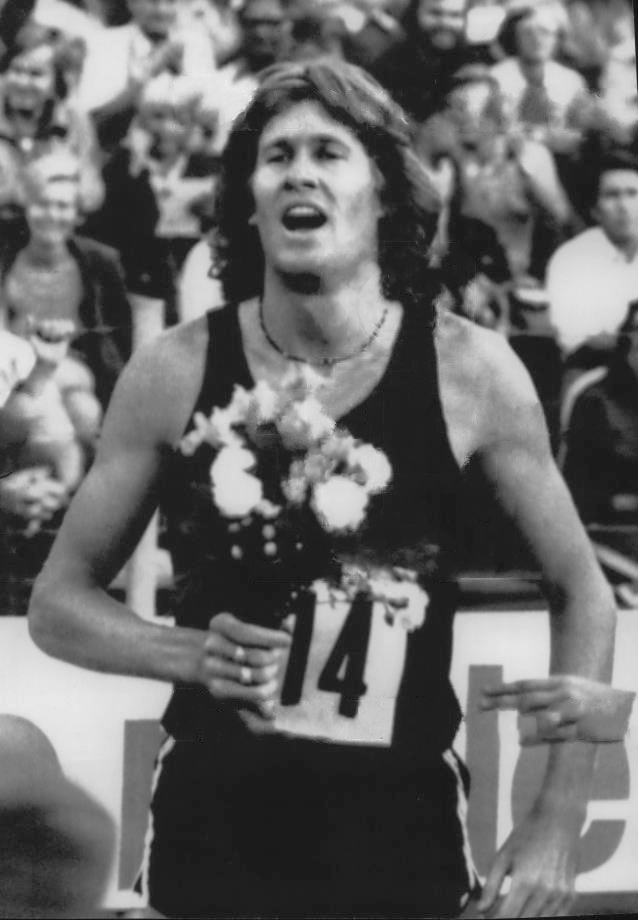
On August 12, 1975, John Walker made history in Göteborg, Sweden, by breaking the world record in the mile run with a time of 3:49.4. This achievement made him the first person ever to run the mile in under three minutes and fifty seconds, bettering the previous record of 3:51.0 set by Filbert Bayi earlier that year. Remarkably, Walker's record-breaking time was exactly ten seconds faster than Roger Bannister's historic first sub-four-minute mile of 3:59.4, run twenty-one years prior. For this outstanding performance, he was named Athlete of the Year by Track & Field News in 1975. His mile record stood for nearly four years until it was surpassed by Sebastian Coe of Great Britain on July 17, 1979.
The following year, on June 30, 1976, Walker set another world record, this time in the 2000 metres event, running 4:51.4 in Oslo, Norway. He significantly broke the ten-year-old record held by Michel Jazy of France by nearly five seconds. Walker regarded this particular race as the best of his career. This record remained unbroken for nine years until Steve Cram of Great Britain lowered it by one one-hundredth of a second, running 4:51.39 on August 4, 1985, in Budapest, Hungary. In 1979, Walker further demonstrated his indoor prowess by breaking the indoor 1500 metres world record with a time of 3:37.4.
2.3. 1976 Montreal Olympic Games
At the 1976 Summer Olympics in Montreal, Walker competed in both the 800 metres and 1500 metres events. In the 800 metres, he finished his heat in 1:47.63, failing to secure one of the two qualifying spots for the semi-final round.
However, he was a strong favourite in the 1500 metres final, an event significantly impacted by a boycott by 22 African nations. This boycott was a protest against New Zealand's All Blacks rugby team touring South Africa, which was then under an apartheid regime. The boycott deprived the 1500 metres event of several top competitors, including his main rival, Filbert Bayi, though it later emerged that Bayi likely would not have competed due to a bout of malaria.
The 1500 metres final began at a slow pace, with the first 800 metres completed in 2:03, indicating a race that would culminate in a fast finish. To outlast runners with stronger shorter-distance sprints, Walker initiated his finishing kick 300 metres from the finish line. Despite fading slightly in the final 20 metres, he managed to hold off strong challenges from Ivo Van Damme of Belgium and Paul-Heinz Wellmann of West Germany, ultimately winning the gold medal with a time of 3:39.17. At the 1984 Summer Olympics in Los Angeles, Walker was honored as the flag bearer for the New Zealand Olympic team during the opening ceremony.
2.4. Later career and achievements
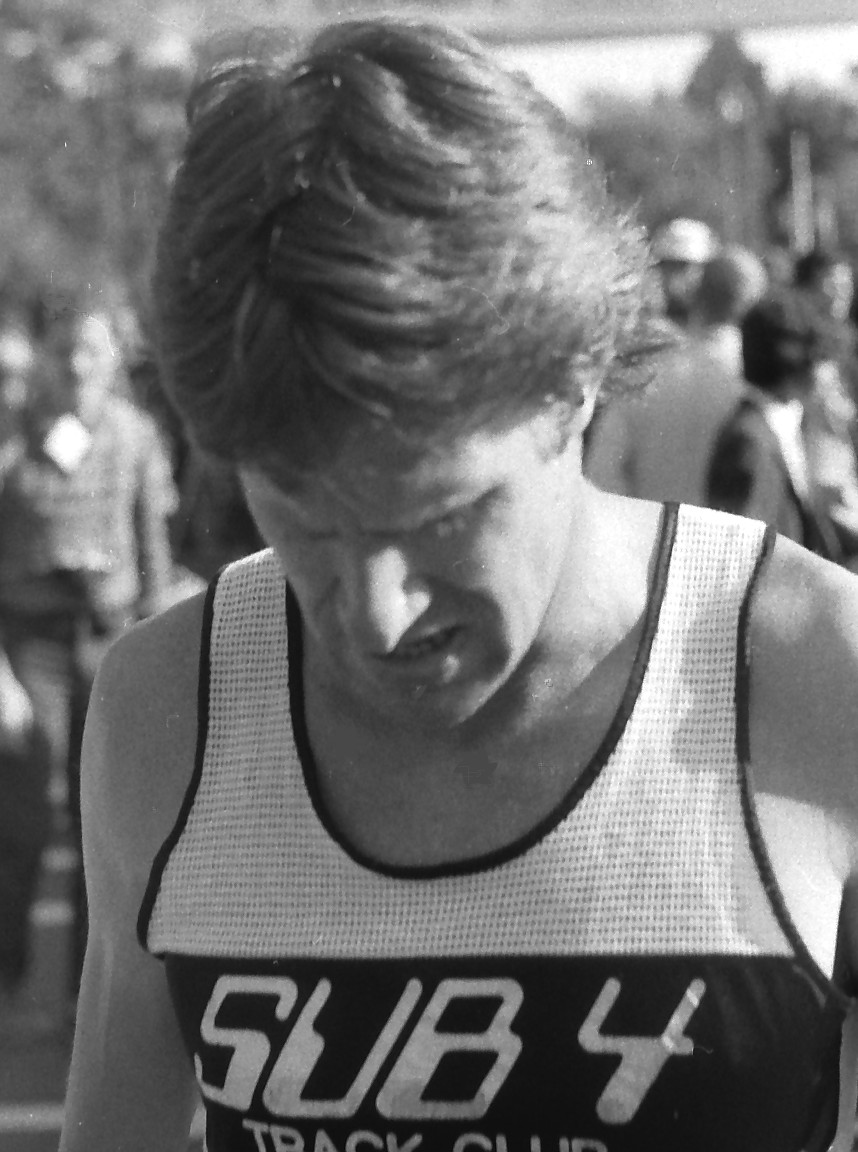
In 1977, Walker faced increased competition, notably from Steve Ovett of Great Britain, who defeated him in the IAAF World Cup 1500 metres. During 1981, Walker set a New Zealand all-comers' mile record of 3:50.6 in Auckland. In 1982, at the Dream Mile event in Oslo, Norway, Walker, along with Steve Scott of the United States and Ray Flynn of Ireland, achieved national records in the same race. Scott ran 3:47.69 (American record), Walker ran 3:49.08 (New Zealand national record), and Flynn ran 3:49.77 (Irish national record). Walker and Flynn's times remain national records, while Scott's was broken in 2007 by Alan Webb.
At the 1982 Commonwealth Games in Brisbane, Walker secured a silver medal in the 1500 metres, finishing behind Steve Cram. He then moved up to the 5000 metres distance for both the 1984 Summer Olympics and the 1986 Commonwealth Games, experiencing limited success at the new distance. His career showed unusual longevity, spanning almost two decades, as he continued to compete at the 1990 Commonwealth Games in Auckland in both the 800 and 1500 metres. In the 1500 metres, he was tripped early in the race but continued to finish. The winner, Peter Elliott of Great Britain, famously persuaded Walker to join him on a lap of honour.
In 1985, John Walker achieved another historic milestone by becoming the first man to run 100 sub-four-minute miles. This achievement came just before his friend and rival, Steve Scott, reached the same mark. There was a minor controversy surrounding this, as Scott claimed they had agreed to reach 99 sub-four-minute miles and then race each other to decide who would be the first to reach 100, an agreement Walker denied. Walker concluded his competitive racing career with a remarkable 135 sub-four-minute miles.
Towards the end of his career, Walker faced challenges from recurring leg injuries and stomach cramps, which impacted his training. In the early 1990s, he aimed to become the first runner over 40 years of age to run a mile in under four minutes, but his attempts were thwarted by a leg injury. This feat was later achieved by his rival, Eamonn Coghlan, in 1993.
2.5. Major international achievements
| Year | Competition | Location | Event | Result | Time |
|---|---|---|---|---|---|
| 1974 | Commonwealth Games | Christchurch (New Zealand) | 800 metres | Bronze | 1:44.92 |
| 1974 | Commonwealth Games | Christchurch (New Zealand) | 1500 metres | Silver | 3:32.52 |
| 1976 | Olympic Games | Montreal (Canada) | 1500 metres | Gold | 3:39.17 |
| 1982 | Commonwealth Games | Brisbane (Australia) | 1500 metres | Silver | 3:43.11 |
3. Life after athletics
After retiring from professional athletics, Sir John Walker dedicated himself to public service and managed personal ventures.
3.1. Local government activities
Walker transitioned into local government, serving as a councillor for Manukau City. Following the merger of several local authorities, he continued his public service as a councillor for the newly formed Auckland Council, representing the Manurewa-Papakura ward. He was successfully re-elected for three consecutive terms, serving from the 2010 Auckland local elections until the 2019 Auckland local elections, when he retired from public life.
| Years | Ward | Affiliation |
|---|---|---|
| 2010-2013 | Manurewa-Papakura | Independent |
| 2013-2016 | Manurewa-Papakura | Independent |
| 2016-2019 | Manurewa-Papakura | Independent |
3.2. Health and personal life
In 1996, John Walker publicly announced that he had been diagnosed with Parkinson's disease. Despite this, he remains active, operating an equestrian shop in Newmarket, Auckland, with his wife, Helen. They have four children.
4. Honours and recognition
John Walker has received numerous honours and recognitions for his exceptional contributions to sport and the community:
- In the 1976 New Year Honours, he was appointed an Officer of the Order of the British Empire (OBE) for his services to athletics, particularly for becoming the first person to run the mile in under 3 minutes and 50 seconds.
- He was inducted into the New Zealand Sports Hall of Fame in 1990.
- In the 1992 Queen's Birthday Honours, he was promoted to Commander of the Order of the British Empire (CBE) in recognition of his continued services to athletics.
- The International Olympic Committee (IOC) awarded him the Olympic Bronze Order in 1996.
- In the 2009 Queen's Birthday Honours, he was appointed a Knight Companion of the New Zealand Order of Merit (KNZM) for his extensive services to sport and the community, after which he became known as Sir John Walker.
5. Legacy
Sir John Walker's legacy is profound, extending beyond his remarkable athletic achievements to his enduring impact on New Zealand sports and the broader community. His historic breaking of the three-minute, fifty-second mile barrier in 1975 not only redefined the limits of middle-distance running but also inspired a generation of athletes worldwide. His Olympic gold medal in Montreal, despite the challenging geopolitical context of the boycott, cemented his status as a national hero.
Walker's transition from an elite athlete to a dedicated public servant, especially his long tenure as a local councillor, underscores his commitment to contributing to society beyond the track. His openness about his Parkinson's disease diagnosis has also brought awareness and resilience to the public discourse on living with chronic illness. Through his athletic prowess, his community involvement, and his personal courage, Sir John Walker remains an inspiring figure in New Zealand's history and an icon in the world of athletics.