1. Early Life and Background
Jeanette's early life was marked by international moves and diverse cultural experiences that shaped her personal and linguistic development before she embarked on her musical career.
1.1. Childhood and Upbringing
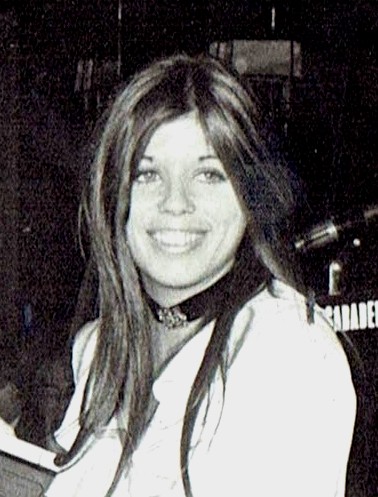
Jeanette Anne Dimech was born on October 10, 1951, in Willesden, a suburb of London. Her father was of Maltese descent, having lived in the Belgian Congo, while her mother was Spanish, originally from the Canary Islands. Due to her grandparents' import-export business, Jeanette spent her formative years growing up in the United States, specifically in Chicago and La Habra, California. When she was 12 years old, her parents separated, leading her to move to Barcelona, Spain, with her mother and her younger brother and sister.
1.2. Education and Early Influences
Having spent her childhood in the United States, Jeanette spoke only English upon her arrival in Spain. Initially placed in an American school, she later formed friendships with local Spanish children who helped her learn the Spanish language. During the 1960s, she taught herself to play the guitar and began composing her own songs. Her musical style was deeply influenced by American folk music, and she cited artists such as Bob Dylan, Donovan, and The Byrds as her idols.
2. Music Career
Jeanette's musical journey began with a folk-pop band before she transitioned into a highly successful solo artist, achieving international fame with her distinctive vocal style.
2.1. Pic-Nic Era
Jeanette's professional music career began when she joined the student band Pic-Nic as a singer. In 1967, the band achieved considerable success with their folk rendition of the Spanish children's song "Cállate, niñaBe quiet, little girlSpanish", a track that Jeanette had co-written. Other notable songs released by Pic-Nic included "AmanecerDawnSpanish" and "No digas nadaDon't say anythingSpanish". However, the group faced persistent disagreements among its members, particularly regarding whether to record English versions of their songs. These internal conflicts ultimately led to the dissolution of Pic-Nic.
2.2. Solo Debut and Early Success (1971-1975)
After the breakup of Pic-Nic, Jeanette relocated to Vienna, Austria, where she lived quietly as a homemaker and mother to her only child, Blythe, with her husband, Hungarian football player László Kristof. Her hiatus from music ended when her former record label, Hispavox, contacted her with a new project for a singer. She returned to Spain in 1971, settling in Barcelona to launch her solo career.
Her first solo single, "Soy rebeldeI am a rebelSpanish", became an instant hit in Spanish-speaking countries. Interestingly, on this single, the record label misspelled her name as "Jeanette" (her given name is Janette), and this spelling has since become her official stage name. The song's influence broadened with the release of French ("L'inconnu qui m'aimeraThe stranger who will love meFrench"), Japanese ("あまのじゃくAmanojakuJapanese"), and English versions. Alongside other songs penned by Manuel Alejandro, such as "Estoy tristeI am sadSpanish" and "Oye mamá, oye papáListen mama, listen papaSpanish", "Soy rebeldeSpanish" established Jeanette as a prominent artist in Spain. In 1973, she released her debut solo album, Palabras, promesasWords, promisesSpanish, written by José Luis Perales, which compiled singles recorded from 1971 to 1973.
2.3. International Breakthrough: "Porque te vas" (1976-1977)
Jeanette's greatest international success came with the song "Porque te vasBecause you are leavingSpanish", also written by José Luis Perales. Although it had been released in Spain two years prior to 1976 with only moderate success, its inclusion in Carlos Saura's acclaimed 1976 film Raise Ravens propelled it to become an enormous international hit. The song reached significant chart positions across Europe, peaking at number 13 in Austria, number 4 in Switzerland, and number 1 in Germany. On February 12, 1977, Jeanette performed the song on the popular German television program Musikladen. "Porque te vasSpanish" also gained immense popularity in Russia, where it is still frequently played on national stations like Retro FM, and remains commonly heard on national radio in Poland. The song's widespread appeal led to many versions being recorded in other languages, with the Russian version "V Posledniy Raz" (For The Last Time) being particularly famous.
2.4. Subsequent Solo Activities (1977-1980)
Following the international success of "Porque te vasSpanish", Jeanette collaborated with renowned French composer André Popp for the production of her 1977 album Todo es nuevoEverything is newSpanish. This album was released in both Spanish and French versions. Despite the artistic collaboration, the album received a lukewarm reception. However, one of its songs, "¿Por qué voy a cambiar?Why should I change?Spanish" (known as "TzeinerlinTzay-ner-leenFrench" in its French version), also featured on the German program Musikladen on October 8, 1977. This particular song was a cover version of "Years may come, years may go" by Herman's Hermits.
2.5. Corazón de poeta and Later Albums (1981-1989)
In 1981, Jeanette recorded her most commercially successful album to date, Heart of a Poet. This critically acclaimed work was composed, arranged, and conducted by Manuel Alejandro. The album yielded three major hit singles: "Corazón de poetaSpanish" (translated as "A heart so warm and so tender"), "Frente a FrenteSpanish" (translated as "Sorrow"), and "El muchacho de los ojos tristesThe Young Man With The Sad EyesSpanish". Corazón de poeta achieved massive worldwide sales, selling millions of copies and triumphing across various Latin American countries. In Spain, it topped the album charts for a week. The single "Frente a frenteSpanish" reached number 4 on the charts and remained there for 20 weeks, while "Corazón de poetaSpanish" peaked at number 13 during its 10-week run.
In the subsequent years, Jeanette released several more albums, including ReluzShineSpanish (1983), Ojos en el solEyes in the SunSpanish (1984), and Loca por la MúsicaCrazy for MusicSpanish (1989), accompanied by a string of singles. While her record sales experienced a decline during this period, Jeanette herself maintained a strong popular following. Her back catalogue was continuously re-packaged into various greatest-hits collections, testifying to her enduring appeal. Her last studio album, Loca por la música, released on the independent label Twins, sought to reinvent her style by incorporating techno-pop influences.
3. Legacy and Influence
In the 21st century, Jeanette's artistic legacy has undergone a significant re-evaluation, solidifying her status as a cult artist. She is now widely recognized as a key influential figure in the development of Spanish-language indie pop. Her distinctive voice and melancholic style have resonated with new generations of musicians and listeners. In 2010, the Spanish newspaper 20 minutos paid tribute to her enduring impact, describing Jeanette as "a legend of Spanish music and muse of independent pop." Her unique blend of folk, pop, and balladry continues to inspire artists within the indie and alternative music scenes across the Spanish-speaking world.
4. Discography
Jeanette's discography spans her early work with the band Pic-Nic and her extensive career as a solo artist, encompassing numerous singles, studio albums, and compilation releases.
4.1. Singles
- Brenner's Folk**
- Pic-Nic**
- Jeanette (Solo)**
4.2. Albums
- Pic-Nic**
- Jeanette (Solo)**
4.3. Compilations
- 1995: Sus Más Lindas CancionesHer Most Beautiful SongsSpanish
- 1996: Sigo rebeldeI'm still a rebelSpanish
- 1998: Coleccion OriginalOriginal CollectionSpanish
- 2002: Soy Rebelde
- 2003: 15 Canciones Favoritas15 Favorite SongsSpanish
- 2004: 15 de Colección15 CollectionSpanish
- 2005: 20 Éxitos Originales20 Original HitsSpanish
- 2008: Lo EsencialThe EssentialSpanish
- 2015: De Cerca: 20 Canciones EsencialesUp Close: 20 Essential SongsSpanish