1. Overview
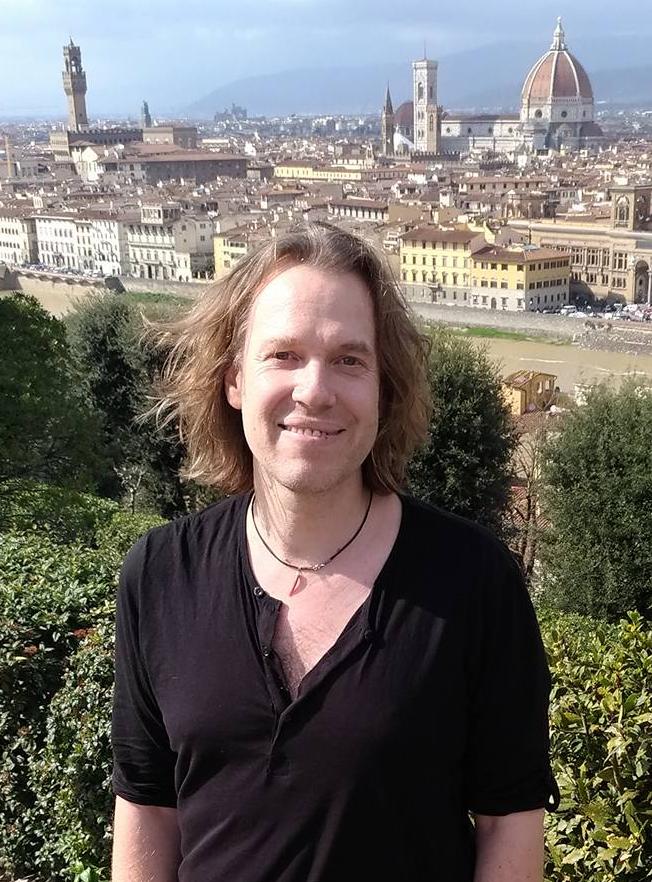
Stefan Lorenz Sorgner is a prominent contemporary German philosopher known for his work in metahumanism, his reinterpretations of Nietzsche's philosophy, the philosophy of music, and the ethics of emerging technologies. He advocates for a form of transhumanism that emphasizes genetic modifications as tools for human betterment. Sorgner's ideas, particularly his controversial re-evaluation of human dignity and his debates with figures like Jürgen Habermas regarding liberal eugenics, have generated significant academic discussion and criticism. This article explores his life, academic journey, major philosophical contributions including his concept of metahumanism and his provocative stance on human dignity, his key publications, and the academic reception and controversies surrounding his work.
2. Life and Academic Background
Stefan Lorenz Sorgner was born on October 15, 1973, in Wetzlar, Germany. His academic career and philosophical thought have been shaped by his diverse educational background and his teaching positions across various European and American institutions.
2.1. Education
Sorgner pursued his philosophical studies at several esteemed universities. He earned his Bachelor of Arts (BA) degree from King's College London. He then completed his Master of Arts (MA) by thesis at the University of Durham, where his work was examined by notable philosophers David E. Cooper and David Owen. His doctoral studies led him to the Justus-Liebig-Universität Gießen and the Friedrich-Schiller-Universität Jena, where he obtained his Doctor of Philosophy (Dr. phil.) degree. His doctoral examiners included Wolfgang Welsch and Gianni Vattimo.
2.2. Academic Career
Throughout his academic career, Sorgner has held teaching positions in philosophy and ethics at several German universities, including the University of Giessen, the University of Jena, the University of Erfurt, and the University of Erlangen. He currently teaches at John Cabot University, an American liberal arts college located in Rome, Italy. Beyond his teaching roles, Sorgner is an active participant in the wider academic community, serving as a member of various editorial and advisory boards, reflecting his influence in contemporary philosophical discourse.
3. Major Philosophical Contributions
Stefan Lorenz Sorgner's philosophy is distinguished by his unique concepts and interpretations that challenge traditional notions of human existence and ethics, particularly in relation to technological advancement and the legacy of Nietzsche.
3.1. Metahumanism and Transhumanism
Sorgner identifies himself as a metahumanist philosopher, a concept he distinguishes from and relates to transhumanism. In his 2021 book, We Have Always Been Cyborgs. Digital Data, Gene Technologies, and an Ethics of Transhumanism, Sorgner proposes a broad definition of a "cyborg" as "a governed, a steered organism," leading him to the provocative conclusion that "we have always been cyborgs." His particular brand of transhumanism heavily relies on what he terms "carbon-based transhuman technologies," including gene editing, genetic engineering, and gene selection. He considers these advancements to be humanity's "most important scientific invention."
From an ethical standpoint, Sorgner argues that gene modification is "stru cturally analogous to traditional parental education." Consequently, he asserts that different moral criteria should not be applied to traditional education versus genetic engineering, especially if the latter is aimed at achieving the greatest good for humanity. This perspective, according to Sorgner, also leads to the disappearance of ethical reservations against moral enhancement.
3.2. Reinterpretation of Nietzsche's Philosophy
Sorgner has extensively reinterpreted Nietzsche's philosophy, particularly the concept of the Übermensch (overhuman), and its connection to posthumanism. In his 2009 article, "Nietzsche, the Overhuman, and Transhumanism," published in the Journal of Evolution and Technology, he highlighted significant similarities between Nietzsche's Übermensch and certain transhumanist conceptions of the posthuman. This interpretation led to an explicit controversy with prominent transhumanist Nick Bostrom, who aimed to differentiate his form of transhumanism from Nietzsche's philosophy.
Sorgner's views sparked considerable debate among both Nietzsche scholars and transhumanists. The Journal of Evolution and Technology dedicated a special issue, "Nietzsche and European Posthumanisms" (Vol. 21, Issue 1, January 2010), to explore the relationship between transhumanism, Nietzsche, and European posthumanist philosophies. This issue featured responses to Sorgner's article from scholars such as Max More and Michael Hauskeller. Sorgner subsequently responded to his critics in Vol. 21, Issue 2 (October 2010) of the same journal with his article "Beyond Humanism: Reflections on Trans- and Posthumanism."
Sorgner's philosophical position is also influenced by his teacher Gianni Vattimo and his concept of "weak thought" (pensiero deboleItalian). While embracing weak thought, Sorgner criticizes Vattimo's understanding of the historical "weakening of Being". Instead, Sorgner proposes a more this-worldly, naturalist, and perspectivist interpretation of the world. This approach is further elaborated in his 2010 monograph, Menschenwürde nach Nietzsche: Die Geschichte eines Begriffs (Human dignity after Nietzsche: history of a concept). He regards nihilism, as described by Nietzsche, as "entirely a gain."
3.3. Ethics of Emerging Technologies and Human Dignity
Sorgner's work deeply engages with the ethical implications of genetic engineering and moral enhancement, often challenging conventional understandings of human dignity. His most controversial statement in Menschenwürde nach Nietzsche (2010) asserts that "the dominant concept of human dignity, from the perspective of perspectivism, has no higher status in terms of knowing the truth in correspondence to reality than the conceptions of Adolf Hitler or Pol Pot." This provocative re-evaluation suggests a radical relativism concerning ethical values.
He has engaged in a notable debate with Jürgen Habermas, a prominent contemporary philosopher, concerning liberal eugenics. Habermas explicitly rejected all procedures of genetic enhancement, arguing that transhumanism was unacceptable due to the potential for a new "Nietzschean-elite" to impose "liberal eugenics," which he deemed "fascist." Sorgner, however, criticized Habermas, accusing him of employing "rhetorically gifted" tactics to evoke negative reactions to human biotechnological procedures by associating them with actions undertaken in Nazi Germany.
Sorgner also challenged Habermas's distinction between education and genetic engineering. Habermas argued that genetic manipulation was fundamentally different from education due to its irreversibility. Sorgner countered this by disputing that the outcomes of education could always be modified by children, and by asserting that genetic modifications are not always irreversible, citing developments, particularly in the field of epigenetics, as evidence.
4. Major Works
Stefan Lorenz Sorgner has contributed to the fields of transhumanism, posthumanism, Nietzsche studies, and bioethics through several influential books and academic articles.
4.1. Books
His principal monographs and edited volumes include:
- Menschenwürde nach Nietzsche: Die Geschichte eines Begriffs (2010): This book details Sorgner's naturalist and perspectivist interpretation of the world. It explores his views on nihilism and presents his controversial re-evaluation of human dignity, specifically his argument that the concept of human dignity holds no higher status than the conceptions of controversial figures like Adolf Hitler or Pol Pot from a perspectivist viewpoint.
- We Have Always Been Cyborgs. Digital Data, Gene Technologies, and an Ethics of Transhumanism (2021): In this work, Sorgner expands on his notion that humans have always been cyborgs, defining cyborgs broadly as "governed" or "steered organisms." He advocates for "carbon-based transhuman technologies" such as gene editing and genetic engineering, presenting them as the "most important scientific invention" for humanity and asserting their ethical equivalence to traditional education.
4.2. Articles and Essays
Sorgner's key academic articles and essays include:
- Nietzsche, the Overhuman, and Transhumanism (2009): Published in the Journal of Evolution and Technology, this article explores the significant parallels between Nietzsche's concept of the Übermensch and the posthuman ideal championed by some transhumanists. It initiated a notable debate with Nick Bostrom regarding the relationship between Nietzsche's philosophy and transhumanism.
- Beyond Humanism: Reflections on Trans- and Posthumanism (2010): This essay, also published in the Journal of Evolution and Technology, serves as Sorgner's comprehensive reply to the various criticisms and responses his initial article on Nietzsche and transhumanism received. It further clarifies his philosophical position on transhumanism and posthumanism.
5. Academic Reception and Controversies
Stefan Lorenz Sorgner's philosophical positions, particularly his interpretations of Nietzsche and his radical views on human dignity and emerging technologies, have elicited extensive academic debate and critical responses from scholars across various fields.
His interpretation of Nietzsche's philosophy and its connection to transhumanism spurred a significant academic dialogue. Leading Nietzsche scholars such as Keith Ansell-Pearson, Paul Loeb, and Babette Babich contributed responses in The Agonist, a journal published by the Nietzsche Circle in New York.
His monograph, Menschenwürde nach Nietzsche, which proposes a controversial re-evaluation of human dignity, was the subject of a symposium organized by the "Nietzsche Forum Munich," an institution co-founded by Thomas Mann. During this event, prominent German philosophers, including Annemarie Pieper, responded to Sorgner's provocative suggestions concerning the necessity of revising the prevailing concept of human dignity. The critiques addressed the potential societal and ethical implications of his assertion that the concept of human dignity holds no inherent higher status than the ideological frameworks of figures like Adolf Hitler or Pol Pot.
Further critical examination of Sorgner's ideas appeared in Autumn 2014 with the publication of Umwertung der Menschenwürde (Transvaluation of human dignity), an essay collection edited by Beatrix Vogel and published by Alber Verlag. This volume featured critical replies from a diverse group of international theologians, philosophers, and ethicists, specifically addressing Sorgner's suggestions concerning the notion of human dignity. The collection reflects the ongoing debate and scrutiny of his challenging perspectives on established ethical concepts.
6. Public Engagements and Recognition
Stefan Lorenz Sorgner has been a notable figure in contemporary philosophical discourse, engaging with both academic and public audiences through various conferences, lectures, and interviews.
He has been invited to speak at numerous significant events, often as a keynote speaker. These include phil.cologneGerman, a major philosophy festival in Cologne, Germany; TEDx events, where he delivered a talk titled "Suggestions for a (Post-)Human Zoo"; and international forums such as the World Humanities Forum and ICISTS-KAIST, where he participated in discussions on "Shaping the Future."
In May 2013, the influential German weekly newspaper Die Zeit published an interview with Sorgner, which summarized his key suggestions concerning human dignity, emerging technologies, and trans- and posthumanism, further broadening the public's awareness of his ideas. His impact on contemporary thought has also been formally recognized; Rainer Zimmermann of the "Identity Foundation," a German private think tank, has referred to Sorgner as "Germany's leading post- and transhumanist philosopher" (Deutschlands führender post- und transhumanistischer PhilosophGerman). These engagements and recognitions underscore his significant, albeit controversial, influence in the philosophical landscape.
7. External links
- [http://www.sorgner.de Official website]
- [http://dx.doi.org/10.13169/prometheus.38.2.0271 Review of the English translation of On Trans-humanism]