1. Overview
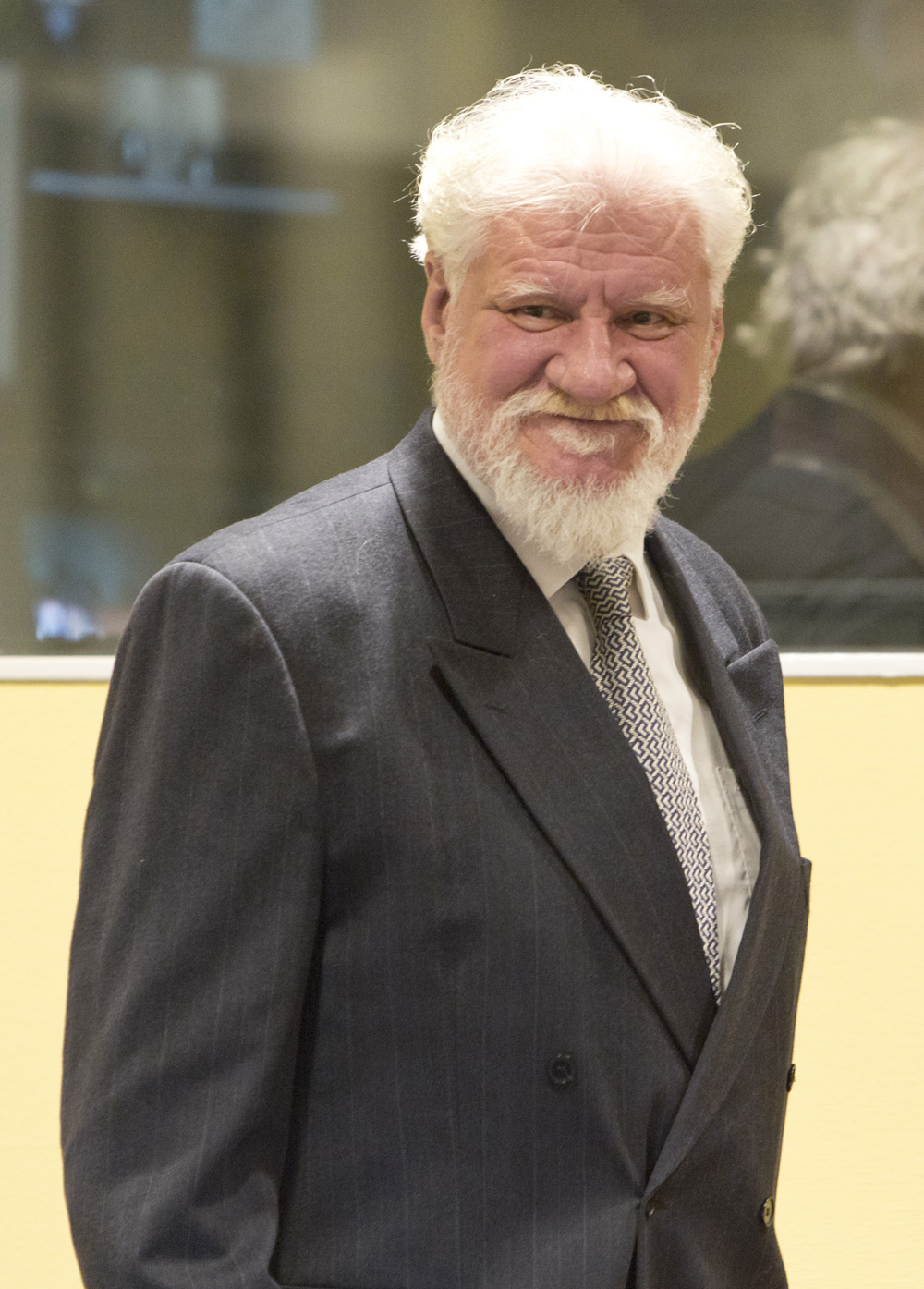
Slobodan Praljak (Slobodan Praljakslobǒdan prǎːʎakCroatian; January 2, 1945 - November 29, 2017) was a prominent Bosnian Croat military figure, intellectual, and businessman who became a convicted war criminal by the International Criminal Tribunal for the former Yugoslavia (ICTY). His life was marked by a diverse career spanning electrical engineering, philosophy, sociology, and dramatic arts before his voluntary enlistment in the Croatian Armed Forces during the Yugoslav Wars. Praljak's involvement in the Croat-Bosniak War as a high-ranking officer in the Croatian Defence Council (HVO) led to his indictment for grave breaches of the Geneva Conventions, violations of the laws of war, and crimes against humanity, including the destruction of the historic Stari Most bridge in Mostar and alleged atrocities in camps like Dretelj. His final act, the defiant public suicide by poison in the courtroom upon the upholding of his 20-year sentence, underscored the deep divisions and unresolved historical narratives surrounding the conflicts, provoking strong and varied reactions internationally and within the former Yugoslavia, particularly highlighting a persistent denial of guilt by some Croatian nationalist factions despite the established facts of international justice.
2. Early Life and Education
Slobodan Praljak's formative years and extensive academic background laid a unique foundation for his later involvement in military and political affairs.
2.1. Birth and Background
Slobodan Praljak was born on January 2, 1945, in Čapljina, a town located in what was then the Independent State of Croatia and is now part of southern Bosnia and Herzegovina, near the Croatian border. His father, Mirko Praljak, served in the state security agency OZNA in former Yugoslavia during World War II. Praljak attended high school in Široki Brijeg, where he was a classmate of Gojko Šušak, who would later become the Croatian Defence Minister.
2.2. Education
Praljak distinguished himself academically, earning three university degrees from the University of Zagreb in the early 1970s. In 1970, he graduated as an electrical engineer from the Faculty of Electrical Engineering in Zagreb, achieving an impressive GPA of 4.5 out of 5. The following year, in 1971, he earned a degree from the Zagreb Faculty of Humanities and Social Sciences, where he majored in both philosophy and sociology. His diverse intellectual pursuits culminated in 1972 when he graduated from the Zagreb Academy of Dramatic Art with a degree in dramatic arts and direction.
3. Early Career
Prior to his significant military engagement, Slobodan Praljak cultivated a diverse professional and artistic career, reflecting his intellectual breadth.
3.1. Academic and Artistic Activities
Praljak began his professional life as a professor and manager of the electronics laboratory at the Nikola Tesla Vocational High School in Zagreb. He also lectured on philosophy and sociology. After 1973, he transitioned into a career as a freelance artist, engaging deeply with the performing arts. He became a prominent theatre director, working in theaters across Zagreb, Osijek, and Mostar in Bosnia and Herzegovina. His work extended to television and film, where he directed the television series Blesan i Tulipan (Blesan and Tulipan), as well as television dramas Novela od Stanca (Prank for Stanac) and Sargaško more (Sargasso Sea). Praljak also directed several documentaries, including Smrt psa (Death of a Dog, 1980), Sandžak (Sanjak, 1990), and Duhan (Tobacco, 1990). His filmography includes the drama film Povratak Katarine Kožul (Return of Katarina Kožul, 1989), which he also wrote.
3.2. Business Ventures
While primarily known for his academic and artistic endeavors before the war, details about significant entrepreneurial activities during this early period are not extensively documented in available sources. His later business ventures, particularly after his military retirement, became more prominent.
4. Military Career
Slobodan Praljak's military career began with the outbreak of the Yugoslav Wars, leading him to key command roles within the Croatian forces, particularly during the Croat-Bosniak War.
4.1. Enlistment and Key Positions
Slobodan Praljak garnered public attention in September 1991 when he voluntarily joined the newly formed Croatian Armed Forces following the commencement of the Croatian War of Independence. He formed and commanded a specialized unit composed of artists and intellectuals from Zagreb, which held strategic positions in Sunja. His ascent through the ranks was rapid: by April 3, 1992, following the Sarajevo Agreement, he was promoted to major general. Praljak assumed multiple responsibilities within the Croatian Ministry of Defence, becoming one of 14 members of the Croatian National Defence Council and a member of the Croatian State Commission for Relations with the United Nations Protection Force (UNPROFOR). On March 14, 1992, he became the Deputy Minister of Defence of the Republic of Croatia. He served as the High Representative of the Ministry of Defence, and from May 13, 1993, he was the representative of the Ministry of Defence in the Croatian Republic of Herzeg-Bosnia and the Croatian Defence Council (HVO). From July 24, 1993, to November 9, 1993, Praljak held the crucial position of Chief of Staff of the HVO, serving as the military commander of the armed forces of Croatian Herzeg-Bosnia/HVO.
4.2. Role in the Croat-Bosniak War
During the complex and often brutal Croat-Bosniak War (1992-1995), Praljak's command responsibilities placed him at the center of the conflict's most contentious events. While he was accused of grave crimes, certain instances demonstrated a more nuanced role. For example, Praljak appealed to Alija Izetbegović to lift the blockade of Sarajevo, though his propositions were ultimately rejected. Amidst the escalating conflict between Croats and Muslims, he notably sent a truck filled with weapons to the besieged Sarajevo to aid Bosniaks. He also facilitated the passage of a UNHCR humanitarian convoy that had been halted in Čitluk, allowing it to reach Mostar.
4.3. War Crime Allegations and Controversies
Praljak faced serious allegations of war crimes, which were extensively examined during his trial at the International Criminal Tribunal for the former Yugoslavia (ICTY). He was accused of failing to prevent numerous crimes despite being informed of them and having the ability to foresee their occurrence. These allegations included the removal and detention of the Muslim population of Prozor between July and August 1993, murders committed in the Mostar municipality, and the widespread destruction of buildings in East Mostar, specifically encompassing mosques and the historic Stari Most (Old Bridge). He was also implicated in attacks and injuries sustained by members of international organizations, as well as the destruction and looting of property in Gornji Vakuf in January 1993, Raštani in August 1993, and Stupni Do in October 1993.
A particularly grim aspect of the accusations centered on the Dretelj camp. During 1993, General Praljak was in charge of this facility, where Bosniak men were subjected to brutalization, starvation, and in some cases, murder. An investigative journalist who visited the camp in September 1993 reported on the abuse and deaths of Bosniak Muslims but noted that it was unclear if Praljak directly ordered these actions.

Praljak was explicitly accused of ordering the destruction of Mostar's iconic Old Bridge in November 1993. The ICTY ruled that this act had "caused disproportionate damage to the Muslim civilian population." While the ICTY acknowledged that the bridge could be considered a legitimate military target, it also investigated whether the prior siege by the Yugoslav People's Army (JNA) and Bosnian Serb forces contributed to the bridge's collapse.
Throughout his trial, Praljak adamantly denied the accusation regarding the bridge's destruction. He claimed that in the same month the bridge was destroyed, he had come into conflict with Mladen Naletilić Tuta, the commander of the HVO's "Convicts' Battalion," leading to his resignation from the position of HVO's Chief of Staff just one day before the bridge's demolition. He further asserted that the bridge was actually destroyed by an explosive charge set on the left bank of the Neretva River, an area under the control of the Army of the Republic of Bosnia and Herzegovina. Praljak retired from military service at his own request on December 1, 1995.
5. Post-War Activities
Following his military retirement, Slobodan Praljak transitioned into a career as a businessman and author, though both endeavors were mired in financial and literary controversies.
5.1. Business Activities and Financial Controversies
After the war, Praljak pursued various entrepreneurial ventures. In 1995, he co-founded a company named Oktavijan with his brother, Zoran. Initially, Oktavijan focused on producing films, video, and television programs, and publishing Praljak's own books. The company later expanded into the real estate sector, managing Centar 2000, a business complex in Zagreb. Since 2005, the company has been owned and managed by Praljak's stepson, Nikola Babić Praljak. In 2011, Oktavijan reported revenues of approximately 22.00 M HRK. Praljak also held a co-ownership stake in Liberan, a company with shares in the Ljubuški Tobacco Factory, and maintained ownership in several other companies.
These business activities became subject to scrutiny, particularly concerning his financial obligations to the Hague Tribunal. From 2012 onwards, the Tribunal's secretariat sought to recover defence costs from Praljak, estimated to be between 2.80 M EUR and 3.30 M EUR. The Tribunal had estimated his assets and shares to be worth around 6.50 M EUR, suggesting he possessed sufficient means to cover his defence expenses. However, Praljak and his lawyer consistently rejected this estimation, asserting that he held no property in his name, a claim he maintained even from the beginning of his trial. It was alleged that Praljak had transferred all his assets to his son. In 2013, the Ministry of Finance (Croatia) made an enforcement charge of 435.00 K HRK against him.
5.2. Literary Works
Slobodan Praljak was a prolific author, writing a total of 25 books. His literary output primarily focused on the Croatian War of Independence and the complex Bosnian War, as well as the intricate relations between Croatia and Bosnia and Herzegovina. However, his works drew controversy and official criticism. In 2008, the Ministry of Culture (Croatia) controversially assessed 18 of his works, deeming them not as legitimate books but as "brochures of worthless literature," specifically categorizing them as "trash and pornography."
6. ICTY Trial
The legal proceedings against Slobodan Praljak at the International Criminal Tribunal for the former Yugoslavia (ICTY) culminated in his conviction for grave war crimes.
6.1. Indictment and Trial Process
Slobodan Praljak was among six individuals indicted by the International Criminal Tribunal for the former Yugoslavia (ICTY) in connection with crimes committed in the Croatian Republic of Herzeg-Bosnia. He voluntarily surrendered to the ICTY on April 5, 2004, and was subsequently transferred to the Hague. On April 6, he made his initial appearance before the ICTY, pleading not guilty to all charges. Notably, Praljak chose to represent himself during the trial, foregoing legal counsel.
His indictment alleged that as a senior military official, Praljak directly and indirectly commanded the Herzeg-Bosnia/HVO armed forces, which were accused of committing mass war crimes against the Bosnian Muslim population in eight municipalities across Bosnia and Herzegovina between 1992 and 1994. These actions were considered part of a joint criminal enterprise. Furthermore, his role as a high-ranking official within the Ministry of Defence meant he was intricately involved in all facets of not only the military planning and operations of Herzeg-Bosnia/HVO but also the activities of the Herzeg-Bosnia/HVO civilian police. The trial against Praljak and his co-accused commenced on April 26, 2006. On May 29, 2013, the Trial Chamber delivered its judgment, sentencing Praljak to 20 years of imprisonment, a sentence that accounted for the time he had already spent in detention. Praljak filed an appeal against this judgment on June 28, 2013.
6.2. Conviction and Charges
On November 29, 2017, the ICTY appeals chamber delivered its final judgment, upholding the majority of Praljak's conviction, though some aspects were overturned. Despite the partial overturning, his initial 20-year sentence was not reduced. He was convicted for crimes against "humanity, violations of the laws or customs of war, and grave breaches of the Geneva Conventions," indicating his significant responsibility for atrocities committed during the conflict. Specifically, the ICTY found him guilty on:
- Four counts of grave breaches of the Geneva Conventions**, which included willful killing; unlawful deportation, transfer, and confinement of civilians; inhuman treatment; and extensive destruction and appropriation of property not justified by military necessity, carried out unlawfully and wantonly.
- Six counts of violations of the laws or customs of war**, encompassing cruel treatment; unlawful labor; destruction or willful damage done to institutions dedicated to religion or education; plunder of public or private property; unlawful attack on civilians; and unlawful infliction of terror on civilians.
- Five counts of crimes against humanity**, covering persecutions on political, racial, and religious grounds; murder; deportation; imprisonment; and inhumane acts.
The charges also included "extensive appropriation of property not justified by military necessity" and "plunder of public or private property through the third category of joint criminal enterprise liability." Given his command responsibility, the court determined that he failed to act and prevent these crimes, which he was informed of and could foresee. While some charges related to the destruction of the Old Bridge were overturned on appeal, the core conviction stood. At the time of his appeal judgment, Praljak had already served approximately 13 years and several months in jail, meaning he would likely have been released soon had he not taken his own life, as those convicted are generally released after serving two-thirds of their sentences.
7. Death in Court
Slobodan Praljak's life concluded dramatically in the courtroom of the International Criminal Tribunal for the former Yugoslavia, an event that sent shockwaves globally.
7.1. Circumstances of Death
On November 29, 2017, during the live pronouncement of his appeal judgment at the ICTY in The Hague, Slobodan Praljak delivered a defiant statement to the judges. As the verdict upholding his 20-year sentence was read, he declared: "Judges, Slobodan Praljak is not a war criminal. With disdain, I reject your verdict!" Immediately after this pronouncement, he raised a small bottle to his lips and ingested its contents, stating it was poison. The presiding judge, Carmel Agius, promptly suspended the hearings, and medical staff from the ICTY swiftly transported Praljak to the nearby HMC Hospital. Despite immediate medical attention, Praljak died shortly after his arrival at the hospital. His body was later cremated in Zagreb during a private ceremony.
7.2. Cause of Death and Investigation
A preliminary autopsy conducted by Dutch authorities confirmed that Slobodan Praljak had been poisoned by potassium cyanide, a highly lethal substance, which subsequently led to heart failure as the cause of his death. The Dutch authorities immediately declared the courtroom a crime scene and launched an official investigation to determine how the poison was obtained and smuggled into the tightly secured courtroom. Praljak's lawyer, Nika Pinter, suggested that his act of suicide may have been a long-planned decision, stemming from his inability to accept being convicted as a war criminal and his firm belief in his own innocence. It was also noted that potassium cyanide was not listed as a prohibited substance under Dutch law at the time. Despite a thorough investigation involving interviews with witnesses, review of video materials, and inspection of Praljak's accommodations and other relevant items, prosecutors ultimately stated that no information was found regarding how Praljak came into possession of the substance. Video surveillance recordings also did not conclusively show whether Praljak carried the vial of poison with him into the courtroom or if it was handed to him during the proceedings.
8. Reactions and Assessments
Slobodan Praljak's death in the ICTY courtroom elicited a wide range of reactions, highlighting the deep-seated historical and political divisions stemming from the Yugoslav Wars, and prompting diverse assessments of his legacy.
8.1. Reactions in Croatia
In Croatia, Praljak's death was met with significant public and official sorrow, often framed as an act of defiance against what was perceived as an unjust verdict. The Government of Croatia offered condolences to Praljak's family, asserting that the ICTY had misrepresented Croatian officials from the 1990s. Prime Minister Andrej Plenković stated that Praljak's suicide illustrated a "deep moral injustice towards the six Croats from Bosnia and Herzegovina and the Croatian people." Similarly, all party caucuses within the Croatian Parliament, with the exceptions of the Social Democratic Party of Croatia and the Civic Liberal Alliance, issued a joint statement. This statement declared that the ICTY's verdict failed to respect "historical truths, facts and evidence," deeming it "unjust and unacceptable." They added that Praljak's suicide served as a symbolic warning against the perceived injustice of the verdicts, while also expressing condolences to the families of victims of crimes committed during the Bosnian War.
Croatian President Kolinda Grabar-Kitarović extended her condolences to Praljak's family, describing him as "a man who preferred to die rather than live as a convict for crimes he did not commit." Miroslav Tuđman, son of Croatia's wartime president, attributed Praljak's act to his "moral position not to accept the verdict that has nothing to do with justice or reality." Following his death, almost a thousand Herzegovinian Croats gathered in the squares of Mostar and Čapljina, lighting candles in vigils to pay their respects, demonstrating a strong sense of solidarity and hero-worship. On December 11, 2017, a commemoration for Praljak was held in Zagreb, attended by two thousand people, including government ministers Damir Krstičević and Tomo Medved (attending as private citizens), numerous Members of Parliament (mostly from the Croatian Democratic Union party), and retired army officers from the 1990s war. A religious ceremony was also held at a Catholic church that evening. However, on the same day, members of the Youth Initiative for Human Rights held their own commemoration for the victims of Croatian forces, urging condemnation of the policies of that period. President Grabar-Kitarović faced pressure to revoke wartime decorations from Praljak and other convicted officials but refused, stating that they received the honors for "defence against Serbian aggression" and that such revocations had not been implemented historically, except for verdicts made by Croatian courts.
8.2. International and Victim Reactions
International figures and victim groups expressed a starkly different perspective, often criticizing Praljak's act and emphasizing the imperative of justice for victims. Former ICTY judges Wolfgang Schomburg and Richard Goldstone commented that it was "a tragedy that someone in such a situation has taken their own life." Goldstone specifically added that "In a way, the victims are deprived of this deed. They did not get full justice." Journalist Martin Bell characterized Praljak as a "theatrical character" who "died in a theatrical way." Andrey Shary of Radio Free Europe/Radio Liberty noted that while Praljak's "samurai final act might evoke respect or sympathy," he stressed that "individual perceptions of honor don't always coincide with correctness." Writing for The Daily Telegraph, journalist Harry de Quetteville opined that the defiant suicide was "the most dramatic proof possible of a very uncomfortable reality: many in the Balkans refuse to accept that the horrific ethnic cleansing of the 1990s was wrong." Stephen Rapp, former US Ambassador for War Crimes Issues, drew a comparison between Praljak's suicide and that of Hermann Göring, his role model. Rapp highlighted that in both cases, the verdict nonetheless "stands for all history in establishing the facts and in showing that the perpetrators of atrocities will be held to account," suggesting that Praljak, much like Göring, managed to thwart the due process of law at its climax.
Within Bosnia and Herzegovina, reactions reflected deep ethnic divisions. Bakir Izetbegović, the Bosniak member of the Presidency of Bosnia and Herzegovina, asserted that Praljak was driven to suicide by the very "joint criminal enterprise" for which he was convicted. In contrast, Dragan Čović, the Croat member and Chairman of the Presidency of Bosnia and Herzegovina, maintained that Praljak had sacrificed his life to prove his innocence. Aleksandar Vučić, the President of Serbia, stated he would not mock Praljak's suicide but criticized the reaction of Croatian officials, deeming it unacceptable for him to praise a convicted war criminal as a hero or denounce an ICTY verdict. Vojislav Šešelj, a Serbian politician and a convicted war criminal himself, commented that despite being an "enemy," Praljak's act was a "heroic move worthy of respect" and that more such strong blows against the tribunal were necessary.
8.3. Historical Assessment and Legacy
Slobodan Praljak's life and death encapsulate the enduring complexities and deeply conflicting narratives surrounding the Yugoslav Wars. His extensive and distinguished pre-war career as an engineer, philosopher, sociologist, and artist stands in stark contrast to his wartime role and subsequent conviction as a war criminal. The ICTY's judgment, which found him guilty of grave breaches of international law, crimes against humanity, and violations of the laws or customs of war, stands as a critical international legal assessment of his command responsibility and the atrocities committed under his authority. The findings of his involvement in the destruction of cultural heritage, such as the Stari Most, and the brutal conditions in camps like Dretelj, are central to his historical legacy as determined by international justice.
However, Praljak's defiant suicide in court, coupled with the outpouring of support and heroization by some factions within Croatia and among Bosnian Croats, underscores a persistent nationalistic interpretation that views him as a martyr who refused to accept an unjust verdict, rather than an adjudicated perpetrator of severe crimes. This ongoing debate reflects deep societal divisions regarding historical truth, accountability, and national identity in the post-Yugoslav space. His legacy therefore remains highly contested: for international legal bodies and many victims, he represents a figure held accountable for horrific wartime actions; for others, particularly certain Croat nationalist communities, he is a symbol of resistance against perceived injustices of international courts. The dramatic conclusion to his trial ensures that Slobodan Praljak's name remains a potent, divisive symbol in the broader historical assessment of the Yugoslav Wars and the pursuit of international criminal justice.