1. Early Life and Sumo Career
Junzo Hasegawa was a skilled athlete from a young age, displaying versatility in various sports. His early life was shaped by his entry into the traditional world of sumo, where he honed his skills and earned recognition.
1.1. Birth and Early Growth
Junzo Hasegawa was born on September 27, 1928, in Ichinomiya Town, Chosei District, Chiba Prefecture, Japan. From his childhood, he demonstrated exceptional athletic abilities.
1.2. Sumo Debut and Activity
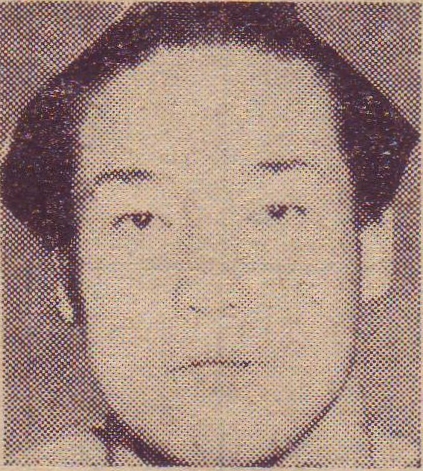
Hasegawa pursued a career as a sumo wrestler, joining the Nishonoseki stable under Tamanoumi Daitarō with the assistance of Kamikaze Shoichi. He made his professional sumo debut in the January 1944 tournament, competing under the shikona (wrestler's name) "Hasegawa". He later adopted the shikona "Junzo Kamiwaka" (神若 淳三Kamiwaka JunzōJapanese or 神若 順三Kamiwaka JunzōJapanese) and successfully reached the top division (`makuuchi`) in the January 1950 tournament. In the January 1952 tournament, he changed his shikona again, this time to "Yoshinosato" (芳ノ里YoshinosatoJapanese). Despite his relatively small stature for a sumo wrestler, he distinguished himself as a skilled technical wrestler, particularly adept at the underhand throw (`shitate-nage`). His talent led him, along with Wakanohana Kanji I and Kotogahama, to be recognized as the "Three Musketeers of Nishonoseki," a testament to their collective strength and skill within the stable.
1.3. End of Sumo Career
Despite reaching the rank of `maegashira` 12, Hasegawa became increasingly disillusioned with his performance in the sumo rankings and the internal conflicts plaguing his stable. This growing dissatisfaction led him to ultimately retire from sumo. He did not compete in the September 1954 tournament, marking the conclusion of his career in the sport.
1.4. Key Sumo Records
During his tenure as a sumo wrestler, Yoshinosato achieved the following records:
- Overall career record: 178 wins, 158 losses, 1 draw, with a winning percentage of .530.
- `Makuuchi` division record: 39 wins and 51 losses, with a winning percentage of .433.
- Active tenure: 30 tournaments.
- `Makuuchi` tenure: 6 tournaments.
Below are his detailed tournament performances and his `makuuchi` matchup records:
| Yoshinosato Junzo's Sumo Record | ||||||
|---|---|---|---|---|---|---|
| Year ! January ! March ! May ! July ! September ! November | ||||||
| 1944 | `sj` (San'yaku) 3-1 | `jo` (Jonokuchi) 39 East 2-3 | `jo` (Jonokuchi) 44 East 3-2 | |||
| 1945 | `sa` (Sandanme) 36 West 3-2 | `sa` (Sandanme) 11 East 4-1 | ||||
| 1946 | `ma` (Makushita) 20 West 5-2 | |||||
| 1947 | `ma` (Makushita) 7 East 2-3 | `ma` (Makushita) 10 East 2-4 | ||||
| 1948 | `ma` (Makushita) 14 West 4-2 | `ma` (Makushita) 7 East 4-1 (1 draw) | ||||
| 1949 | `j` (Juryo) 11 East 8-5 | `j` (Juryo) 4 West 9-6 | `j` (Juryo) 1 West 8-7 | |||
| 1950 | `m` (Makuuchi) 20 West 9-6 | `m` (Makuuchi) 15 East 8-7 | `m` (Makuuchi) 12 East 3-12 | |||
| 1951 | `m` (Makuuchi) 21 West 8-7 | `m` (Makuuchi) 20 East 7-8 | `j` (Juryo) 1 East 5-10 | |||
| 1952 | `j` (Juryo) 6 East 12-3 | `j` (Juryo) 1 West 8-7 | `m` (Makuuchi) 20 East 4-11 | |||
| 1953 | `j` (Juryo) 6 West 7-8 | `j` (Juryo) 8 West 9-6 | `j` (Juryo) 7 East 9-6 | `j` (Juryo) 4 East 6-9 | ||
| 1954 | `j` (Juryo) 8 West 7-8 | `j` (Juryo) 9 West 8-7 | `j` (Juryo) 7 West 11-4 | Retired from `j` (Juryo) 3 East | ||
| `Makuuchi` Matchup Records | |||||||||||
|---|---|---|---|---|---|---|---|---|---|---|---|
| Wrestler | Wins | Losses | Wrestler | Wins | Losses | Wrestler | Wins | Losses | Wrestler | Wins | Losses |
| Aichiyama | 1 | 1 | Itsuutsunada | 0 | 1 | Oiwayama | 1 | 1 | Ouchiyama | 0 | 1 |
| Ohki | 1 | 1 | Ohshono | 1 | 0 | Ohko | 0 | 2 | Ohjigata | 0 | 2 |
| Kainoyama | 1 | 2 | Kaminishiki | 2 (1) | 0 | Kitanoho | 0 | 2 | Kiyomebana | 1 | 3 |
| Kyushunishiki | 0 | 1 | Kunitonishiki | 0 | 1 | Kozakigawa | 0 | 2 | Sakuraguni | 0 | 1 |
| Sakuranishiki | 1 | 0 | Shimanishiki | 0 | 1 | Tsunenoyama | 1 | 0 | Terukagami | 1 | 1 |
| Tokitsuyama | 1 | 0 | Nachinoyama | 0 | 1 | Nayoroiwa | 1 | 0 | Narutoumi | 3 | 1 |
| Hakuryuzan | 0 | 1 | Hashiyamayama | 0 | 1 | Hiotoshi | 1 | 2 | Hirosegawa | 1 | 1 |
| Fujita | 2 | 0 | Futaseyama | 1 | 0 | Fudoiwa | 0 | 1 | Masumiyama | 4 | 1 |
| Midori Kuni | 1 | 2 | Miyagiumi | 1 | 3 | Happozan | 0 | 3 | Yoshiyama | 2 | 1 |
| Yoshidagawa | 2 | 1 | Yonekawa | 0 | 1 | Wakabayama | 1 | 2 | |||
- Note: Numbers in parentheses indicate wins by default (`fusen-sho`).
2. Professional Wrestling Career
After concluding his sumo career, Junzo Hasegawa made a rapid and impactful transition into the world of professional wrestling, quickly establishing himself as a significant figure in the nascent Japanese wrestling scene.
2.1. Transition and Debut
On September 10, 1954, immediately after his retirement from sumo, Yoshinosato visited his former senior from the Nishonoseki stable, Rikidōzan, at the Osaka Prefectural Gymnasium. He directly requested to join Rikidōzan's newly formed Japan Pro Wrestling Alliance (JWA), and his request was accepted. Remarkably, he made his professional wrestling debut on the very same day against Teizo Watanabe, a feat considered the fastest debut in the history of Japanese professional wrestling. In addition to his wrestling training, he also received instruction from professional boxers during his early professional wrestling career.
2.2. Major Activities and Achievements in Japan
Yoshinosato quickly rose through the ranks in Japanese professional wrestling. On October 23, 1956, he participated in a tournament held at the Osaka Prefectural Gymnasium to crown the inaugural Japanese Light Heavyweight Champion. He emerged victorious, defeating Isao Yoshihara (who would later become the president of International Wrestling Enterprise) in the finals. He later vacated this title upon his move to the junior heavyweight division. In 1960, he teamed with Rikidōzan to win the prestigious All Japan Tag Team Championship. Furthermore, in August 1960, he was officially awarded the Japanese Junior Heavyweight Championship, solidifying his status as a key titleholder in the JWA. He also played a role in nurturing new talent, notably training Kintarō Ōki, who debuted in 1959.
2.3. Overseas Excursion and Persona
In 1961, Yoshinosato embarked on an overseas excursion to the United States alongside fellow Japanese wrestlers Giant Baba and Mammoth Suzuki. During this period, he adopted a `heel` (villainous) persona that became notorious, especially in the Tennessee region. He wore short tights, kneepads, and distinctively, wooden clogs, which he would sometimes use as a weapon. Under the ring name "Devil Sato," he became infamous for repeatedly engaging in illegal attacks, a style that became known as the "Tagosaku style." This unique and rule-breaking approach became a traditional gimmick for Japanese `heels` performing in the United States. His persona was so influential that his protégé Akihisa Mera later adopted the "Devil Sato" gimmick himself.
2.4. Incident with Noboru Ichikawa
A deeply disturbing incident occurred early in Yoshinosato's professional wrestling career, highlighting the dark side of the sport's early days and severe human rights abuses. On December 22, 1954, at Kuramae Kokugikan, prior to the highly anticipated "Showanoganryujima" match between Rikidozan and Masahiko Kimura, Yoshinosato was involved in an unscripted and brutal confrontation. During a preliminary match, he unexpectedly initiated a `cement` (a legitimate, uncooperative fight) against his opponent, Noboru Ichikawa, who was a member of the All Japan Pro Wrestling Association. Yoshinosato delivered dozens of open-hand slaps (`harite`) to Ichikawa, causing him to collapse into unconsciousness.
Tragically, Noboru Ichikawa suffered severe brain damage as a result of this unprovoked assault and passed away in late 1967. This sudden and violent act was later revealed to have been explicitly ordered by Rikidozan, who held absolute authority at the time. It was reported that Rikidozan had repeatedly instructed Yoshinosato to "kill Ichikawa" during their meals, emphasizing the coercive and violent nature of the order and the dire consequences for the victim. This incident stands as a dark chapter in the history of Japanese professional wrestling, raising significant questions about the ethical responsibilities of promoters and the treatment of wrestlers.
3. Promoter and Management Activities
Following the abrupt end of Rikidozan's life, Junzo Hasegawa transitioned from being an active wrestler to taking on significant management responsibilities within the Japan Pro Wrestling Alliance, ultimately leading the organization during its tumultuous final years.
3.1. Involvement in Japan Pro Wrestling Alliance Management
After the murder of Rikidōzan in 1963, a leadership vacuum emerged within the Japan Pro Wrestling Alliance. Yoshinosato, alongside Michiaki Yoshimura, Toyonobori, and Kokichi Endo, collectively assumed the management responsibilities of the promotion, with Toyonobori initially serving as president. This collective leadership aimed to stabilize the JWA in the wake of its founder's death.
3.2. Tenure as JWA President
In January 1966, Junzo Hasegawa, known then as Yoshinosato, took over from Toyonobori to become the third president of the Japan Pro Wrestling Alliance. With his new role, he gradually reduced his in-ring workload, eventually ceasing active wrestling altogether in October 1967. Beyond his presidential duties, he also served as a commentator for the International Pro Wrestling television program, International Pro Wrestling Hour, which was broadcast on Tokyo Channel 12. Later in his life, in 1996, Yoshinosato was appointed the inaugural chairman of the Rikidozan Alumni Association & Pro Wrestling, a fraternal organization dedicated to former wrestlers, underscoring his continued influence and respect within the professional wrestling community.
3.3. Controversial Refereeing
In 1978, during a notable three-way event organized by All Japan Pro Wrestling, which featured wrestlers from All Japan Pro Wrestling, International Wrestling Enterprise, and the Korean Army (represented by the Kintarō Ōki faction), Yoshinosato was invited to serve as the guest referee for a high-profile match between Giant Baba and Rusher Kimura. During the match, Baba applied a figure-four leglock to Kimura. Kimura managed to break the hold by positioning his upper body outside the ring, which typically constitutes a rope break. However, for reasons that remain unclear, Yoshinosato controversially failed to acknowledge the break. Instead, he began counting Kimura out, leading to Baba winning the match via ring out. This highly questionable decision became widely known as an infamous example of "dubious refereeing" in the annals of Japanese professional wrestling, damaging the perception of impartiality.
3.4. Collapse of Japan Pro Wrestling Alliance
The Japan Pro Wrestling Alliance faced significant internal and external challenges that ultimately led to its collapse. In 1972, the JWA experienced a major blow when its top stars, Antonio Inoki and Giant Baba, departed to establish their own promotions, New Japan Pro-Wrestling and All Japan Pro Wrestling, respectively. This defection severely weakened the JWA. In 1973, a proposal for a merger between the Japan Pro Wrestling Alliance and New Japan Pro-Wrestling was put forth, with Yoshinosato reportedly being offered a chairman position in the new entity. However, the deal was ultimately rejected by Yoshinosato, reportedly at the urging of Kintarō Ōki.
The JWA finally collapsed in April 1973. Reflecting on the company's demise, Yoshinosato expressed personal regret to his wife, stating, "If I had been educated, I would not have destroyed the company. I was better suited to being second-in-command than the president, and to discussing the opinions of those above and below." This candid reflection suggested he felt more adept at managing operations and mediating between different factions rather than leading the organization as its primary executive. When he completed the extensive process of sorting out the remaining affairs of the Japan Pro Wrestling Alliance, he took home all the employee badges left in the office, a gesture symbolic of his attachment and responsibility towards the former organization and its personnel.
4. Wrestling Style and Accomplishments
Junzo Hasegawa developed a distinctive wrestling style during his professional career, blending his sumo background with a more aggressive, often rule-breaking, approach. He achieved notable success, acquiring multiple championships throughout his career.
4.1. Wrestling Style and Key Techniques
Yoshinosato's in-ring style was characterized by a combination of legitimate skill and a penchant for `heel` tactics. His primary finishing move was the small package (`kubigatame` - 首固めJapanese). He often used this submission hold as a decisive move after disorienting his opponents with various foul attacks. A notable example of his unique style was the "Geta Attack" (下駄攻撃Geta kōgekiJapanese). He would enter the ring wearing traditional Japanese wooden clogs (`geta`), and during matches, he was known to use these clogs to strike his opponents, earning him the nickname "Geta President." This move, while illegal, was highly effective in disrupting opponents and was particularly notorious for frequently catching younger wrestlers, including Giant Baba, off guard.
4.2. Championships and Achievements
Throughout his professional wrestling career, Junzo Yoshinosato held several significant championships:
- Japan Pro Wrestling Alliance
- All Japan Tag Team Championship (1 time) - with Rikidōzan
- Japanese Junior Heavyweight Championship (1 time)
- Japanese Light Heavyweight Championship (1 time)
- NWA Mid-America
- NWA United States Junior Heavyweight Championship (Mid-America version) (1 time)
- NWA United States Tag Team Championship (Mid-America version) (1 time) - with Taro Sakuro
5. Later Life and Death
After his active wrestling and promotional careers, Junzo Hasegawa remained connected to the professional wrestling world until his final days, leaving a lasting legacy.
5.1. Activities in Later Life
In his later years, Junzo Hasegawa continued to be an influential figure within the professional wrestling community, particularly among former wrestlers. He served as the chairman of the Rikidozan Alumni Association & Pro Wrestling, an organization dedicated to fostering camaraderie and supporting former wrestlers. This role allowed him to maintain his ties to the industry and its veterans, reflecting his enduring commitment to the sport.
5.2. Death
On March 11, 1998, Junzo Hasegawa suffered a cerebral infarction, a serious medical event. He subsequently died of multiple organ failure on January 19, 1999, at the age of 70. His passing marked the end of a long and impactful career in both sumo and professional wrestling, leaving behind a complex legacy that shaped the early landscape of Japanese professional wrestling.
6. Assessment and Criticism
Junzo Hasegawa's career, spanning both sumo and professional wrestling, left an indelible mark on Japanese sports history. However, his actions and decisions, particularly during his time in professional wrestling management, also attracted significant criticism and controversy.
6.1. Historical Assessment
Junzo Hasegawa's historical contributions are multifaceted. As a sumo wrestler, he demonstrated considerable skill and was recognized among the "Three Musketeers of Nishonoseki," highlighting his athletic prowess. His swift and successful transition into professional wrestling, where he became a prominent champion and developed a unique `heel` persona like "Devil Sato," showcased his adaptability and entertainment value. More significantly, his role in the post-Rikidozan Japan Pro Wrestling Alliance, first as part of a collective management and then as its president, solidified his importance in the organizational development of Japanese professional wrestling. He navigated a turbulent period for the JWA, even if its ultimate collapse was unavoidable given the changing landscape of the industry. His efforts, alongside others, helped bridge the gap between Rikidozan's era and the rise of new promotions like New Japan Pro-Wrestling and All Japan Pro Wrestling.
6.2. Criticism and Controversies
Despite his achievements, Junzo Hasegawa's career is marked by notable criticisms and controversies. The most significant and deeply troubling incident was his unprovoked, brutal assault on wrestler Noboru Ichikawa in 1954. This "legitimate fight" (`cement`) was reportedly ordered by Rikidozan, who allegedly repeatedly commanded Hasegawa to "kill" Ichikawa. The assault resulted in severe brain damage for Ichikawa, leading to his premature death years later. This event represents a grave violation of human rights and remains a dark stain on the early history of Japanese professional wrestling, highlighting the coercive and dangerous environment that could exist under powerful figures like Rikidozan. Hasegawa's direct involvement in such a tragic and seemingly forced act raises serious ethical questions about his complicity.
Another controversial moment was his officiating in the 1978 match between Giant Baba and Rusher Kimura, where his refusal to acknowledge a clear rope break led to a dubious outcome. This decision contributed to a public perception of unfairness and manipulation within professional wrestling, diminishing the sport's credibility. Furthermore, Hasegawa faced negative portrayals in media, notably in the manga series Pro Wrestling Superstar Retsuden by Ikki Kajiwara. This manga exaggerated his spending habits, depicting him as lavishly squandering JWA funds in Tokyo's Ginza district, which significantly tarnished his public image and fueled public criticism regarding his financial stewardship of the promotion. These incidents collectively contribute to a complex and often critical assessment of his legacy.