1. Overview
Conrado Eugenio Marrero Ramos (April 25, 1911 - April 23, 2014), widely known as Connie Marrero, was a Cuban professional baseball pitcher. A right-handed pitcher, Marrero gained significant popularity and achieved a long, successful career in his native Cuba within amateur baseball and the professional Cuban League. He also pitched in Major League Baseball (MLB) from 1950 to 1954 for the Washington Senators. Marrero made his MLB debut at the age of 38, making him one of the oldest players in the league throughout his tenure. He was distinguished as the oldest living former Major League Baseball player at the time of his death, just two days shy of his 103rd birthday. Marrero's legacy is marked by his unique pitching style, his enduring presence in Cuban baseball after the Cuban Revolution, and his remarkable longevity.
2. Life and Background
Connie Marrero's life began in rural Cuba, where he developed his early passion for baseball. His physical appearance and origins later contributed to his distinctive nicknames.
2.1. Birth and Childhood
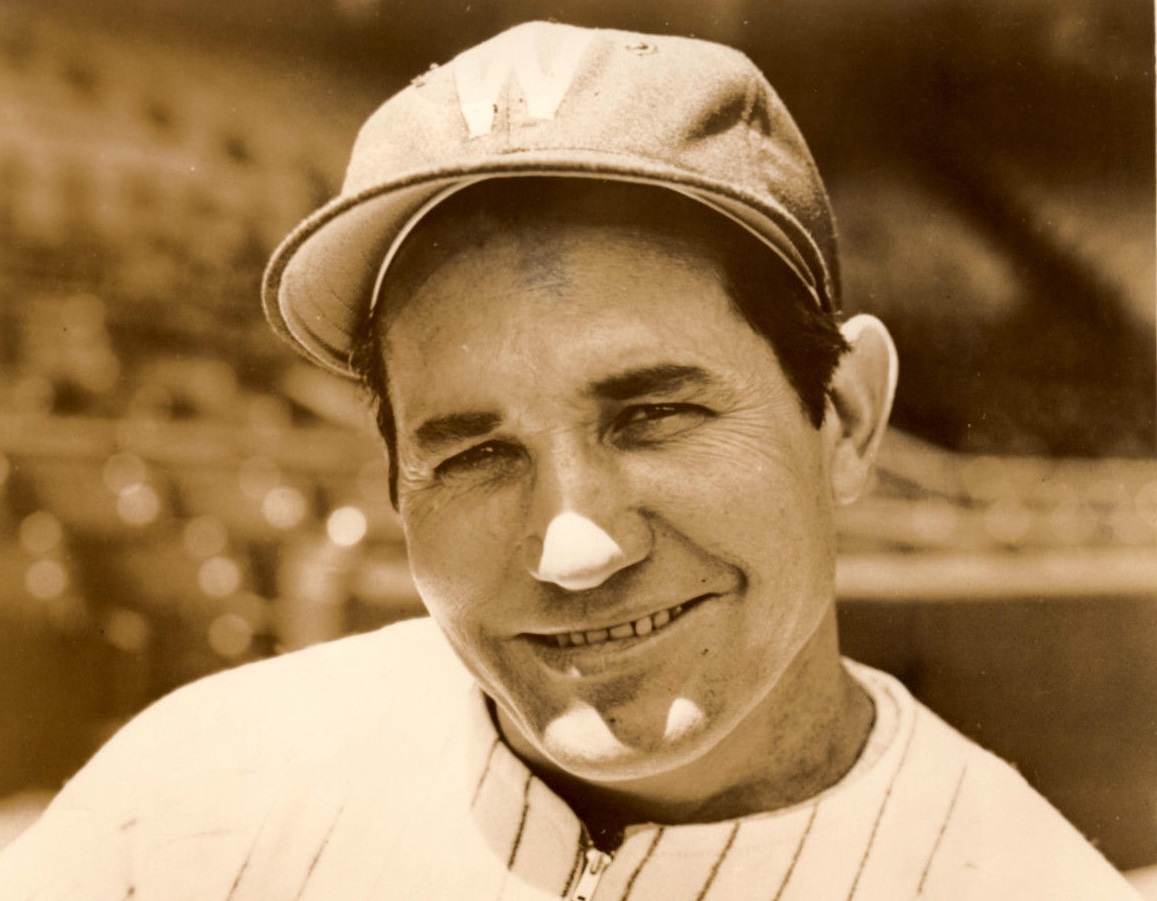
Conrado Eugenio Marrero Ramos was born on April 25, 1911, on a farm called El Laberinto in the district of Sagua la Grande, Cuba. He was of Canarian descent, reflecting the Spanish heritage common in the region. His upbringing in a rural area would later influence one of his most notable nicknames.
2.2. Nicknames and Appearance
Marrero was commonly known by his nickname "Connie." In Cuba, he earned several other nicknames that reflected his background and pitching style. These included "El Guajiro de Laberinto" (El Guajiro de LaberintoThe Peasant from LaberintoSpanish), which highlighted his rural origins, as well as "El Premier" and "El Curvo" (El CurvoThe Curvy OneSpanish), likely referring to his curveball.
Physically, Marrero was described as being "a bit plump, of less than average height," listed at 5 in tall and weighing 158 lb (158 lb). He had short arms and small hands, leading to observations that in uniform, he looked "like someone in a baseball costume, not a player," and more like "a Spanish grocer or peasant than an athlete."
3. Cuban Baseball Career
Before his Major League Baseball career, Connie Marrero established himself as a prominent figure in Cuban baseball, excelling in both amateur and professional leagues.
3.1. Amateur Career
Marrero began his baseball career relatively late, at age 27, when he was invited to pitch for the Cienfuegos team in the Cuban Amateur League in 1938. This league played on Sundays from March through September, and Marrero was employed by the team's department store sponsor during the week. He quickly became one of the most popular and successful pitchers in the league's history, accumulating 123 wins between 1938 and 1945. During his amateur years, Marrero was considered a bigger draw than any professional pitcher in Cuba.
From 1939 to 1943, Cuba hosted the second through sixth Amateur World Series competitions at La Tropical Stadium in Havana. Marrero was a key pitcher for the Cuba national baseball team in these tournaments.
- 1939 Amateur World Series:** In 1939, at the second Amateur World Series, the first in which Cuba competed, only three teams participated, and Cuba easily won. Marrero contributed a victory in the only game he pitched.
- 1940 Amateur World Series:** In the third Amateur World Series in 1940, Marrero led the Cuban team to victory, achieving a 3-2 record with a 1.15 ERA and earning the most valuable player award for the series.
- 1941 Amateur World Series:** During the fourth Amateur World Series in 1941, Marrero secured three wins. The series concluded in a tie between Cuba and the Venezuela team, which relied heavily on the pitching of Daniel Canónico. A playoff game was scheduled to allow Canónico rest. On October 23, 1941, Marrero faced Canónico for the championship. Venezuela scored three runs in the bottom of the first inning, aided by an error from Cuba's third baseman. Marrero was pulled after two innings, and Canónico held Cuba scoreless until the ninth, leading Venezuela to a 3-1 victory and their first Amateur World Series title.
- 1942 Amateur World Series:** Marrero's best amateur season was in 1942, with a 22-5 record and a 1.22 ERA. For the fifth Amateur World Series, he was the top vote-getter in a fan poll to select the Cuban national team. In a rematch against Venezuela's Canónico, Cuba won decisively with an 8-0 score, regaining the Cup.
- 1943:** In 1943, Marrero was suspended from the Amateur League for six months for accepting payment for a game, which prevented his selection for the Amateur World Series team.
- 1944 Amateur World Series:** He returned in 1944 with a 21-8 season and was again selected for the Amateur World Series team. The series, held in Caracas, Venezuela, ended controversially in a three-way tie among Mexico, Venezuela, and Cuba, necessitating a playoff. However, Cuba withdrew from the tournament in protest due to questionable calls by Venezuelan umpires.
- 1945:** In 1945, Marrero pitched for Cienfuegos in the Amateur League again but received an indefinite suspension after being caught pitching in a non-league game for a second time. Following this, he decided to turn professional.
3.2. Cuban League Career
In the winter of 1946-47, Marrero signed with the Oriente team in the National Federation League, where he had a strong season with an 8-5 record, leading the league in victories. After the Federation season concluded, he joined the Almendares team of the regular Cuban League for its final month. Although he played a minor role, pitching in four games and going 1-0, he was part of the winning team in one of the most famous pennant races in Cuban League history.
In the spring of 1947, Marrero, as part of a Cuban all-star team, had the opportunity to pitch against Major League teams during spring training in Havana. He defeated the New York Yankees in a rain-shortened seven-inning game, allowing only one run and four hits. A week later, pitching for the minor league Havana Cubans, he suffered a tough 1-0 loss against the Brooklyn Dodgers, giving up four hits and striking out eight.
For the 1947-48 Cuban League season, Marrero returned to Almendares, which was now officially sanctioned by Major League Baseball. This season was arguably his best, as he posted a 12-2 record, setting Cuban League all-time records for shutouts (eight) and ERA (1.12 ERA), and earning the Most Valuable Player award. However, Almendares, tied with the Habana team with one game remaining, lost the pennant to Habana's Alex Patterson in a 3-2 game.
In the 1948-49 season, Marrero went 6-4, as Almendares easily secured another pennant. As league champions, Almendares represented Cuba in the inaugural Caribbean Series held in Havana in 1949. Cuba swept the series, with Marrero contributing a one-run, four-hit, complete-game victory in his sole appearance. In the 1949-50 season, Marrero recorded a 7-3 record and led the Cuban League with a 2.66 ERA, as Almendares again won the pennant. At the second Caribbean Series, Marrero went 0-2 as Cuba was upset by Panamá. The following winter, Marrero posted an 11-7 record with a 2.37 ERA, leading the Cuban League in wins and innings pitched. However, Almendares was edged out by Habana for the pennant in a one-game playoff. In the 1951-52 season, Marrero's record was 6-9, and the next winter, he went 8-8.
In the 1953-54 season, Marrero went 7-5, helping Almendares regain the pennant. In the sixth Caribbean Series, Marrero pitched a shutout in his only appearance, but Puerto Rico ultimately won the series. In 1954-55, Marrero's record was 2-3, and he began to be used primarily in relief. Almendares won the pennant and advanced to the Caribbean Series, but Marrero did not make an appearance. In 1955-56, Marrero took on the role of manager for Almendares, but the team finished in last place, leading to a short managerial tenure. He pitched in four games, going 1-0. After being released by Almendares, Marrero signed with the Tigres de Marianao for the 1956-57 season, where he pitched 19 innings across seven games with a 1.37 ERA. Marianao won the pennant, and Marrero pitched in his final Caribbean Series, lasting 3.3 innings against Panamá in a game eventually won by his teammate, Jim Bunning. Cuba went on to secure their fourth victory in nine series appearances. The subsequent season, 1957-58, was Marrero's last as a player, as he pitched only four innings in three appearances.
Marrero concluded his Cuban League career with a record of 69-43. His .600 winning percentage ranks as the sixth highest in league history among pitchers with at least 40 wins. Notably, three of the five pitchers with a higher career winning percentage are enshrined in the U.S. Baseball Hall of Fame: José Méndez, Ray Brown, and Martín Dihigo; the other two are Carlos Royer and Camilo Pascual. Despite not pitching in the Cuban League until he was 35 years old, his 69 victories place him 10th on the Cuban League's all-time wins list.
4. Minor League Baseball Career
Connie Marrero also had a significant career in the United States minor league system, primarily with the Havana Cubans, which later became the Havana Sugar Kings.
From 1947 to 1949, Marrero pitched for the Havana Cubans in the Florida International League. This team served as a minor league affiliate of the Washington Senators.
- 1947:** Marrero had an exceptional season, going 25-6 and leading the league in wins (25), complete games (28), strikeouts (251), shutouts (seven), and ERA (1.66 ERA). On July 12, 1947, he pitched a no hitter against the Tampa Smokers, allowing only one base runner on a hit by pitch. The Cubans finished in first place with a 105-45 record and went on to win the playoffs against the Miami Sun Sox and the Tampa Smokers, with Marrero contributing two shutouts.
- 1948:** He continued his strong performance, posting a 20-11 record with a 1.67 ERA. The Cubans again finished in first place with a 97-57 record, marking their third consecutive title. In the playoffs, they defeated both the Lakeland Pilots and the Tampa Smokers.
- 1949:** Marrero earned the league MVP award after an outstanding season where he went 25-8 with 11 shutouts and a 1.53 ERA. He also set a league record by pitching 44 consecutive scoreless innings. Havana secured another first-place finish with a 95-57 record, their fourth of five consecutive top finishes. They defeated Miami Beach in the first round of the playoffs but were swept by Tampa in the second round, with Marrero losing to Tampa's Oscar del Calvo.
After spending five years with the Major League Washington Senators, Marrero returned to Havana to play with the minor league team from 1955 to 1957. In 1954, the team had relocated to the International League and was renamed the Havana Sugar Kings. Marrero did not travel with the team, pitching exclusively in their home games.
- 1955:** He went 7-3, pitched five shutouts (including one one-hitter), and recorded a 2.69 ERA.
- 1956:** At 45 years old, he pitched only 45 innings and went 3-1. His sole loss was to an even older pitcher, Miami's Satchel Paige.
- 1957:** Marrero pitched only five innings in three games, marking the end of his professional pitching career.
5. Major League Baseball Career
Connie Marrero's Major League Baseball career, though relatively short and beginning later in his life, saw him achieve notable success, including an All-Star selection.
5.1. Debut and Performance
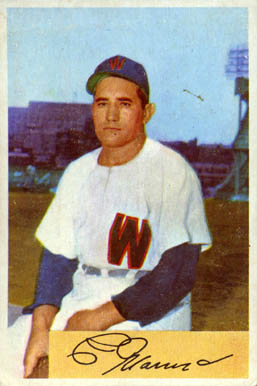
From 1950 to 1954, Connie Marrero pitched for the American League Washington Senators. During this period, the Senators' roster also included several other Cuban players, such as pitchers Sandy Consuegra and Camilo Pascual, and catcher Mike Guerra. The Senators were a second-division team during Marrero's tenure, never finishing higher than fifth place in the eight-team league.
Marrero made his Major League debut on April 21, 1950. At 38 years old, he was one of the oldest players in the league throughout his time in the major leagues.
- 1950:** In his debut season, he pitched 152 innings across 27 games (19 of them starts), finishing with a 6-10 record and a 4.50 ERA.
- 1951:** Marrero led his team in both wins and innings pitched, going 11-9 in 187 innings with a 3.90 ERA. On April 26, 1951, he pitched a one-hitter against the Philadelphia Athletics, securing a 2-1 victory. The only hit he allowed was a home run by Barney McCosky.
- 1952:** He posted an 11-8 record with a 2.88 ERA, which ranked ninth in the league, as Washington improved to a 78-76 record.
- 1953:** The following year, he went 8-7 with a 3.03 ERA.
- 1954:** In his final Major League season, he was the oldest player in the league. His performance declined to a 3-6 record with a 4.75 ERA. He was released by the Senators on January 24, 1955, at the age of 43.
Marrero concluded his Major League career with a 39-40 win-loss record and a 3.67 ERA. His ERA was eight percent better than the league average after adjusting for ballpark differences. In his 94 starts, he completed 51 games, including seven shutouts.
5.2. All-Star Selection
Connie Marrero was selected to the 1951 American League All-Star team. Although he did not play in the game, his selection was significant because, at age 40, he was the oldest first-time All-Star to that point in Major League Baseball history.
6. Pitching Style
Connie Marrero was known for his distinctive pitching style, which relied more on finesse and deception than overpowering speed. His primary pitches were described as "slow stuff," including curves, sliders, and knucklers. Marrero himself insisted that his main pitch was the slider, and he sometimes threw it exclusively. His approach to pitching emphasized control and movement over velocity, allowing him to be effective despite his physical appearance, which did not conform to the typical image of an athlete.
7. Post-Playing Career
After retiring as a player, Connie Marrero remained deeply involved in baseball, particularly in his native Cuba, and became a respected figure in the sport.
Following his playing career, Marrero became a coach for the Havana Sugar Kings, the minor league team he had previously played for. In 1960, he was listed as a scout for the Boston Red Sox during Bucky Harris's tenure as the team's general manager.
After the Cuban Revolution, Marrero was one of the most prominent baseball players to remain in Cuba under Fidel Castro's government. This decision allowed him to serve as a vital link between the era of the old professional Cuban League and the new amateur Cuban national baseball league and its Cuban National Series. He served for several years as a pitching coach for the Havana Industriales and also worked as a roving pitching instructor, sharing his expertise across the country.
Marrero is a highly respected figure in Cuba. His portrait is featured on a mural at Estadio Latinoamericano, a testament to his enduring legacy. He also had the honor of throwing out the first pitch at the 1984 baseball World Championship and at the 1999 Baltimore Orioles-Cuba national baseball team exhibition series.
In 2006, Marrero was featured alongside his former Almendares teammate, Hall of Famer Monte Irvin, in "The Bases Are Loaded," a documentary about Cuban baseball. Despite his significant contributions to the sport, Marrero did not receive a Major League Baseball pension for many years and was reported to be living modestly in a room within a relative's apartment in Havana. As recently as early 2007, baseball tours of Cuba advertised opportunities for participants to visit with the then 95-year-old Marrero.
On April 25, 2013, Marrero celebrated his 102nd birthday with family and friends, reportedly with "an unlit Cuban cigar in his mouth and a baseball cap on his head." Earlier that year, he received a 20.00 K USD payout from Major League Baseball. This payment was granted to former players who had played between 1947 and 1979, and its distribution to Marrero had been delayed due to issues related to the United States' embargo on Cuba. Marrero was also a fan of the contemporary Cienfuegos baseball team.
8. Personal Life and Death
Connie Marrero's later life was marked by his status as one of the longest-lived former Major League Baseball players, culminating in his death just before his 103rd birthday.
8.1. Oldest Player Status
Connie Marrero achieved the distinction of being the oldest living former Major League Baseball player. He gained this status following the death of Tony Malinosky on February 8, 2011, at the age of 101. Marrero celebrated his 102nd birthday on April 25, 2013, solidifying his place as a centenarian among baseball alumni.
8.2. Death
Connie Marrero passed away on April 23, 2014, at his home in Havana, Cuba. He died just two days shy of his 103rd birthday. Following his death, Mike Sandlock, then 98 years old, became the oldest living former Major League Baseball player.
9. Assessment and Legacy
Connie Marrero's impact on baseball, particularly in Cuba, is widely recognized, and he received numerous honors throughout his life.
9.1. Standing in Cuban Baseball
Connie Marrero holds a highly respected position in the history of Cuban baseball. His extensive and successful career in both amateur and professional leagues in Cuba, combined with his decision to remain in the country after the revolution, cemented his status as a national baseball icon. He served as a crucial link between different eras of Cuban baseball, contributing to the sport's continuity and development on the island. His popularity and achievements made him a beloved figure among Cuban baseball fans.
9.2. Honors and Recognition
Marrero's significant contributions to baseball were widely recognized.
- He was inducted into the Cuban Baseball Hall of Fame in 2014.
- His achievements in the Amateur World Series include:
- Gold Medals:** 1939 Havana, 1940 Havana, 1942 Havana (all with the Team Cuba).
- Silver Medal:** 1941 Havana (with Team Cuba).
- Bronze Medal:** 1944 Caracas (with Team Cuba).
- He was named the Most Valuable Player of the 1940 Amateur World Series.
- In the Cuban League, he set all-time records for shutouts (eight) and ERA (1.12 ERA) in the 1947-48 season, for which he also won the Most Valuable Player award.
- In Minor League Baseball, he won the Florida International League MVP award in 1949 and set a league record with 44 consecutive scoreless innings.
- He was selected to the 1951 American League All-Star team, becoming the oldest first-time All-Star at age 40.
10. Career Statistics
Connie Marrero's career spanned multiple leagues, showcasing his consistent performance across different levels of baseball.
10.1. Cuban League Statistics
| Year | Team | League | W | L | PCT | G | GS | IP | H | R | ER | BB | SO | ERA |
|---|---|---|---|---|---|---|---|---|---|---|---|---|---|---|
| 1946/47 | Oriente | National Federation | 8 | 5 | .615 | 18 | - | - | - | - | - | - | - | |
| Almendares | Cuban | 1 | 0 | 1.000 | 4 | 1 | 14.3 | - | 5 | 6 | - | |||
| 1947/48 | Almendares | Cuban | 12 | 2 | .857 | 22 | 17 | 184.7 | 123 | 55 | 99 | 1.12 | ||
| 1948/49 | Almendares | Cuban | 6 | 4 | .600 | 15 | 4 | 77.7 | 71 | 19 | 27 | 3.48 | ||
| 1949/50 | Almendares | Cuban | 7 | 3 | .700 | 15 | 5 | 81.3 | 81 | 20 | 38 | 2.66 | ||
| 1950/51 | Almendares | Cuban | 11 | 7 | .611 | 27 | 9 | 159.7 | 135 | 32 | 58 | 2.37 | ||
| 1951/52 | Almendares | Cuban | 6 | 9 | .400 | 21 | 6 | 115.7 | 107 | 40 | 51 | 3.50 | ||
| 1952/53 | Almendares | Cuban | 8 | 8 | .500 | 22 | 8 | 135.0 | 105 | 47 | 48 | 2.60 | ||
| 1953/54 | Almendares | Cuban | 7 | 5 | .583 | 22 | 3 | 107.3 | 102 | 28 | 46 | 3.27 | ||
| 1954/55 | Almendares | Cuban | 2 | 3 | .400 | 21 | 1 | 58.7 | 42 | 19 | 28 | 2.61 | ||
| 1955/56 | Almendares | Cuban | 1 | 0 | 1.000 | 4 | 0 | 10.3 | 10 | 6 | 5 | 2.61 | ||
| 1956/57 | Marianao | Cuban | 0 | 0 | .000 | 7 | 0 | 19.7 | 13 | 6 | 7 | 1.37 | ||
| 1957/58 | Marianao | Cuban | 0 | 0 | .000 | 3 | 0 | 4.0 | 9 | 4 | 4 | - | ||
| Total | 12 seasons | 69 | 46 | .600 | 201 | 54 | 968.3 | 798 | 281 | 417 | 2.51 | |||
10.1.1. Caribbean Series
| Year | Team | W | L | PCT | G | GS | IP | H | R | ER | BB | SO | ERA |
|---|---|---|---|---|---|---|---|---|---|---|---|---|---|
| 1949 | Almendares | 1 | 0 | 1.000 | 1 | 1 | 9.0 | 4 | 3 | 5 | - | - | |
| 1950 | Almendares | 0 | 2 | .000 | 2 | 0 | 7.0 | 9 | 0 | 3 | - | - | |
| 1954 | Almendares | 1 | 0 | 1.000 | 1 | 1 | 9.0 | 5 | 2 | 5 | 0.00 | - | |
| 1957 | Marianao | 0 | 0 | .000 | 1 | 0 | 3.3 | 5 | 0 | 0 | - | - | |
| Total | 4 Series | 2 | 2 | .500 | 5 | 2 | 28.3 | 23 | 5 | 13 | - | - |
10.2. Minor League Statistics
| Year | Team | League | W | L | PCT | G | GS | IP | H | R | ER | BB | SO | ERA |
|---|---|---|---|---|---|---|---|---|---|---|---|---|---|---|
| 1947 | Havana | Florida International | 25 | 6 | .806 | 40 | 28 | 271 | 180 | 46 | 251 | 1.66 | - | |
| 1948 | Havana | Florida International | 20 | 11 | .645 | 35 | 24 | 264 | 206 | 24 | 168 | 1.67 | - | |
| 1949 | Havana | Florida International | 25 | 8 | .758 | 35 | 26 | 258 | 175 | 47 | 167 | 1.53 | - | |
| 1955 | Havana | International | 7 | 3 | .700 | 16 | 5 | 87 | 71 | 27 | 54 | 2.69 | - | |
| 1956 | Havana | International | 3 | 1 | .750 | 15 | 0 | 45 | 45 | 11 | 20 | 3.40 | - | |
| 1957 | Havana | International | 0 | 0 | .000 | 3 | 0 | 5 | 3 | 1 | 1 | 1.93 | - | |
| Total | 6 seasons | 80 | 29 | .734 | 144 | 83 | 930 | 680 | 156 | 661 | 1.81 | - | ||
10.3. Major League Baseball Statistics
| Year | Team | League | W | L | PCT | G | GS | CG | SHO | SV | IP | H | R | ER | HR | BB | SO | HBP | WP | ERA | ERA+ |
|---|---|---|---|---|---|---|---|---|---|---|---|---|---|---|---|---|---|---|---|---|---|
| 1950 | Washington | AL | 6 | 10 | .375 | 27 | 19 | 8 | 1 | 1 | 152.0 | 159 | 84 | 76 | 17 | 55 | 63 | 1 | 2 | 4.50 | 100 |
| 1951 | Washington | AL | 11 | 9 | .550 | 25 | 25 | 16 | 2 | 1 | 187.0 | 198 | 87 | 81 | 8 | 71 | 66 | 2 | 2 | 3.90 | 105 |
| 1952 | Washington | AL | 11 | 8 | .579 | 22 | 22 | 16 | 2 | 1 | 184.3 | 175 | 68 | 59 | 9 | 53 | 77 | 2 | 0 | 2.88 | 124 |
| 1953 | Washington | AL | 8 | 7 | .533 | 22 | 20 | 10 | 2 | 0 | 145.7 | 130 | 56 | 49 | 14 | 48 | 65 | 5 | 0 | 3.03 | 129 |
| 1954 | Washington | AL | 3 | 6 | .333 | 22 | 8 | 1 | 0 | 0 | 66.3 | 74 | 37 | 35 | 12 | 22 | 26 | 1 | 1 | 4.75 | 75 |
| Total | 5 seasons | 39 | 40 | .494 | 118 | 94 | 51 | 7 | 3 | 735.3 | 736 | 332 | 300 | 60 | 249 | 297 | 11 | 5 | 3.67 | 108 | |