1. Early Life and Education
Alain Aspect's early life and academic journey laid the foundation for his distinguished career in physics.
1.1. Birth and Early Life
Alain Aspect was born on 15 June 1947 in Agen, France.
1.2. Education
Aspect pursued his higher education at the École Normale Supérieure de Cachan (ENS Cachan), which is now part of Paris-Saclay University. He successfully passed the agrégation in physics in 1969. Following this, he earned his PhD degree in 1971 from the École supérieure d'optique, later known as Institut d'Optique Graduate School, which was part of Université d'Orsay (now Université Paris-Sud). After completing his initial studies, Aspect fulfilled a period of national service by teaching for three years in Cameroon, which served as a replacement for compulsory military service at the time.
In the early 1980s, while working on his doctorat d'État (habilitation thesis), Aspect conducted a series of pivotal experiments. He defended this thesis in 1983 at Université Paris-Sud, which is now integrated into Paris-Saclay University. His academic achievements were further recognized with several honorary doctorates, including one from Heriot-Watt University in 2008, Université de Montréal in 2006, Australian National University in 2008, University of Glasgow in 2010, University of Haifa in 2011, University of Waterloo in 2014, City University of Hong Kong in 2018, Université de Sherbrooke in 2023, and University of Minho in 2024.
2. Scientific Career and Research
Alain Aspect's scientific career is marked by his revolutionary experiments in quantum physics, particularly his work on quantum entanglement and his subsequent contributions to laser cooling and Bose-Einstein condensates.
2.1. Quantum Entanglement and Bell's Inequalities
Aspect's most celebrated work involves his Bell test experiments, which he conducted in the early 1980s. These experiments followed the initial work of Stuart Freedman and John Clauser in 1972. Aspect's experiments were designed to test Bell's theorem and its implications for quantum mechanics, specifically addressing the concept of "ghostly action at a distance" as posited by Albert Einstein, Boris Podolsky, and Nathan Rosen as a putative reductio ad absurdum of quantum mechanics.
His experiments provided strong support for the violation of Bell inequalities, particularly the CHSH version, thereby challenging the principle of local realism. Aspect's findings demonstrated that even when two particles are separated by an arbitrarily large distance, a correlation between their wave functions persists, provided they were once part of the same undisturbed wave function before one of the particles was measured. While his results were highly influential, some physicists noted that there were still loopholes that allowed for alternative explanations consistent with local realism, prompting further research by other groups to conduct more conclusive tests.
2.2. Laser Cooling and Bose-Einstein Condensates
Following his groundbreaking work on Bell's inequalities, Aspect shifted his research focus. He began to investigate the laser cooling of neutral atoms and the study of Bose-Einstein condensates. This research was conducted at the Kastler-Brossel Laboratory, further expanding his contributions to the field of atomic physics.
2.3. Academic and Institutional Roles
Alain Aspect has held numerous significant academic and institutional positions throughout his career. He served as the deputy director of the French "grande école" École supérieure d'optique until 1994. From 1985 to 1992, he was affiliated with the Collège de France, working under Claude Cohen-Tannoudji, where he also served as the deputy director of a research laboratory.

He is a distinguished member of the French Academy of Sciences and the French Academy of Technologies. Since 2005, Aspect has been a professor at the École Polytechnique. He also holds the position of Research Director at the Centre national de la recherche scientifique (CNRS), where he was awarded the gold medal in 2005.
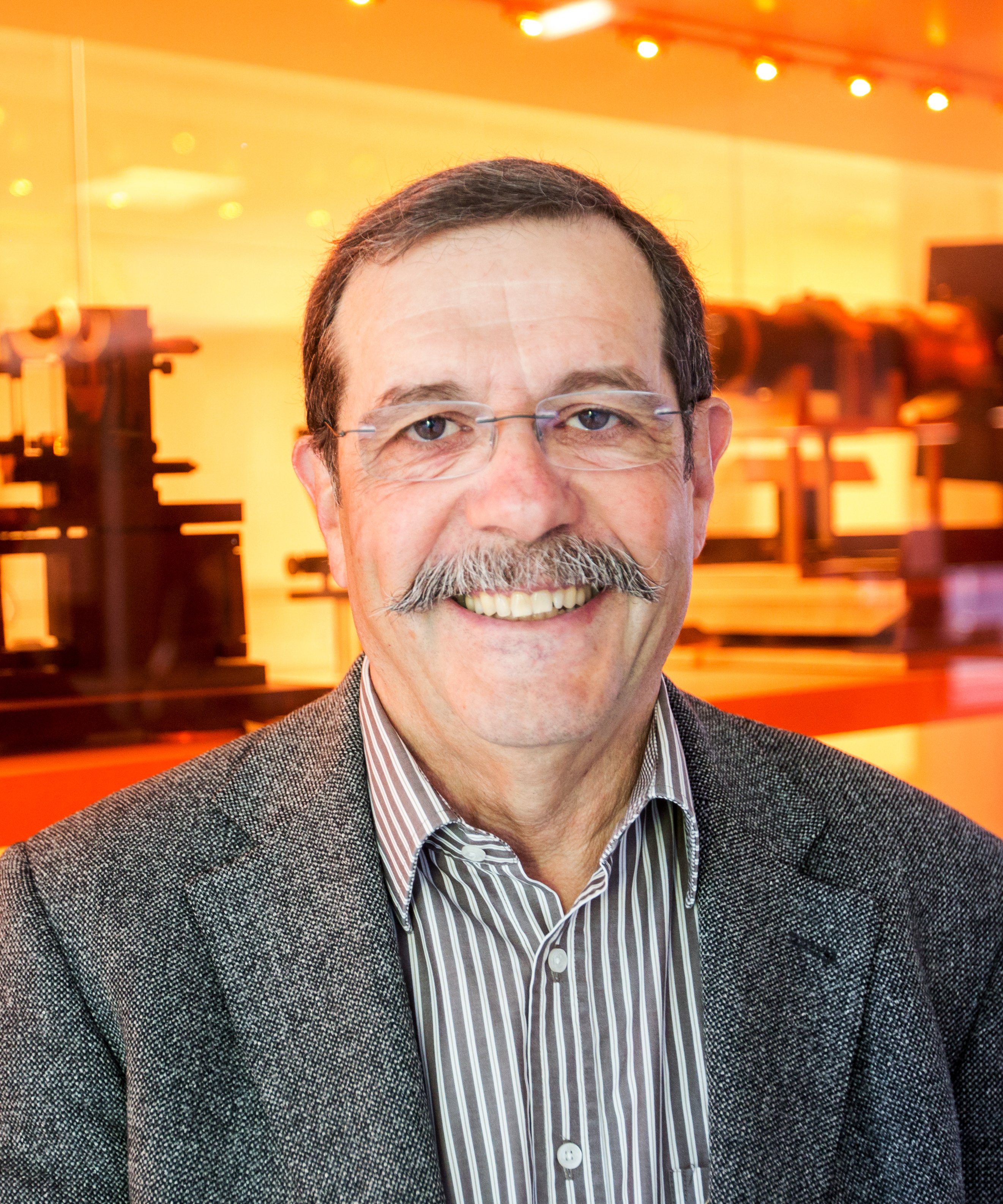
Aspect is also a Foreign Member of the Royal Society (elected 2015), a Foreign Associate of the National Academy of Sciences, an Associate Member of the Royal Academy of Science, Letters and Fine Arts of Belgium, and a Corresponding member abroad of the Austrian Academy of Sciences. He is also a Fellow and Honorary Member of Optica.
3. Awards and Honors
Alain Aspect has received numerous prestigious awards and honors throughout his career, recognizing his profound contributions to quantum physics.
In 2022, Aspect was jointly awarded the Nobel Prize in Physics with John Clauser and Anton Zeilinger. The prize was given "for experiments with entangled photons, establishing the violation of Bell's inequalities and pioneering quantum information science." This award recognized his breakthrough experiments with entangled quantum states, where two particles behave as a single unit even when separated, paving the way for new technologies based on quantum information.
Other significant accolades include:
- 2022: Commander of the Legion of Honour
- 2022: Honorary Optica Member
- 2014: Officer of the Legion of Honour
- 2013: Balzan Prize for Quantum Information Processing and Communication
- 2013: Niels Bohr International Gold Medal
- 2013: UNESCO Niels Bohr Medal
- 2013: Frederic Ives Medal/Jarus W. Quinn Prize
- 2012: Albert Einstein Medal
- 2012: Herbert Walther Award
- 2011: Officer of the National Order of Merit
- 2011: Commander of the Palmes académiques
- 2011: Medal of the City of Paris
- 2010: Wolf Prize in Physics (shared with Anton Zeilinger and John Clauser)
- 2005: CNRS Gold Medal
- 2005: Knight of the Legion of Honour
- 1999: Gay-Lussac-Humboldt Prize
- 1999: Max Born Award
- 1991: Fernand Holweck Medal and Prize
- 1987: International Commission for Optics Award
- 1985: Commonwealth Award for Science and Invention
- 1983: Prix Servant

His election certificate to the Royal Society highlights his contributions: "For his fundamental experiments in quantum optics and atomic physics. Alain Aspect was the first to exclude subluminal communication between the measurement stations in experimental demonstrations that quantum mechanics invalidates separable hidden-variable theories and the first to demonstrate experimentally the wave-particle duality of single photons. He co-invented the technique of velocity-selective coherent population trapping, was the first to compare the Hanbury Brown-Twiss correlations of fermions and bosons under the same conditions, and the first to demonstrate Anderson localization in an ultra-cold atom system. His experiments illuminate fundamental aspects of the quantum-mechanical behaviour of single photons, photon pairs and atoms."
4. Research Impact and Legacy
Alain Aspect's experimental findings have had a profound impact and lasting legacy on the field of quantum physics, particularly in advancing quantum information science and its technological applications. His work provided definitive experimental proof that quantum mechanics is fundamentally non-local, meaning that entangled particles can influence each other instantaneously regardless of distance, a concept that Albert Einstein famously described as "ghostly action at a distance." This validation of Bell's theorem has been crucial for understanding the true nature of quantum reality and has opened up new avenues for research and technological development.
Aspect's experiments laid the groundwork for the burgeoning field of quantum information science, which explores how quantum phenomena like entanglement can be harnessed for practical applications. This includes the development of quantum computing, quantum cryptography, and advanced quantum communication systems. His contributions are considered foundational to the ongoing "second quantum revolution," which aims to build new technologies based on controlling individual quantum systems.
In recognition of his significant impact, Asteroid 33163 Alainaspect, discovered by astronomers at Caussols in 1998, was named after him. The official naming citation was published by the Minor Planet Center on 8 November 2019.
5. Publications
Alain Aspect has authored or co-authored several significant books and scientific papers, contributing extensively to the literature of quantum physics and optics.
- Bardou, François; Bouchaud, Jean-Philippe; Aspect, Alain; Cohen-Tannoudji, Claude (2002). Lévy Statistics and Laser Cooling. Cambridge University Press.
- Bell, J. S. (2004). Speakable and Unspeakable in Quantum Mechanics. (Aspect contributed to the introduction). Cambridge University Press.
- Grynberg, Gilbert; Aspect, Alain; Fabre, Claude (2010). Introduction to Quantum Optics. Cambridge University Press.