1. Overview
Étienne Charles de Loménie de Brienne (Étienne Charles de Loménie de Brienne[etjɛn ʃaʁl də lɔmeni də bʁijɛn]French; born October 9, 1727 - died February 18, 1794) in Paris, was a prominent French clergyman, bishop, cardinal, and politician who served as King Louis XVI's principal minister and finance minister during a critical period preceding the French Revolution. His career, marked by a rise through the ecclesiastical ranks to the highest echelons of state power, was ultimately defined by his efforts to implement financial reforms that largely failed due to strong opposition from the Parlement and widespread public distrust. His inability to effectively address the escalating fiscal crisis exacerbated political tensions and contributed significantly to the eventual convocation of the Estates General, a pivotal event that triggered the Revolution. His later life saw him attempting to navigate the tumultuous early years of the Revolution, taking an oath to the controversial Civil Constitution of the Clergy before ultimately being arrested and dying in prison during the Reign of Terror, leaving behind a legacy debated for its opportunism and failure to avert the revolutionary storm.
2. Early Life and Clerical Career
Étienne Charles de Loménie de Brienne's formative years were characterized by a privileged family background and an ambitious pursuit of a distinguished position within the Catholic Church, despite questions surrounding his theological orthodoxy.
2.1. Family and Education
Étienne Charles de Loménie de Brienne was born in Paris on October 9, 1727. His family, the Loménie, originated from Flavignac in the Limousin region of France, which is now part of Nouvelle-Aquitaine, with their roots traceable back to the 15th century. The Loménie de Brienne were a junior branch of this established family, progressively integrating themselves into the French royal court over several centuries. Their rise began with their ennoblement in 1552 when Martial de Loménie became the secretary to King Henry II of France. The family further solidified their standing by acquiring the lordship of Versailles between 1561 and 1571. Through an advantageous marriage in 1623, they gained the title of counts of Brienne. They continued to hold high-ranking positions within the French state, serving in important governmental roles in foreign affairs under Louis XIV and later in the ministry of war towards the end of the Ancien Régime. Notable relatives included Charles-François de Loménie de Brienne, who served as the Bishop of Coutances from 1668 to 1720, and their adopted cousin, Pierre-François-Martial de Loménie, who briefly served as Coadjutor Archbishop of Sens from 1789 to 1794. As a capable student, Étienne-Charles chose a clerical career, perceiving it as a clear path to achieving a prominent societal position. In 1751, he earned a doctorate in theology, although there were notable doubts regarding the orthodoxy of his thesis at the time.
2.2. Early Church Activities and Social Connections
Upon completing his education, Étienne Charles de Loménie de Brienne swiftly began his ecclesiastical career. In 1751, he was appointed vicar general to Cardinal Nicolas de Saulx-Tavannes, the Archbishop of Rouen. Following a visit to Rome, he was consecrated as Bishop of Condom on December 19, 1760, and subsequently transferred to become Archbishop of Toulouse on March 21, 1763. His influence within the Church grew, leading to his appointment as commendatory Abbot of Mont Saint-Michel Abbey from 1766 to 1769, and later of Corbie Abbey in 1788. In 1772, he presided over the Commission des Réguliers, a body tasked with the suppression of religious houses that were in terminal decline.
Brienne cultivated a wide network of influential friends, including prominent Enlightenment figures such as A.R.J. Turgot, André Morellet, and Voltaire. His intellectual engagement was recognized in 1770 when he was elected to the Académie française. He also held a leading role within the general assembly of the clergy, serving three times as the head of the bureau de jurisdiction. Demonstrating a keen interest in contemporary political and social issues, he addressed several memoires to Turgot on these subjects, including discussions on the pressing problem of pauperism. Despite his ecclesiastical advancements, Loménie de Brienne faced persistent allegations of being an unbeliever. This skepticism was so pronounced that when there was a campaign in 1781 to appoint him as the Archbishop of Paris following the death of Christophe de Beaumont, King Louis XVI reportedly refused, exclaiming, "The Archbishop of Paris should at least believe in God!" This incident underscored doubts about his religious conviction and fueled perceptions of him as an opportunistic figure.
3. Political Career
Loménie de Brienne's political career marked a turbulent period in French history, characterized by his attempts at financial reform, his significant conflicts with the Parlement, and his eventual resignation which further destabilized the French monarchy.
3.1. Role in the Assembly of Notables
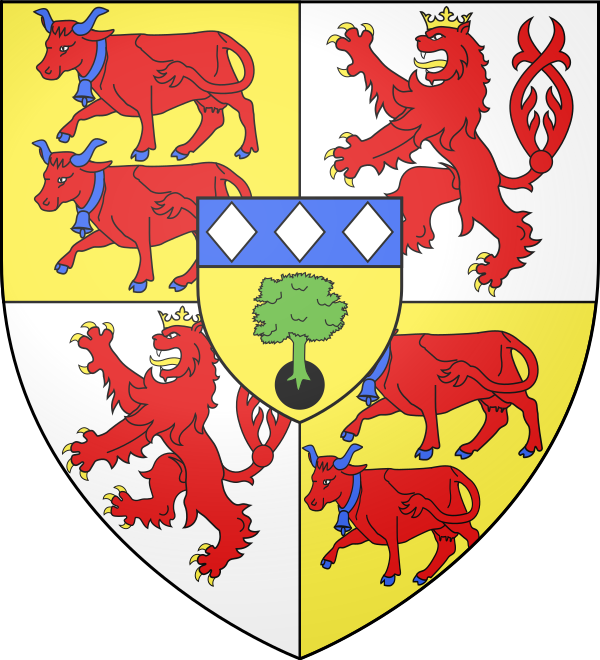
In 1787, Loménie de Brienne played a pivotal role in the Assembly of Notables, where he emerged as a leading figure opposing the fiscal policies of Charles Alexandre de Calonne, the Controller-General of Finances. His strong opposition, coupled with his close ties to Queen Marie Antoinette, positioned him favorably for political advancement. Following intense deliberations among the nobles, which concluded on May 25, 1787, Loménie de Brienne was appointed to succeed Calonne as the principal minister, effectively assuming the crucial role of finance minister. This appointment placed him at the helm of France's deepening financial crisis, tasking him with the daunting challenge of averting the nation's looming bankruptcy.
3.2. As Finance Minister
Upon assuming office, Loménie de Brienne embarked on a series of reform initiatives. He successfully pushed for the registration of edicts promoting internal free trade, establishing provincial assemblies to decentralize administration, and redeeming the corvée, a system of forced labor that had long been a source of grievance among the common people. However, his attempts at comprehensive financial reform soon met with formidable resistance. When the Parlement of Paris, a high judicial court with the power to register royal edicts, refused to approve his proposed new taxes, specifically the stamp duty and a general land tax, Brienne's efforts stalled. To circumvent this opposition, he persuaded King Louis XVI to hold a lit de justice, a special royal session of the Parlement designed to enforce the registration of edicts. When this measure failed to quell dissent, the king, under Brienne's influence, exiled the Parlement to Troyes on August 18, 1787, in a determined effort to crush their resistance.
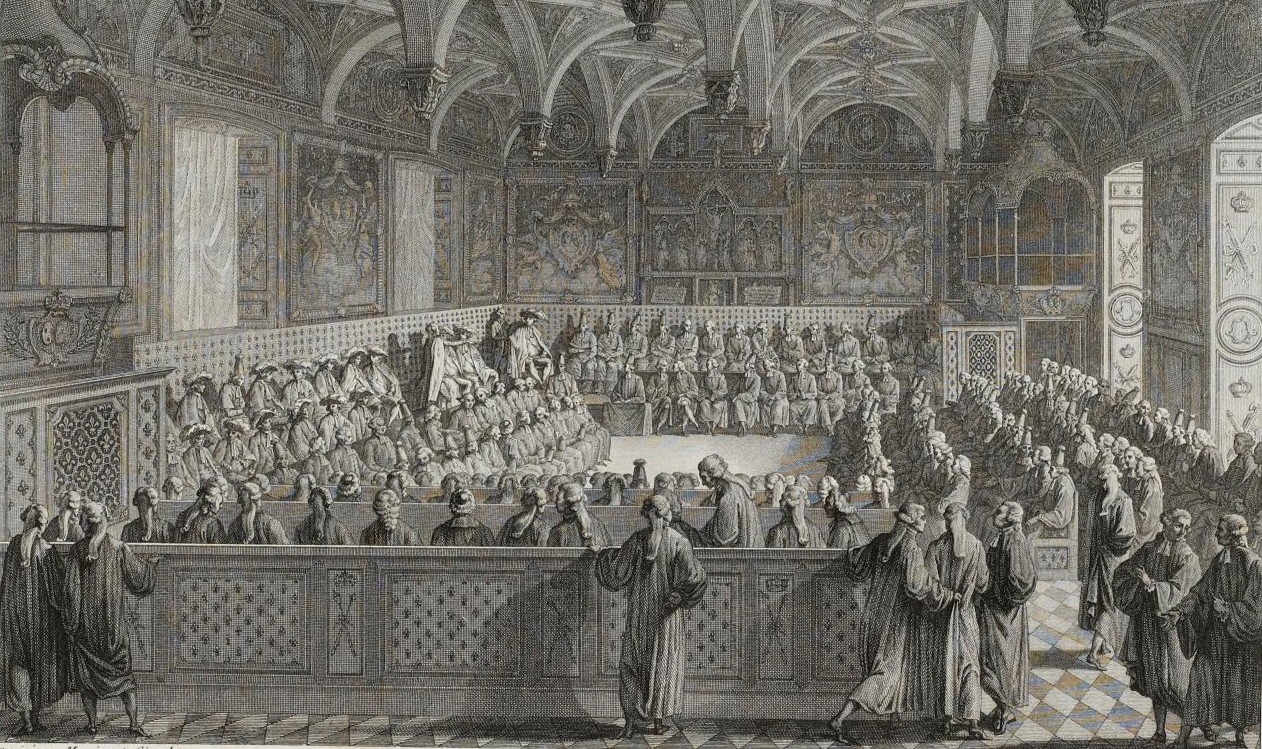
The Parlement was eventually recalled to Paris after agreeing to prolong the direct tax on all kinds of income or Vingtième (twentieth tax), an outcome that offered only a temporary reprieve for the treasury. A subsequent attempt by Brienne to force the Parlement to register an edict for raising a loan of 120 million livres met with even more determined opposition, highlighting the growing power of the Parlement and the increasing fragility of royal authority. By May 1788, the process of tax collection was failing, and the loyalty of the army was beginning to waver. In response, Louis XVI suspended the parlements and established 47 new courts in May 1788. The protracted struggle between Brienne and the Parlement reached its climax on May 8, 1788, when the Parlement, under duress, consented to an edict for its own abolition. However, this consent came with a critical proviso: the Estates General must be summoned to address the state's severe disorders. This concession marked a significant failure of Brienne's reform agenda and underscored the profound political crisis facing the French monarchy, directly paving the way for the convocation of the Estates General, which would soon trigger the French Revolution.
3.3. Resignation
In the midst of his increasingly untenable position as finance minister, Étienne Charles de Loménie de Brienne was appointed Archbishop of Sens on March 10, 1788. Despite this ecclesiastical promotion, his political standing had severely deteriorated, and he faced nearly universal opposition across France. He was compelled to suspend the Cour plenière, a body that had been established to replace the Parlement, and reluctantly promised that the Estates General would indeed be summoned. However, these significant concessions proved insufficient to salvage his political career or public trust. On August 25, 1788, facing an empty treasury and insurmountable political pressure, he was forced to resign as finance minister. He officially retired on August 29, leaving the state's finances in a catastrophic condition, having effectively depleted the treasury.
The recall of Guillaume-Chrétien de Lamoignon de Malesherbes, a figure publicly disliked due to his association with the deeply unpopular monarchy, on September 14, 1788, sparked renewed revolutionary energy. This led to widespread rioting in Paris, with demonstrators specifically targeting and attempting to burn down the homes of both Lamoignon and Brienne. This violent public outcry vividly demonstrated the depth of popular resentment and the profound political instability that characterized the end of Brienne's tenure and the final years of the Ancien Régime. His departure marked a critical turning point, as the monarchy had exhausted its options for internal reform, leaving the convocation of the Estates General as the only perceived solution, thereby setting the stage for the full outbreak of the French Revolution.
4. French Revolution and Death
Étienne Charles de Loménie de Brienne's life took a dramatic turn with the onset of the French Revolution, as he attempted to adapt to the radical changes, ultimately facing a tragic end.
4.1. Appointment as Cardinal and Return to France
After his resignation as finance minister, Loménie de Brienne was elevated to the rank of cardinal on December 15, 1788, a move often seen as a political consolation prize given his failed ministerial tenure. Following this appointment, he departed for Italy, where he resided for two years. During his absence, his adopted nephew, Pierre François Martial de Loménie de Brienne, was appointed Coadjutor bishop of the diocese of Sens at Étienne-Charles's request, and Étienne-Charles personally consecrated him. With the eruption of the French Revolution in 1789, Loménie de Brienne decided to return to France, indicating his intent to engage with, or perhaps adapt to, the rapidly changing political landscape.
4.2. Oath to the Civil Constitution of the Clergy
Upon his return to France, Étienne Charles de Loménie de Brienne made a controversial decision that further complicated his standing with both the Church and the monarchy. In 1790, he took the oath to the Civil Constitution of the Clergy, a measure passed by the revolutionary National Constituent Assembly that effectively brought the French Church under state control and required clergy to swear allegiance to the new order. He was one of the very few bishops of the Ancien Régime to do so, and he actively encouraged many of his priests to follow suit. Subsequently, he was elected as the constitutional Bishop of the Yonne department, a position under the new revolutionary ecclesiastical structure.
His actions, however, were met with severe condemnation from the Holy See. Pope Pius VI repudiated him, leading to his excommunication. Consequently, in 1791, under pressure from the Pope, Loménie de Brienne resigned from the cardinalate to avoid being formally stripped of the dignity, marking a significant break from his former ecclesiastical allegiances and highlighting the deep schism within the French Catholic Church during the Revolution.
4.3. Later Life and Demise
In his final years, Loménie de Brienne took up residence in Sens, where he acquired the former Abbey of Saint-Pierre-le-Vif. In a notable act, he had the majestic church, which had served as the burial place for his predecessors as Archbishop of Sens, demolished, choosing to reside in the abbot's house with members of his family. Despite his earlier unpopularity in Paris, he displayed a surprising ability to gain local support in Sens, where a segment of the population became his ardent supporters.
However, the increasingly radical trajectory of the Revolution meant that even the days of the Constitutional Church were numbered. Although he had refused to ordain constitutional bishops, a move that might have signaled some resistance to the more extreme aspects of the new ecclesiastical structure, his past and present conduct made him an object of suspicion to the ascendant revolutionaries. On November 15, 1793, at the height of the Revolution's anti-clerical fervor, he formally renounced the priesthood. Despite this renunciation, he could not escape the suspicion of the revolutionary authorities. He was arrested in Sens on February 18, 1794. That very night, he died in prison. The exact cause of his death remains disputed, with theories ranging from a stroke to poison or even suicide. Some accounts suggest that the overwhelming shock of the failure of his political maneuvers and his desperate attempts at survival may have been enough to cause his demise. His nephew, Pierre-François de Loménie, who had also sworn the oath to the Civil Constitution of the Clergy, was guillotined on May 10, 1794, after having repented of his submission, further illustrating the brutal fate that awaited many figures caught in the maelstrom of the Revolution.
5. Works
Étienne Charles de Loménie de Brienne was an active writer and publisher during his lifetime. His most notable published works include:
- Oraison funébre du Dauphin (Paris, 1766), an oration delivered at the funeral of Louis, the Dauphin.
- Compte-rendu au roi (Paris, 1788), a financial report submitted to the King during his tenure as finance minister, which aimed to present the state of the nation's finances.
- Le Conciliateur (Rome, Paris, 1754), a collaborative work written in conjunction with Turgot.
6. Legacy and Assessment
Étienne Charles de Loménie de Brienne's legacy is deeply intertwined with the escalating crisis of the late Ancien Régime and the eventual outbreak of the French Revolution. His actions and policies have been subject to considerable historical scrutiny and criticism, reflecting his controversial role in a period of profound societal upheaval.
6.1. Historical Context and Impact
Loménie de Brienne's tenure as principal minister and finance minister, from 1787 to 1788, occurred at a critical juncture when France was grappling with severe financial distress and growing social unrest. His policies, while aiming to introduce necessary reforms such as internal free trade and the abolition of the corvée, ultimately failed to overcome the entrenched resistance of the privileged classes and the judiciary, particularly the Parlements. His confrontational approach, including the use of a lit de justice and the exile of the Parlement, only served to deepen political polarization and erode public trust in the monarchy. Instead of resolving the financial crisis, his administration further depleted the treasury, leaving the state on the brink of bankruptcy. His inability to implement effective fiscal measures directly contributed to the monarchy's desperate decision to convoke the Estates General, an assembly that had not met for 175 years. This act inadvertently provided a platform for revolutionary demands and, rather than stabilizing the nation, ignited the French Revolution. Thus, his period in power is largely seen as accelerating the collapse of the Ancien Régime by demonstrating the monarchy's incapacity to reform itself.
6.2. Criticism and Controversy
Loménie de Brienne has been a consistent target of criticism and controversy. His policies as finance minister, particularly his attempts to impose new taxes and his clashes with the Parlement, generated widespread public resentment. The fact that he resigned leaving the treasury empty and that rioters targeted his home underscores the intense public hatred he incurred. Beyond his political failures, his personal character and beliefs were also subject to scrutiny. Doubts about his alleged atheistic tendencies, famously highlighted by King Louis XVI's purported remark that the Archbishop of Paris should "at least believe in God," painted him as an opportunistic clergyman primarily concerned with personal advancement rather than genuine religious conviction.
During the French Revolution, his decision to take the oath to the Civil Constitution of the Clergy, an act that led to his excommunication by Pope Pius VI, was seen by many as a pragmatic and self-serving maneuver to retain influence rather than a principled stand. His subsequent renunciation of the priesthood shortly before his arrest further cemented perceptions of his opportunism and lack of steadfast principles. His actions throughout his career, from his perceived insincerity in faith to his political blunders that worsened the state's finances and accelerated revolutionary fervor, have positioned him in historical discourse as a figure whose self-serving actions contributed to the instability and eventual downfall of the Ancien Régime, rather than alleviating its inherent contradictions.