1. Overview
Triệu Việt Vương (Triệu Việt Vương趙越王Vietnamese, 524-571), born Triệu Quang Phục (Triệu Quang Phục趙光復Vietnamese), was a significant figure in 6th-century Vietnamese history, serving as a king of the Vạn Xuân kingdom from 548 to 571. He initially co-ruled with Lý Thiên Bảo from 548 until Lý Thiên Bảo's death in 555, after which he became the sole monarch. Unlike other rulers of the Early Lý dynasty, Triệu Việt Vương was not a member of the Lý family; he ascended to power as a commanding general, renowned for his leadership in resisting the Liang dynasty's attempts to reclaim Vạn Xuân. He is particularly recognized as a pioneer in the use of guerrilla warfare tactics. His reign, marked by successful defense against foreign invasion, ultimately ended due to internal conflicts with the Lý family, leading to his defeat and suicide.
2. Early Life
Triệu Việt Vương's early life laid the foundation for his later role as a national leader, marked by his family's involvement in the resistance movement and his own early military contributions against foreign domination.
2.1. Background and Family
Triệu Quang Phục was born on January 26, 524, in Zhu Diên, an area now part of Khoái Châu District, Hưng Yên Province. He was the son of Triệu Túc (Triệu Túc趙肅Vietnamese), a prominent military leader who served as Thái phó (Grand Tutor) under Lý Nam Đế. Historical records describe Triệu Quang Phục as a man of great courage and valor. His family originated from the Vietnamese populace, aligning them with the local resistance against foreign rule.
2.2. Early Military Involvement
Triệu Quang Phục began his military career by joining his father, Triệu Túc, in Lý Nam Đế's uprising in 541. This rebellion aimed to overthrow the oppressive rule of the Chinese Liang dynasty, which governed Vietnam as a province. Lý Bôn, who later became Lý Nam Đế, rallied local Vietnamese officials and soldiers against the corrupt and cruel administration of Xiao Zi, a nephew of the Liang emperor. Triệu Quang Phục played a crucial role in the initial stages of this resistance, contributing to the successful expulsion of Liang forces from the region. His efforts earned him the prestigious position of Tả tướng quân (Left General) of the Vạn Xuân kingdom, demonstrating his early recognition as a capable military leader.
3. Rise to Power and Rule
Triệu Việt Vương's ascension to leadership was a direct consequence of his military prowess and the trust placed in him by Lý Nam Đế, allowing him to continue the fight for Vạn Xuân's independence and establish his own governance.
3.1. Resistance against the Liang Dynasty
In May 545, the Liang dynasty launched a major invasion of Vạn Xuân, led by generals Dương Phiêu and Trần Bá Tiên (Trần Bá Tiên陳霸先Vietnamese), a highly skilled strategist who would later become emperor of the Chen dynasty in China. Lý Nam Đế's forces suffered initial setbacks, forcing him to retreat to Khuất Lão cave in 546. Recognizing Triệu Quang Phục's exceptional military capabilities, Lý Nam Đế entrusted him with the critical task of continuing the resistance against Trần Bá Tiên and safeguarding the nation's independence.
In January 547, Triệu Quang Phục strategically withdrew his forces to the Dạ Trạch swamp (also known as Bãi Màn Trò, located in present-day Khoái Châu District, Hưng Yên Province). This vast swamp was characterized by dense vegetation, thick bushes, and treacherous muddy terrain, making it extremely difficult for conventional armies, especially cavalry, to navigate. In the center of the swamp was a raised piece of land, accessible only by small dugout canoes that could glide over the water-covered grass. Unfamiliar paths led to dangerous waters infested with venomous snakes. Triệu Quang Phục, intimately familiar with the swamp's intricate routes, established his stronghold there with over 20,000 men.
From this secure base, he employed innovative guerrilla warfare and war of attrition tactics. His army remained hidden during the day, showing no signs of smoke or human presence. At night, they launched surprise attacks on Trần Bá Tiên's camps using their small canoes, seizing provisions and weapons, and inflicting heavy casualties on Chinese soldiers before swiftly retreating back into the swamp. These relentless tactics frustrated the Liang army, earning Triệu Quang Phục the moniker Dạ Trạch Vương (Dạ Trạch Vương夜澤王Vietnamese, literally "King of the Night Marsh").
The stalemate continued until 550 when a significant development in China provided a crucial opportunity for Vạn Xuân. The Hou Jing rebellion erupted within the Liang dynasty, compelling Trần Bá Tiên to return to China to help quell the revolt. He left his subordinate, Dương Sàn, in charge of the Liang forces in Vietnam. Seizing this moment, Triệu Quang Phục launched a decisive offensive. Dương Sàn's forces were defeated and he was killed, leading to the complete rout and retreat of the Liang army back to the north.
3.2. Ascension to Kingship and Governance
Following the assassination of Lý Nam Đế in 548, his elder brother, Lý Thiên Bảo, became the de facto ruler of Vạn Xuân. However, Lý Thiên Bảo died of an illness in 555 without leaving any heirs. This vacuum in leadership prompted the military and court officials, along with the general populace, to elect Triệu Quang Phục as the new leader and de facto ruler. Upon his ascension, he adopted the regnal name Triệu Việt Vương.
Despite his widespread support and the approval of the court, military, and people, Triệu Việt Vương's claim to the throne was not entirely undisputed. Other prominent members of the Lý family challenged his leadership, asserting their right to rule through primogeniture, as they still considered themselves the legitimate ruling dynasty. Nevertheless, Triệu Việt Vương successfully established his authority and began his reign over Vạn Xuân, initially setting his capital at Long Uyên (which would later be renamed Long Biên during the Tang dynasty, now part of Hanoi). This period was crucial for consolidating the newly won independence and establishing stable governance amidst lingering internal and external challenges.
4. Internal Conflicts and Defeat
Despite his success in repelling foreign invaders, Triệu Việt Vương's reign was ultimately undermined by internal political struggles, leading to the division of the kingdom and his eventual downfall.
4.1. Conflict with the Lý Family
Shortly after Lý Thiên Bảo's death in 555, his cousin, Lý Phật Tử (Lý Phật Tử李佛子Vietnamese), claimed the imperial throne, directly challenging Triệu Việt Vương's rule. This ignited a civil war for control of Vạn Xuân. After several inconclusive battles, with neither side achieving a decisive victory, Triệu Việt Vương, wary of prolonged internal strife that would only exhaust and frustrate the people, sued for peace.
A truce was established, dividing the territory: all lands north of Long Biên were placed under Lý Phật Tử's rule, while the lands south of Long Biên remained under Triệu Việt Vương's control. Lý Phật Tử subsequently moved his base to Ô Diên (present-day Hạ Mỗ Commune, Đan Phượng District, Hanoi). To solidify the peace, Lý Phật Tử's son, Nhã Lang (Nhã Lang雅郎Vietnamese), married Triệu Việt Vương's daughter, Cảo Nương (Cảo Nương杲娘Vietnamese). Triệu Việt Vương, fond of his daughter, allowed Nhã Lang to reside at his court as a "sent son-in-law" (gửi rể). Historians have noted that this conflict highlighted Triệu Việt Vương's inability to fully control the entire Vạn Xuân territory, preventing him from mobilizing overwhelming force against the Lý family. This internal division significantly weakened the kingdom, leaving it vulnerable to future challenges.
4.2. Final Defeat and Death
In 571, Lý Phật Tử unilaterally broke the truce and launched a surprise attack on Triệu Việt Vương's domain. Triệu Việt Vương's forces were caught unprepared for this sudden assault and were easily defeated. His capital was sacked and burned by Lý Phật Tử's troops, though Triệu Việt Vương managed to escape the immediate devastation.
He attempted to retreat southward with his daughter, seeking refuge in a strategically difficult terrain. However, Lý Phật Tử's forces relentlessly pursued him. Triệu Việt Vương rode his horse to the mouth of Đại Nha (also known as Đại Ác, and later Đại An during the Lý dynasty, now the Đáy River mouth, or Cửa Liêu). Blocked by the water, and with no escape route remaining, he committed suicide by jumping into the sea. This tragic event marked the end of Triệu Việt Vương's rule and the Triệu family's control over Vạn Xuân. Triệu Quang Phục's remaining forces and territories subsequently surrendered and were incorporated into Lý Phật Tử's domains.
5. Legends and Historical Evaluation
Triệu Việt Vương's life is interwoven with popular legends that reflect his heroic image, while historical assessments offer a more critical analysis of his reign and decisions.
5.1. Legends and Myths
Ancient historical texts contain a popular legend explaining Triệu Việt Vương's military success and eventual defeat through the story of the "dragon claw helmet" (mũ đâu mâu móng rồng). According to the tale, in 549, while entrenched in the Dạ Trạch swamp and facing the persistent Liang army, Triệu Việt Vương offered fervent prayers to heaven and the spirits. As a result, a divine omen appeared: a golden dragon, ridden by the immortal Chử Đồng Tử (Chử Đồng Tử楮童子Vietnamese), descended from the sky. Chử Đồng Tử extracted a claw from the dragon and presented it to Triệu Việt Vương, instructing him to attach it to his helmet. With this magical artifact, Triệu Việt Vương's army became invincible, inspiring awe and fear wherever they fought.
The legend continues to explain his downfall: In 557, Triệu Việt Vương's daughter, Cảo Nương, married Nhã Lang, the son of Lý Phật Tử. In 570, Nhã Lang, harboring ulterior motives, asked his wife about the secret behind her father's ability to repel his own father's army. Unaware of her husband's true intentions, Cảo Nương secretly showed him the dragon claw helmet. Nhã Lang then secretly swapped the magical claw with a fake one. After the deception, Nhã Lang feigned a visit to his parents, telling Cảo Nương that despite their love, he had to temporarily leave to see his father and mother. Upon returning, Nhã Lang conspired with Lý Phật Tử to launch a surprise attack, leading to Triệu Việt Vương's defeat and the loss of his kingdom.
The historian Ngô Sĩ Liên criticized Triệu Việt Vương's decision to allow Nhã Lang to reside as a "sent son-in-law," arguing that it was akin to the ancient Chinese custom of "gửi rể" (living at the wife's family's home) and ultimately led to his downfall. He likened the narrative to the legendary betrayal of Mỵ Châu by Trọng Thủy during the time of Triệu Đà and An Dương Vương, where a marriage alliance led to the downfall of the kingdom. Historians of the Nguyễn dynasty, in their work Khâm định Việt sử thông giám cương mục, also commented on this legend: "Old histories record events... like Thục An Dương Vương and Triệu Trọng Thủy, exactly alike, strange and abnormal, no need to explain much. But old histories often overlap, completely wrong, roughly like that. Now to find credible stories in old histories for this generation and to pass down to future generations, it is truly difficult." This indicates a recognition of the mythical nature of the story while acknowledging its presence in historical accounts. The generals Trương Hống (Trương Hống張弘Vietnamese) and Trương Hát (Trương Hát張喝Vietnamese) are also said to have warned Triệu Việt Vương against the marriage of Cảo Nương to Nhã Lang, but their advice was unheeded.
5.2. Historical Assessment and Criticism
Historians generally acknowledge Triệu Việt Vương's significant contributions to Vietnamese independence, particularly his innovative military strategies. His effective use of guerrilla warfare and attrition tactics from the strategic base of Dạ Trạch swamp allowed him to successfully repel the formidable Liang dynasty forces, a feat that secured Vạn Xuân's autonomy for a crucial period. This demonstrated his tactical genius and adaptability against a superior conventional army.
However, historical assessments also include criticisms regarding his political decisions, especially concerning the internal conflict with the Lý family. His decision to seek peace and divide the kingdom with Lý Phật Tử, rather than continuing the struggle, is viewed by some as a strategic misstep that ultimately weakened his position. The subsequent marriage alliance between his daughter Cảo Nương and Lý Phật Tử's son Nhã Lang, and the arrangement for Nhã Lang to reside at Triệu Việt Vương's court, are often highlighted as a critical error. This alliance, intended to secure peace, instead provided Lý Phật Tử with an opportunity for espionage and ultimately led to the kingdom's collapse. Critics argue that Triệu Việt Vương's trust and leniency towards a rival, especially one from a family with a competing claim to the throne, created the conditions for his own defeat. The internal divisions and power struggles between the Triệu and Lý families are seen as a major factor that undermined the stability of Vạn Xuân, leading to its eventual re-subjugation.
6. Legacy and Commemoration
Triệu Việt Vương's legacy is deeply embedded in Vietnamese history and culture, celebrated for his role in maintaining national independence and commemorated through numerous shrines and public recognitions.
6.1. Impact on Posterity
Triệu Việt Vương's actions and reign have left a lasting impact on subsequent generations of Vietnamese people, shaping historical narratives and contributing to national identity. His successful resistance against the powerful Liang dynasty, particularly his pioneering use of guerrilla warfare from the Dạ Trạch swamp, established a precedent for future Vietnamese leaders in defending national sovereignty against foreign invaders. He is remembered as a heroic figure who continued the struggle for independence initiated by Lý Nam Đế, embodying the spirit of resilience and strategic ingenuity. His story, especially the legendary elements, contributes to the rich tapestry of Vietnamese folklore and reinforces national pride in overcoming adversity. Despite his ultimate defeat due to internal strife, his contributions to securing a period of autonomy for Vạn Xuân are widely recognized and celebrated as a vital chapter in Vietnam's long history of self-determination.
6.2. Commemoration and Shrines
Triệu Việt Vương is widely venerated across Vietnam, with numerous temples, shrines, and public places dedicated to his memory. These sites reflect his continued importance in the cultural memory of the nation. Many of these commemorative sites are concentrated in the areas around the Đáy River mouth (Cửa Liêu), particularly in Ninh Bình Province and Nam Định Province, where he is believed to have made his final stand.
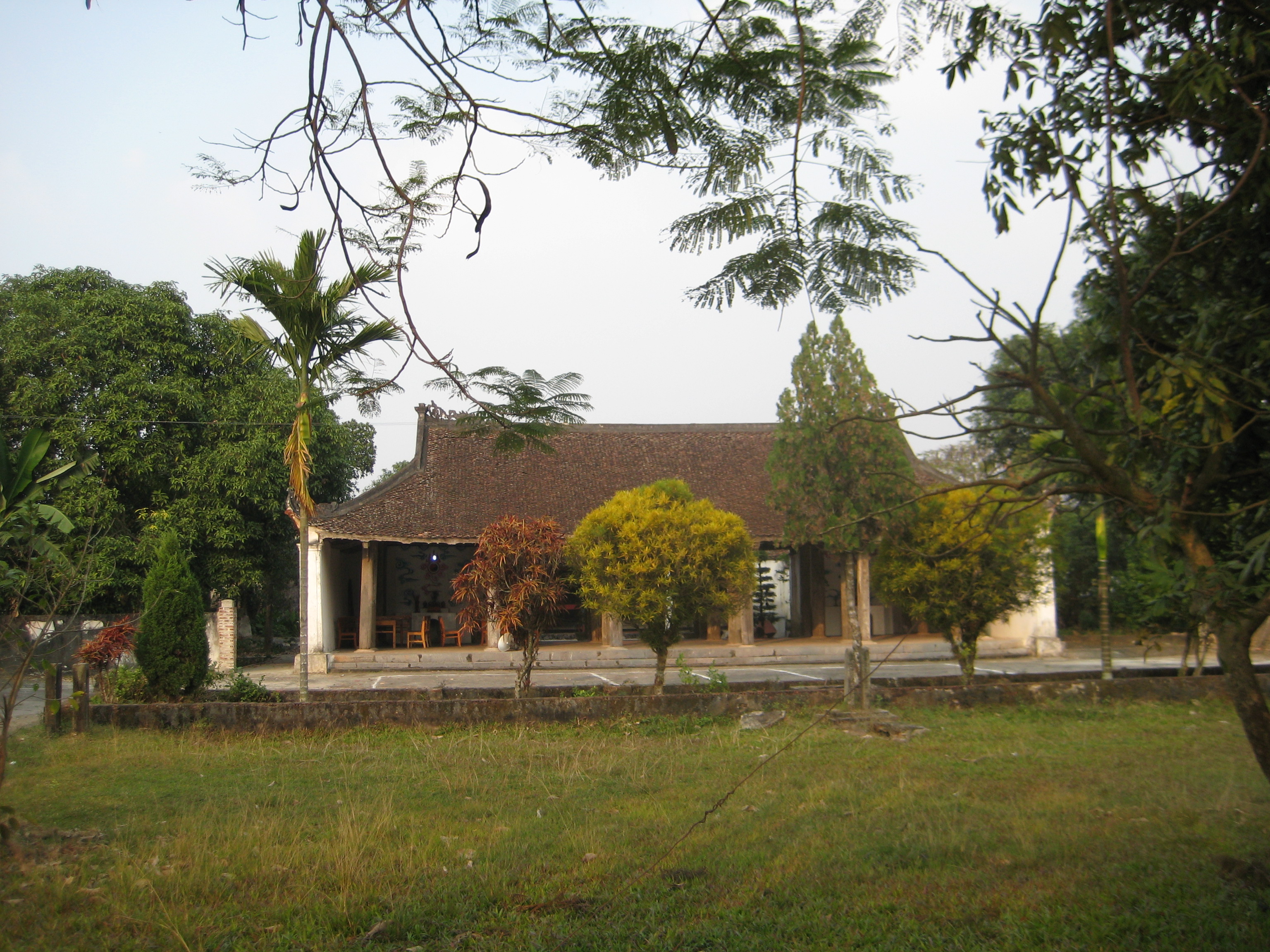
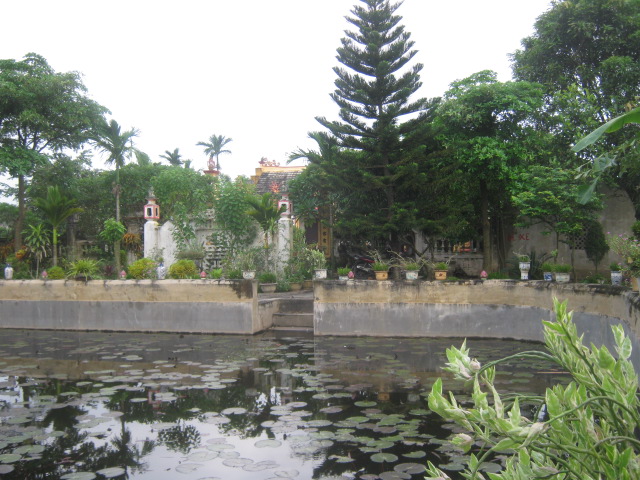
In Nam Định Province, Triệu Việt Vương is honored at:
- Chùa Độc Bộ in Ý Yên District.
- A temple in the new land of Nam Điền Commune, Nghĩa Hưng District, near the Đáy River mouth.
- Đồng Quỹ Village Temple in Nam Tiến Commune, Nam Trực District, a National Historic Site, where an annual festival is held from the 11th to the 14th day of the 8th lunar month.
- Kiên Lao Village Temple in Xuân Kiên Commune, Xuân Trường District, also a National Historic Site, with an annual festival from the 5th to the 6th day of the 1st lunar month.
- Chùa Thiên Biên Tự in Hải Thanh Commune, Hải Hậu District.
- Phúc Lộc Village Temple in Hải Lộc Commune, Hải Hậu District.
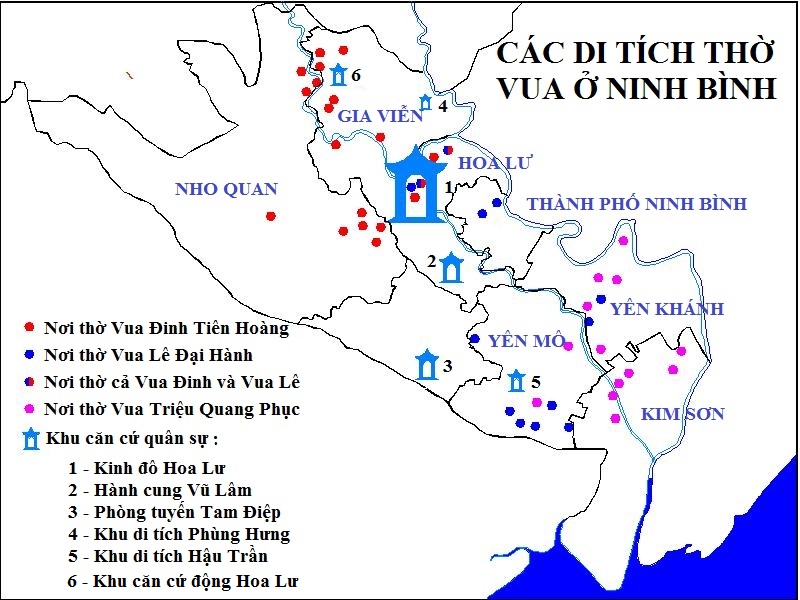
Ninh Bình Province boasts the highest number of shrines dedicated to Triệu Việt Vương:
- In Kim Sơn District, located at the mouth of the Đáy River: Đình Chất Thành (Chất Bình), Đình làng Kiến Thái, Đình làng Kim Chính, Đền làng Yên Thổ (Kim Chính), Miếu Thượng (Thượng Kiệm), Miếu Ứng Luật (Quang Thiện), Đình làng Chỉ Thiện (Xuân Chính), Đình xã Lưu Phương, and Chùa Hòa Lạc (Như Hòa).
- In the cultural area of Thần Phù Estuary, Yên Lâm Commune, Yên Mô District: Đình Phù Sa, Đình Đông Cao, and Đền Nhân Phẩm, all recognized as National Cultural Relics.
- In Yên Từ Commune: Miếu Quảng Từ, Đền Phúc Lại, and a temple dedicated to Triệu Việt Vương.
- At the confluence of the Hoàng Long River and Hoa Lư: Đền La Phù, Đình La Phù, Đền Triệu Việt Vương, and Đình Bạch Cừ (Ninh Khang Commune).
- In Gia Viễn District: Đình Cung Quế (Gia Trấn), Đình Thần Thiệu (Gia Tân), Đền Sào Long, and Đền Đồng Mỹ (Gia Lập).
- In Yên Khánh District, an area historically near the sea but now inland: Đền Duyên Phúc (Khánh Hồng), Đền Triệu Việt Vương (Yên Ninh Town), Đền Tiên Yên, Chùa Kim Rong (Khánh Lợi), Đền Đông, Đền Triệu Việt Vương (Khánh Hải), and Đình Tiền Tiến (Khánh Tiên).
In Hưng Yên Province:
- Đền Hóa Dạ Trạch in Dạ Trạch Commune, Khoái Châu District, features an altar dedicated to Triệu Việt Vương alongside that of Chử Đồng Tử.
- In 2012, a dedicated temple for Triệu Việt Vương, also known as Đền Vua Rừng (Forest King Temple), was built in An Vỹ Commune, Khoái Châu District (adjacent to Dạ Trạch Commune). This site is traditionally believed to be where he stored provisions and trained his troops. The temple also honors his parents, wives, and supporting generals. An annual festival is held here on the 12th day of the 8th lunar month. In 2015, then-President Trương Tấn Sang visited and offered incense at the temple.
- Hưng Yên Province is also constructing another new temple specifically for Triệu Việt Vương near Đền Hóa Dạ Trạch.
Beyond religious sites, Triệu Việt Vương's name is also used for various public works, including streets and schools, signifying his enduring presence in contemporary Vietnamese society.
7. Associated Figures
Several key individuals played significant roles in the life and campaigns of Triệu Việt Vương, contributing to the resistance against foreign rule and shaping the course of the Vạn Xuân kingdom.
- Triệu Túc (Triệu Túc趙肅Vietnamese): Triệu Việt Vương's father, a senior military leader and Thái phó (Grand Tutor) under Lý Nam Đế. He was a crucial figure in the early resistance against the Liang dynasty and entrusted his son with the leadership of the forces.
- Lý Nam Đế (Lý Nam Đế李南帝Vietnamese): Born Lý Bôn, he was the initial leader of the Vietnamese uprising against the Liang dynasty and the founder of the Vạn Xuân kingdom. He appointed Triệu Quang Phục as Tả tướng quân and later entrusted him with the future of the nation.
- Lý Thiên Bảo: Lý Nam Đế's elder brother, who became the de facto ruler of Vạn Xuân after Lý Nam Đế's death. His passing without heirs led to Triệu Việt Vương's election as king.
- Lý Phật Tử (Lý Phật Tử李佛子Vietnamese): Lý Thiên Bảo's cousin and a rival to Triệu Việt Vương. He challenged Triệu Việt Vương's rule, leading to a civil war, a territorial division, and ultimately, Triệu Việt Vương's defeat and death. He later proclaimed himself Hậu Lý Nam Đế (Later Lý Nam Đế).
- Trần Bá Tiên (Trần Bá Tiên陳霸先Vietnamese): A highly skilled general of the Liang dynasty who led the invasion of Vạn Xuân. He was a formidable opponent whom Triệu Việt Vương successfully resisted through guerrilla tactics. He later became Emperor Wu of Chen, founding the Chen dynasty in China.
- Dương Sàn: A subordinate general of Trần Bá Tiên, left in charge of Liang forces in Vietnam after Trần Bá Tiên was recalled to China. He was defeated and killed by Triệu Việt Vương's forces.
- Nhã Lang (Nhã Lang雅郎Vietnamese): Lý Phật Tử's son and Triệu Việt Vương's son-in-law. According to legend, he betrayed Triệu Việt Vương by stealing the magical dragon claw, leading to his father's victory.
- Cảo Nương (Cảo Nương杲娘Vietnamese): Triệu Việt Vương's daughter, who married Nhã Lang. She is a central figure in the "dragon claw helmet" legend, depicted as unwittingly aiding her husband's deception.
- Chử Đồng Tử (Chử Đồng Tử楮童子Vietnamese): A mythical immortal figure in Vietnamese folklore. In legend, he bestowed the magical dragon claw upon Triệu Việt Vương.
- Đức thánh Tam Giang (Đức thánh Tam GiangĐức thánh Tam GiangVietnamese): A collective term for the "Three Rivers Saints," including Trương Hống (Trương Hống張弘Vietnamese) and Trương Hát (Trương Hát張喝Vietnamese). These generals are said to have served Triệu Việt Vương and are worshipped in villages along the Cầu River, Thương River, and Đuống River. They are also believed to have warned Triệu Việt Vương against the marriage alliance with Lý Phật Tử's family.
- Phùng Kim: A general who served Triệu Việt Vương, worshipped alongside him at the Tiên Yên Temple and Kim Rong Pagoda in Khánh Lợi Commune, Yên Khánh District, Ninh Bình Province.
- Đinh Bính Công: Another general who supported Triệu Việt Vương, commemorated at Đình Yên Mẫu in Bắc Ninh City, Bắc Ninh Province, a National Historic Site.