1. Overview
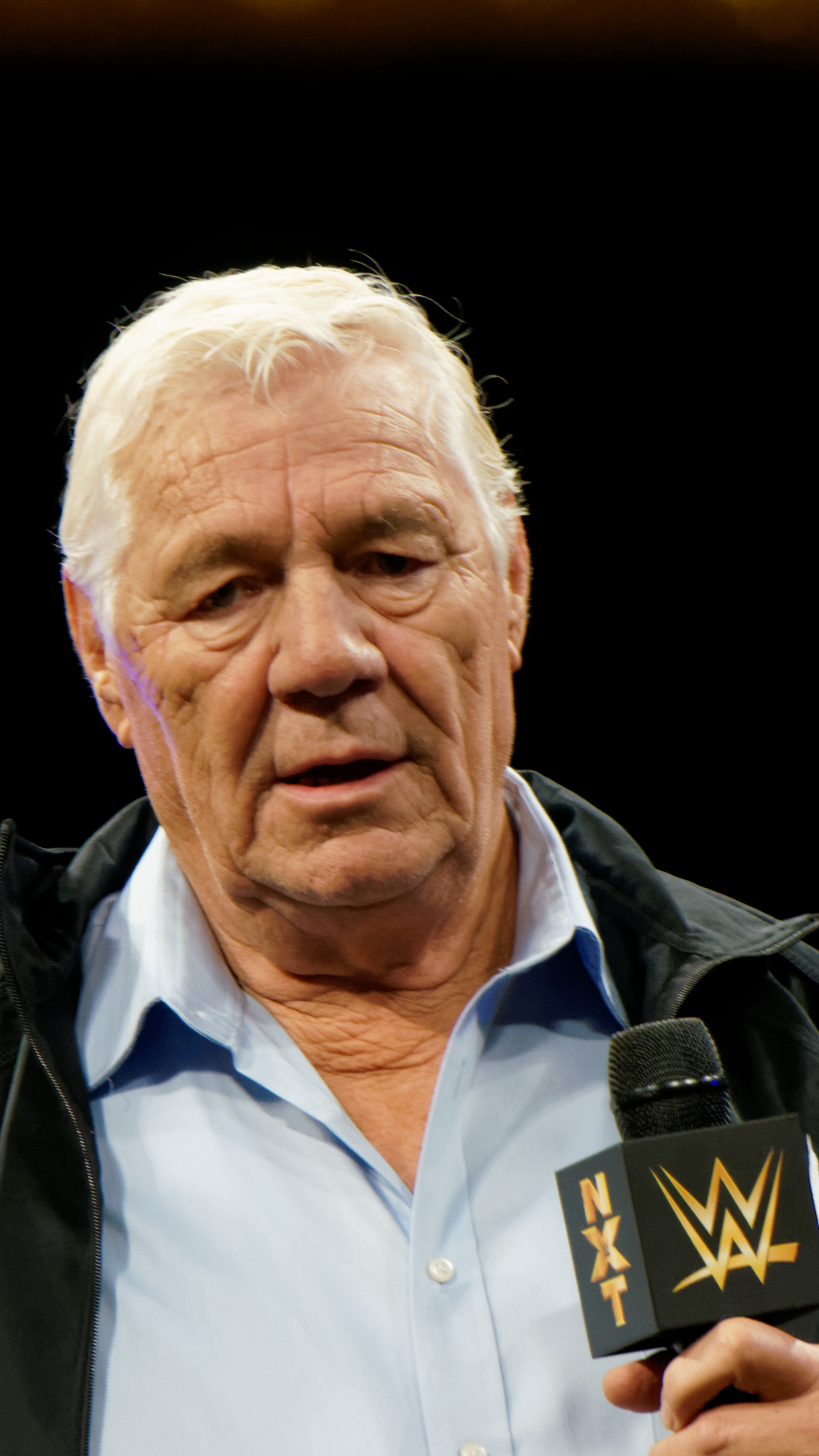
Pat Patterson, born Pierre Clermont on January 19, 1941, in Montreal, Quebec, Canada, was a highly influential Canadian-American professional wrestler and producer. He is widely recognized for his extensive career with the WWE, initially as a groundbreaking wrestler and later as a pivotal creative consultant and producer. Patterson is officially credited by the company as its first Intercontinental Champion and as the visionary creator of the iconic Royal Rumble match. His significant contributions to professional wrestling were recognized with his induction into the WWE Hall of Fame in 1996.
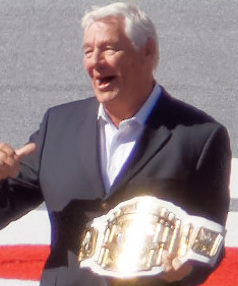
Beyond his in-ring and backstage achievements, Patterson made history as the oldest person to win a title in WWE, capturing the WWE 24/7 Championship at the age of 78 in 2019. Journalist Dave Meltzer lauded him as "Vince McMahon's right-hand man" and "one of the chief architects of the WWE," playing an indispensable role in transforming it into a global phenomenon. Pat Patterson was also a trailblazing figure as the first openly gay professional wrestling star, navigating a challenging environment and becoming an important symbol of progress in sports entertainment. He passed away on December 2, 2020, in Miami, Florida.
2. Early Life and Background
Pat Patterson's journey into professional wrestling began in his formative years, shaped by his family background and early experiences in Canada before he ventured into the United States.
2.1. Birth and Upbringing
Pierre Clermont was born on January 19, 1941, into an impoverished French-speaking family in the Ville-Marie borough of Montreal, Quebec, Canada. He was raised as a Roman Catholic and served as an altar boy. Patterson once expressed an interest in becoming a priest himself, but a priest advised him against it, stating he was "too adventurous."
2.2. Immigration and Early Career Preparation
Patterson began training to wrestle at the age of 14 at Loisirs Saint Jean Baptiste, trained by Pat Girard. In 1961, despite not speaking any English, he immigrated to the United States to pursue his professional wrestling career. He eventually became a U.S. citizen. While living and working in Boston, Massachusetts, where he initially worked for Tony Santos's Big Time Wrestling promotion, Patterson met his long-term partner, Louie Dondero.
3. Professional Wrestling Career
Pat Patterson's professional wrestling career was remarkably extensive, encompassing various roles from an innovative in-ring performer to a crucial backstage creative force and executive.
3.1. Debut and Early Career
Patterson made his professional wrestling debut in 1958 in his hometown of Montreal, Quebec, wrestling at the Palais des Sports for promoter Sylvio Samson. Early in his career, he performed under the ring name "Killer" Pat Patterson. He later adopted the persona of "Pretty Boy" Pat Patterson, an effeminate wrestler who would wear lipstick, pink trunks, sunglasses, and a beret, sometimes even bringing a pet poodle to the ring, to enhance his gimmick. He was also known by the ring name Le Rêve du QuébecThe Dream of QuebecFrench. Patterson stood 6 in tall and weighed 240 lb (240 lb).
3.2. Career in Major North American Promotions
Patterson's career saw him achieve significant success and championship reigns across various prominent wrestling territories throughout North America.
3.2.1. Pacific Northwest Wrestling (PNW)
In 1962, Patterson was recruited by Mad Dog Vachon to join Don Owen's Portland, Oregon-based Pacific Northwest Wrestling promotion. With the encouragement of PNW promoter Harry Elliot, who was aware of Patterson's homosexuality, Patterson further developed his "Pretty Boy" character. In 1963, Patterson wrestled for promotions in Texas, Arizona, and Oklahoma as part of a talent exchange organized by Owen. He returned to Pacific Northwest Wrestling in 1964, where he held the NWA Pacific Northwest Tag Team Championship on two occasions that year. On October 2, 1964, Patterson defeated Pepper Martin for the NWA Pacific Northwest Heavyweight Championship, holding it for six weeks before losing it back to Martin. He won the championship again in 1965 and 1966, accumulating a total of three reigns.
3.2.2. Big Time Wrestling (San Francisco) and The Blond Bombers
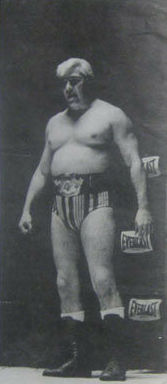
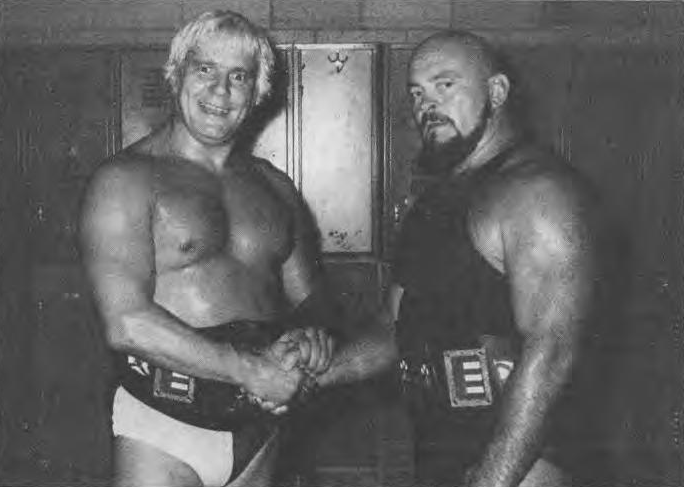
In January 1965, Patterson was hired by Roy Shire for his San Francisco, California-based Big Time Wrestling promotion, billed from San Francisco, California. At Shire's request, Patterson dyed his hair blond to form a highly successful tag team with Ray Stevens, known as The Blond Bombers. This duo won the NWA World Tag Team Championship in 1965 and again in 1967. The Blond Bombers were lauded by Bret Hart as "considered by many to be the best tag team of the 1970s." Patterson also achieved significant success as a singles competitor in San Francisco, holding the NWA United States Heavyweight Championship (San Francisco version) six times between 1969 and 1977, defeating notable opponents like Pedro Morales, Rocky Johnson, The Great Mephisto, Moondog Lonnie Mayne, The Brute, Angelo Mosca, and Alex Smirnoff. His NWA World Tag Team Championship reigns in San Francisco totaled 15, with partners including Ray Stevens (2), Superstar Billy Graham (2), Paul DeMarco (1), Pedro Morales (1), Pepper Gomez (1), Peter Maivia (2), Moondog Mayne (1), Rocky Johnson (4), and Tony Garea (1).
In 1968, Patterson wrestled for NWA Western States Sports in Amarillo, Texas, under the name Lord Patrick Patterson, where he won the NWA North American Heavyweight Championship (defeating Pat O'Connor in a tournament final on October 24) and the NWA Brass Knuckles Championship (defeating Thunderbolt Patterson on July 18). After Stevens turned face in the late 1960s, he engaged in a feud with the heel Patterson, culminating in a Texas Death match where Stevens won the title from Patterson. In 1970 and 1971, Patterson wrestled wearing a mask, often cheating by concealing a foreign object under it to enhance his headbutts. He turned face again in 1972 following a feud with Lars Anderson, who was managed by Dr. Ken Ramey. Later that year, he teamed with Rocky Johnson to win the tag team championship. Patterson also won the Cow Palace Battle Royal in San Francisco in both 1975 and 1981.
3.2.3. Championship Wrestling from Florida (CWF)
In 1977, Patterson wrestled for Eddie Graham's Tampa, Florida-based Championship Wrestling from Florida promotion. During this period, he won the NWA Florida Television Championship from Mike Graham on May 20, and the NWA Florida Tag Team Championship with Ivan Koloff on June 20, defeating Jack Brisco and Jerry Brisco. He also briefly served as a booker for the promotion.
3.2.4. American Wrestling Association (AWA)
In 1978, Patterson joined Verne Gagne's Minneapolis, Minnesota-based American Wrestling Association. He reformed The Blond Bombers with Ray Stevens, and the duo won the AWA World Tag Team Championship on September 23, 1978. They successfully defended the title against teams such as Mighty Igor & Rufus R. Jones, Paul Ellering & Steve Olsonoski, Verne Gagne & Bill Robinson, and the former champions The High Flyers (Greg Gagne & Jim Brunzell). They held the championship until June 6, 1979, when they were defeated by Verne Gagne & Mad Dog Vachon. Patterson performed intermittently for the AWA until 1983.
3.3. International Career
Pat Patterson also had notable professional wrestling activities and appearances outside of North America, particularly in Japan.
3.3.1. New Japan Pro-Wrestling (NJPW)
Patterson made his first tour of Japan in April 1968, participating in the 10th World League Tournament for Japan Pro-Wrestling. During this tour, he faced prominent Japanese wrestlers such as Giant Baba, Antonio Inoki, Kintaro Ohki, and Michiaki Yoshimura, while securing victories over Kotetsu Yamamoto, Kantaro Hoshino, Mitsu Hirai, and Duke Keomuka. On May 7, 1968, in Kumamoto, he teamed with Jess Ortega to challenge Kintaro Ohki & Michiaki Yoshimura for the Asia Tag Team Championship.
He later toured Japan with New Japan Pro-Wrestling (NJPW) multiple times. In December 1973, he arrived as the NWA North American Tag Team Champion (Los Angeles/Japan version) with Johnny Powers, defending their title against Antonio Inoki & Seiji Sakaguchi on December 7 at the Osaka Prefectural Gymnasium. Patterson continued to participate in NJPW tours, and in 1976, he teamed with Larry Hennig to challenge Seiji Sakaguchi & Strong Kobayashi for the North American Tag Team Championship on December 8 in Yokohama. His third tour in 1977 saw him challenge Antonio Inoki for the NWF Heavyweight Championship on December 1 at the Osaka Prefectural Gymnasium, and on December 8, he re-challenged Sakaguchi & Kobayashi for the North American Tag Team Championship, this time with Steve Wright as his partner, at the Kuramae Kokugikan.
In November 1979, Patterson returned to NJPW as the WWF North American Heavyweight Champion. On November 8 in Otaru, he lost the title to Seiji Sakaguchi, after which the championship came under NJPW's management until its retirement in 1981. His final tour as an active wrestler in Japan was in November 1981, when he participated in the 2nd MSG Tag League alongside Bad News Allen. Although they achieved a draw against formidable opponents like Stan Hansen & Dick Murdoch, Patterson departed the tournament prematurely. He would return to Japan on March 1, 2002, as a road agent for WWF's first standalone Japanese event, "SmackDown Tour Japan."
Patterson also made a professional return to Quebec in 1980, wrestling a number of bouts for the Montreal-based Lutte Internationale promotion. He held the Canadian International Tag Team Championship on five occasions between 1980 and 1983, partnering with Raymond Rougeau (2 times) and Pierre Lefebvre (3 times).
3.4. World Wrestling Federation / WWE
Pat Patterson's longest and most impactful tenure was with the World Wrestling Federation (WWF), later known as World Wrestling Entertainment (WWE), where he left an indelible mark both as a performer and a crucial backstage figure.
3.4.1. Debut and Early Championships
In 1979, Patterson debuted in the World Wrestling Federation (WWF) as a heel, under the tutelage of manager The Grand Wizard. As a villain, Patterson's primary feuds were with then WWF North American Champion Ted DiBiase and WWF Heavyweight Champion Bob Backlund. During a television taping on June 19 in Allentown, Pennsylvania, Patterson defeated DiBiase for the WWF North American Championship by using a pair of brass knuckles to knock out DiBiase. However, Patterson was unsuccessful in winning the WWF Heavyweight Championship from Backlund.
3.4.2. Backstage Contributions and Creative Activities
Patterson transitioned to working backstage as a road agent and became a trusted right-hand man to WWF promoter Vince McMahon.
3.4.3. Later Career and Special Appearances
At Breaking Point, Patterson made an appearance in his hometown of Montreal in an in-ring segment with Dolph Ziggler. Patterson was also a regular cast member on the WWE Network original reality show Legends' House.
On July 22, 2019, during the Raw Reunion episode, Patterson won the WWE 24/7 Championship by pinning Drake Maverick backstage. He would lose the title to Gerald Brisco off-screen later that same night. At 78 years old, he became the oldest person ever to win a title in WWE history, surpassing The Fabulous Moolah's fourth reign with the original WWF Women's Championship at 76 years old. It was also Patterson's first title reign since June 19, 2000, with the similarly introduced WWF Hardcore Championship, which also used the "24/7 rule". He was only the second person ever to win both the 24/7 and Hardcore Championships, after R-Truth. Patterson continued to work backstage as a WWE official from 2005 until his death in 2020.
4. Personal Life
Pat Patterson's personal life was marked by his identity as an openly gay man, a pioneering stance in the world of professional wrestling, and the challenges he faced as a result.
4.1. Life as an Openly Gay Man and Social Significance
Patterson was openly gay, having come out in the early 1970s. For decades, his sexuality was not publicly acknowledged or integrated into WWE storylines until the finale of WWE Legends' House, which aired on June 12, 2014, where he emotionally spoke about his identity. However, on the May 10, 1999, episode of Raw, commentator Jim Ross made a subtle acknowledgment, commenting "and he's single fellas" in response to a shirtless Patterson celebrating a win over the Mean Street Posse. NBC News described Patterson as "the first openly gay pro wrestling star," and People magazine similarly hailed him as the "First Gay Wrestling Star," recognizing his significant impact as a pioneering figure in sports entertainment.
4.2. Partnership and Personal Relationships
Patterson's longtime partner was Louie Dondero. They were together for 40 years, a relationship that Patterson openly discussed on WWE Legends' House. Dondero tragically died of a heart attack on June 28, 1998, the same night as the King of the Ring pay-per-view event. Documents later disclosed through Freedom of Information Act requests suggested that Dondero also acted as Patterson's agent and that they had an open relationship.
4.3. Government Investigation and Deportation Threat
In the 1960s, following the end of the main part of the Lavender scare, the Justice Department's Immigration and Naturalization Service (INS) spent several years, from late 1964 onwards, actively seeking evidence of "homosexual activity" in order to have Patterson deported back to Canada. Documents revealed that the Portland Police Bureau's Morals Division had reported Patterson's presence at "gay parties" and gay bars in the city, and that Patterson was known to pick up male prostitutes in Portland. The documents also described interviewees' suspicions about Louie Dondero being Patterson's romantic partner and agent. The same documents revealed that the United States Air Force Office of Special Investigations was investigating another wrestler suspected of being gay, with a view to discharging him; this wrestler subsequently denounced Patterson to the INS before retracting his statement.
In November 1966, the INS initiated deportation proceedings against Patterson, leading to an interview where he was questioned about his effeminacy, dyed hair, whether he was homosexual, and whether "he molested little boys." In December 1966, Patterson was served with a deportation notice, requiring him to leave the United States on or before January 10. However, Patterson was fighting again in Arizona just four days later, indicating he did not comply. After Patterson's application for a green card in 1971, journalist's dossier of Freedom of Information responses showed nothing further until his successful naturalization in 2002, suggesting that the deportation efforts were eventually unsuccessful.
4.4. Health and Later Years
In August 2006, Patterson underwent emergency heart surgery to remove a cyst from his coronary artery. By October of the same year, he had recovered from the operation and was released from the hospital. In 2008, he legally changed his name to Pat Patterson.
5. Death
Pat Patterson died of liver failure, caused by a blood clot, at a Miami, Florida, hospital on December 2, 2020. He was 79 years old. Following his passing, numerous figures throughout the wrestling world paid their respects to Patterson, recognizing his immense contributions both as an in-ring performer and as a crucial behind-the-scenes figure.
6. Legacy and Impact
Pat Patterson left an indelible mark on the world of professional wrestling, not only through his in-ring performances but also as a creative innovator and a significant social figure.
6.1. Innovator in Professional Wrestling
Patterson is widely celebrated as a creative genius behind the scenes, most notably for conceiving the Royal Rumble match, which revolutionized battle royal concepts and became one of WWE's most anticipated annual events. His influence extended to wrestling storytelling and match structure, where he played a key role in shaping the narrative and in-ring action, particularly during the Attitude Era of the WWF. He was considered a primary producer during this period, contributing significantly to the company's creative direction.
6.2. Historical Evaluation and Influence
Described as Vince McMahon's "right-hand man" and "one of the chief architects of the WWE," Patterson was integral in helping the company become a global phenomenon. His humanistic and supportive personality earned him great trust within the WWE leadership. For instance, during Antonio Inoki's early struggles in America due to language barriers, Patterson, who also initially spoke no English, extended significant help and friendship, taking Inoki out for meals and offering support. Inoki deeply appreciated this kindness, leading him to frequently invite Patterson to New Japan Pro-Wrestling and even feature him as a challenger for the NWF Heavyweight Championship. Their reunion in 2010 when Inoki was inducted into the WWE Hall of Fame highlighted their enduring bond. Beyond wrestling, Patterson also possessed notable singing talent, releasing a CD in 2009 and famously performing Louis Armstrong's "What a Wonderful World" on WWE television, showcasing his diverse abilities. His journey as the first openly gay professional wrestling star further cemented his legacy as a trailblazer, breaking barriers and inspiring others in the sports entertainment industry.
7. Championships and Accomplishments
- American Wrestling Association
- AWA World Tag Team Championship (1 time) - with Ray Stevens
- Big Time Wrestling (San Francisco)
- NWA United States Heavyweight Championship (San Francisco version) (6 times)
- NWA World Tag Team Championship (San Francisco version) (15 times) - with Ray Stevens (2), Superstar Billy Graham (2), Paul DeMarco (1), Pedro Morales (1), Pepper Gomez (1), Peter Maivia (2), Moondog Mayne (1), Rocky Johnson (4), and Tony Garea (1)
- Cauliflower Alley Club
- Art Abrams Lifetime Achievement Award (2008)
- Other honoree (1995)
- Championship Wrestling from Florida
- NWA Florida Tag Team Championship (1 time) - with Ivan Koloff
- NWA Florida Television Championship (1 time)
- Lutte Internationale
- Canadian International Tag Team Championship (5 times) - with Raymond Rougeau (2) and Pierre Lefebvre (3)
- NWA Hollywood Wrestling
- NWA Americas Heavyweight Championship (1 time)
- New Japan Pro-Wrestling
- NWA North American Tag Team Championship (Los Angeles/Japan version) (1 time) - with Johnny Powers
- NWA Western States Sports
- NWA Brass Knuckles Championship (Amarillo version) (1 time)
- NWA North American Heavyweight Championship (Amarillo version) (1 time)
- Pacific Northwest Wrestling
- NWA Pacific Northwest Heavyweight Championship (3 times)
- NWA Pacific Northwest Tag Team Championship (2 times) - with Tony Borne (1) and The Hangman (1)
- Pro Wrestling Illustrated
- PWI Stanley Weston Award (2004)
- PWI Ranked him #110 of the 500 best singles wrestlers of the PWI Years in 2003.
- Professional Wrestling Hall of Fame
- Class of 2006 - as a member of The Blond Bombers
- World Championship Wrestling
- IWA World Tag Team Championship (1 time) - with Art Nelson
- World Wrestling Federation/WWE
- WWE 24/7 Championship (1 time)
- WWF Hardcore Championship (1 time)
- WWF North American Heavyweight Championship (1 time)
- WWF Intercontinental Heavyweight Championship (1 time, inaugural)
- WWF Hall of Fame (Class of 1996) - inducted by Bret Hart
- Wrestling Observer Newsletter
- Match of the Year (1981) vs. Sgt. Slaughter in an Alley Fight on April 21, 1981
- Worst Match of the Year (2000) vs. Gerald Brisco at King of the Ring on June 25, 2000, in Boston, Massachusetts
- Wrestling Observer Newsletter Hall of Fame (Class of 1996)
8. Bibliography
Patterson authored his autobiography titled Accepted: How the First Gay Superstar Changed WWE, which was published on August 9, 2016.