1. Early Life and Background
Ma Zhanshan's early life was characterized by humble beginnings and a gradual ascent through the military ranks, laying the foundation for his later prominence in Chinese history.
1.1. Childhood and Education
Ma Zhanshan was born on November 30, 1885, in Huaide County (present-day Gongzhuling) in Jilin province, which was then part of Fengtian Province (now Liaoning Province). He came from a poor shepherding family. While some Western sources suggest he was born in Liaoning in 1887, most accounts confirm 1885 as his birth year. He was of Manchu heritage, a fact confirmed by his grandson, Ma Zhiwei, a member of the Chinese People's Political Consultative Conference. At the age of 20, Ma Zhanshan began his career as a security guard in Huaide County. Although some British diplomatic documents described him as one of the "bandit" military men who received no formal training or modern military knowledge, he was widely recognized for his exceptional marksmanship and equestrian skills.
1.2. Early Military Career
Ma Zhanshan's military career began in 1908 when he was promoted to Guard Monitor of the 4th Security Guard Battalion by Wu Junsheng, who was then Commander of the Tianhou Road Patrol and Defense Battalion of Mukden. In 1913, he was appointed as a Major and Company Commander of the 3rd Company, 3rd Regiment, 2nd Brigade of the Central Cavalry Army in the Army of the Republic of China. By 1920, he had been promoted to colonel and continued to serve under his patron, the warlord Wu Junsheng.
He later joined Zhang Zuolin's Northeastern Army, where he served as a brigade commander of the 5th Cavalry Brigade, 17th Cavalry Division, and subsequently as a brigadier of the 3rd Infantry Brigade of the Heilongjiang Army. After Zhang Zuolin's death in 1928, Ma Zhanshan was nominated as Heilongjiang Provincial Bandit Suppression Commander and Heilongjiang Provincial Cavalry Commander-in-chief in the same year. His experience as a "bandit" and his mastery of guerrilla tactics would later earn him the moniker "Napoleon of the East" among Japanese military personnel.
2. Resistance during the Japanese Invasion of Manchuria
Ma Zhanshan played a pivotal role in the initial resistance against the Japanese invasion of Manchuria, distinguishing himself through his defiance and leadership in critical military engagements.
2.1. Appointment and Initial Defiance
Following the Mukden Incident in September 1931, when the Japanese Kwantung Army invaded Liaoning and Jilin provinces, Wan Fulin, the Governor of Heilongjiang Province, was absent in Beijing, leaving a power vacuum. Zhang Xueliang, seeking guidance from the Nanjing Government, appointed Ma Zhanshan as the acting Governor and Military Commander-in-chief of Heilongjiang Province on October 10, 1931. Ma arrived in the provincial capital, Qiqihar, on October 19 and officially took office the next day. He immediately convened military meetings and personally inspected defense positions. Despite facing pressure from factions advocating surrender, Ma Zhanshan firmly declared, "I am appointed as Chairman of the province, and I have the responsibility to defend the province and I will never be a surrendering general." He initiated armed conflict by destroying the Nen River Bridge to impede the Japanese advance.
2.2. The Jiangqiao Campaign
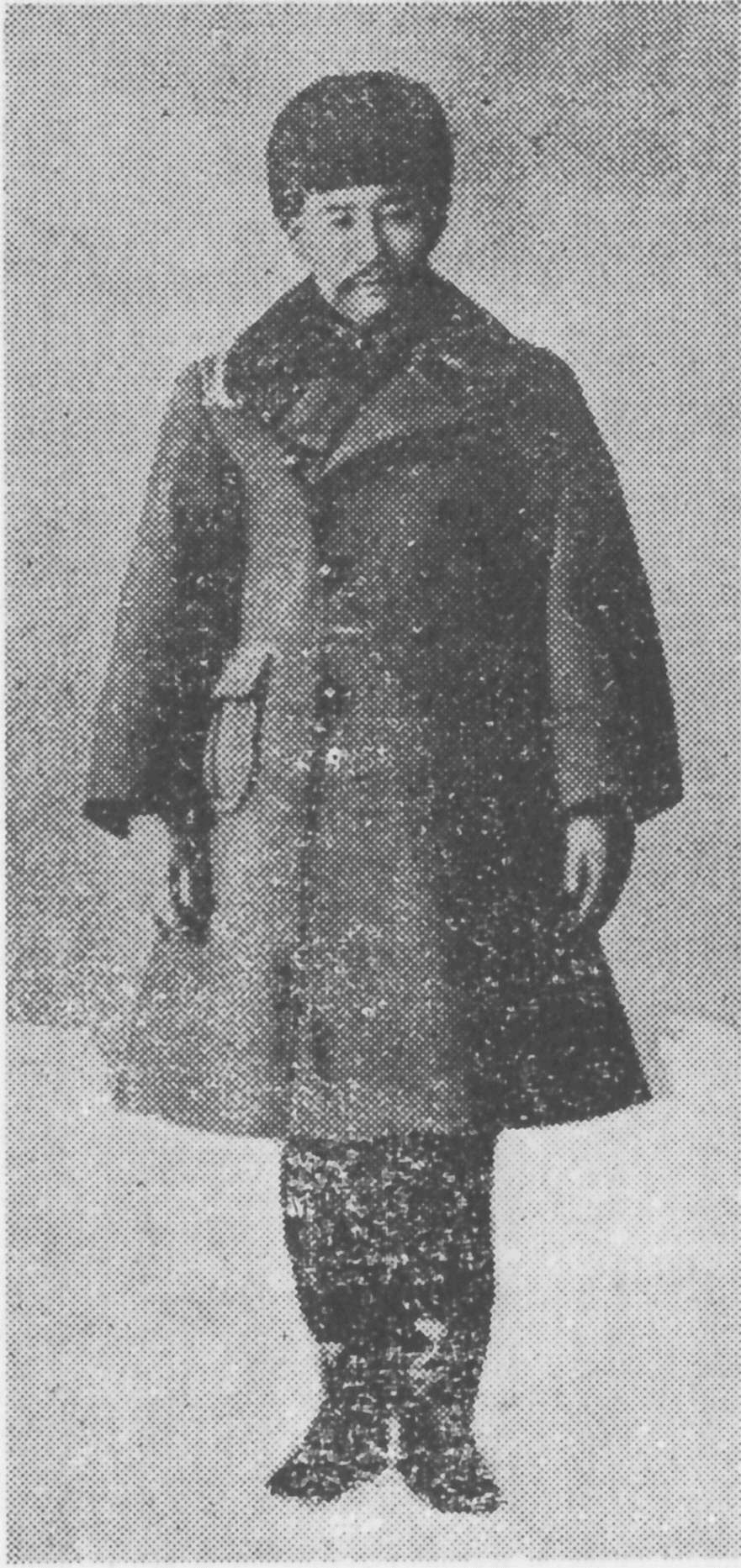
The Japanese, determined to repair the Nen River Bridge, dispatched a repair crew accompanied by 800 soldiers. This led to the Battle of Nenjiang Bridge, where 2,500 Chinese troops under Ma Zhanshan were stationed nearby. Both sides accused the other of initiating fire, marking the beginning of the Jiangqiao Campaign. Although Ma Zhanshan's forces were eventually compelled to withdraw in the face of superior Japanese tanks and artillery, his courageous resistance earned him widespread acclaim as a national hero. His actions were extensively reported in both the Chinese and international press, bringing him global recognition. Inspired by Ma's example, Ding Chao and other senior commanders continued resistance efforts in cities like Harbin in Jilin province. His successes also motivated local Chinese populations to support or enlist in his forces. On November 18, Ma evacuated Qiqihar. However, after General Ding Chao was driven from Harbin, Ma's forces suffered significant casualties and were eventually forced to retreat across the border into the Soviet Union. Ma Zhanshan appealed to the League of Nations via telegram, seeking assistance against the Japanese invasion, and received 2.00 K USD from Chinese communities in America to support his fight.

3. Role in Manchukuo and Subsequent Rebellion
Ma Zhanshan's period of temporary collaboration with the Japanese-backed Manchukuo regime was a complex and strategic phase, ultimately leading to his dramatic defection and leadership of anti-Japanese guerrilla forces.
3.1. Temporary Defection and Appointment
Due to his fame and heroic efforts in resisting the Japanese invasion, Colonel Kenji Doihara of the Kwantung Army offered Ma Zhanshan a substantial sum of 3.00 M USD in gold to defect to the newly formed Manchukuo Imperial Army. Ma Zhanshan agreed to the offer, proposing to tour the country to reconcile the local inhabitants with the new government. In January 1932, he flew to Shenyang (then known as Fengtian) and participated in the meeting that led to the establishment of the puppet state of Manchukuo. Although he was ill at the time and avoided signing the Independence Declaration of Manchukuo, he attended the inaugural ceremony of Pu Yi as Regent of Manchukuo in March of the same year. Under the new Manchukuo government, Ma Zhanshan was appointed as Minister of War and Governor of Heilongjiang Province. However, the Japanese did not fully trust Ma or other Manchukuo officials, requiring him to seek approval from his Japanese advisor for all provincial matters before taking any action. Japanese officials like Seishirō Itagaki and Han Yunjie were involved in persuading him to join. The establishment of Manchukuo was expedited to create a fait accompli before the arrival of the Lytton Commission, which was investigating the Manchurian Incident.
3.2. Rebellion and Formation of Anti-Japanese Forces
Ma Zhanshan had secretly planned to rebel against the Japanese after his "defection." He strategically used the large sums of Japanese money he received to raise and re-equip his new volunteer force with munitions. He clandestinely transported weapons and ammunition out of arsenals and ensured the safe evacuation of his troops' wives and families. On April 1, 1932, he led his troops out of Qiqihar under the pretense of an inspection tour. However, on April 7, at Heihe, he publicly announced the reestablishment of the Heilongjiang Provincial Government and declared his independence from Manchukuo. This act was seen by some as a betrayal due to the lack of rewards within Manchukuo, but it was primarily a strategic move to continue his anti-Japanese struggle.
In early May, Ma Zhanshan reorganized his troops into nine brigades and established an additional 11 volunteer units in areas such as Buxi, Gannan County, Keshan County, and Kedong. This formidable force was named the "Northeast Anti-Japanese National Salvation Army." Ma appointed himself as its nominal Commander-in-chief, absorbing other Anti-Japanese Volunteer Armies in the region, which at its peak commanded a total fighting force of approximately 300,000 men. The Lytton Commission had hoped to meet with Ma Zhanshan, but this meeting never materialized.
The units under Ma Zhanshan conducted effective ambushes along major roads, significantly weakening Manchukuo and Japanese troops in several engagements. His guerrilla tactics were highly effective, leading to daring operations such as a raid on the Manchukuo treasury, attacks on the capital Changchun, and the hijacking of six Japanese planes from an airfield. The Japanese launched a "Ma Chan-shan Subjugation Operation," transferring a large mixed force of Japanese and Manchukuo troops to encircle and destroy Ma's army. Despite being seriously depleted from previous battles, Ma Zhanshan's troops managed to escape due to the laxity of the Manchukuo forces.
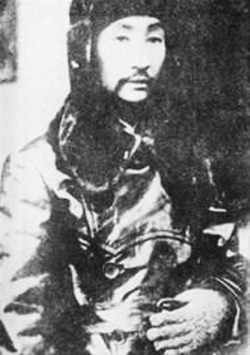
General Ma caused such considerable trouble for the Japanese that when his equipment and horse were captured, they were presented to the Emperor in Tokyo, under the mistaken assumption that he had been killed. The Japanese were reportedly enraged to discover that he had survived and escaped, with reports from The China Monthly Review comically noting the Japanese's persistent and varied claims of his death. In September, Ma Zhanshan arrived in Longmen County and established a relationship with the Heilongjiang National Salvation Army led by Su Bingwen. However, in the "Su Bingwen Subjugation Operation," a combined force of 30,000 Japanese and Manchukuo troops compelled Ma Zhanshan and Su Bingwen to retreat across the border into the Soviet Union in December 1932. Most of these troops were subsequently transferred to Rehe. Even after Ma's escape, his men continued their fight against the Japanese, seizing 350 Japanese and Korean hostages and kidnapping foreigners, including the son of a British general and an American executive's wife.
4. Sino-Japanese War and Continued Resistance
Ma Zhanshan's activities during the broader Second Sino-Japanese War demonstrated his unwavering commitment to national resistance, including significant political alignments and military commands.
4.1. Return to China and Political Stance
After retreating to the Soviet Union, Ma Zhanshan traveled through Europe, visiting the Germany and the Italy, before returning to China in June 1933. Upon his return, he sought assistance from Chiang Kai-shek and the Kuomintang (KMT) government to raise armies to fight the Japanese, but his requests were refused. Ma then settled in Tianjin until October 1936, when Chiang Kai-shek unexpectedly sent him to the front of the Chinese Civil War.
During the Xi'an Incident in December 1936, Ma Zhanshan was present in Xi'an. He advised Zhang Xueliang against killing Chiang Kai-shek, emphasizing the importance of national unity during a period of crisis. He also signed the "Current Political Situation Declaration" issued by Zhang Xueliang and Yang Hucheng, which called for a united front against Japan. Zhang Xueliang appointed Ma Zhanshan as the Commander-in-chief of the "Anti-Japanese Aid Suiyuan Cavalry Group Army," though this command was suspended after Zhang Xueliang's detention by Chiang Kai-shek.
Following the Marco Polo Bridge Incident in July 1937, which marked the full-scale outbreak of the Second Sino-Japanese War, Ma Zhanshan was appointed as Commander of the Northeastern Advance Force. In this role, he was responsible for the four northeastern provinces of Liaoning, Jilin, Heilongjiang, and Rehe. In August 1937, Ma Zhanshan established his headquarters in Datong and led his troops to engage the Japanese in Chahar, Suiyuan, Datong, and Shanxi. He also cooperated with Fu Zuoyi's troops in the defense of Suiyuan and during the Yinshan War.
4.2. Cooperation with the Chinese Communist Party
Ma Zhanshan held a strong aversion to the Kuomintang government's policy of non-resistance against Japan. Consequently, he aligned himself with the Chinese Communist Party's (CCP) anti-Japanese strategy. In 1939, he visited Yan'an, the CCP's revolutionary base, to establish an accommodation with the Eighth Route Army, a key Communist military force. This visit underscored his commitment to a unified national resistance, transcending political differences. In August 1940, the Chinese Communist Party secretly appointed Ma Zhanshan as Chairman of the Provisional Government of Heilongjiang, a title he held covertly until the end of the war. This covert cooperation reflected his pragmatic approach to achieving national liberation and his shift towards progressive alliances against Japanese occupation.
5. Post-War Activities and the Chinese Civil War
After the defeat of Japan in 1945, the Kuomintang government appointed Ma Zhanshan as Northeast Deputy Security Commander. He assumed this office in Shenyang. However, approximately six months later, he retired to his home in Beijing, citing illness.
In January 1949, during the final stages of the Chinese Civil War, Ma Zhanshan played a crucial role in the peaceful transfer of power in Beijing. He crossed over to the Communist Party side after successfully persuading General Fu Zuoyi, the Nationalist commander defending Beijing, to allow the city to be peacefully transferred to the Communists. This negotiation averted a potentially devastating battle and preserved Beijing's cultural heritage. Following the founding of the People's Republic of China, Mao Zedong, the Chairman of the CCP, invited Ma Zhanshan to attend the Chinese People's Political Consultative Conference in June 1950. However, due to his declining health, Ma was unable to attend.
6. Death
Ma Zhanshan died on November 29, 1950, in Beijing, at the age of 64.
7. Legacy and Evaluation
Ma Zhanshan's life and actions have been subject to both widespread acclaim and historical scrutiny, reflecting the complexities of his career during a tumultuous period in Chinese history.
7.1. Recognition as a National Hero
Ma Zhanshan is widely remembered and recognized as a significant national hero in China. His initial and resolute resistance against the Japanese invasion of Manchuria in 1931, particularly during the Jiangqiao Campaign, earned him immense popularity and admiration across the nation and internationally. He became a powerful symbol of patriotism and defiance against foreign aggression, inspiring many Chinese to join the anti-Japanese resistance. His image as a courageous and unyielding general who prioritized national interests over personal gain is deeply embedded in popular perceptions and historical narratives, including his portrayal in television dramas.
7.2. Criticism and Controversy
Despite his heroic status, Ma Zhanshan's career is marked by complexities and has been a subject of criticism and debate, particularly concerning his temporary alignment with the Japanese-backed Manchukuo regime. His "defection" to Manchukuo, although widely understood as a strategic maneuver to acquire funds and intelligence for continued resistance, was a controversial act that raised questions about his loyalties. Critics sometimes point to this period as a stain on his record, highlighting the perceived opportunism or the difficult choices faced by Chinese leaders during the Japanese occupation. However, his subsequent and swift rebellion, coupled with his consistent anti-Japanese stance throughout the broader Second Sino-Japanese War and his later cooperation with the Chinese Communist Party, often serve to mitigate these criticisms, framing his actions as a pragmatic means to an end in the larger struggle for national liberation.
8. Awards and Honors
Ma Zhanshan received significant military honors for his service and contributions to China.

Ribbon of the Order of Blue Sky and White Sun - Recipient of the Order of Blue Sky and White Sun on January 1, 1946.