1. Overview
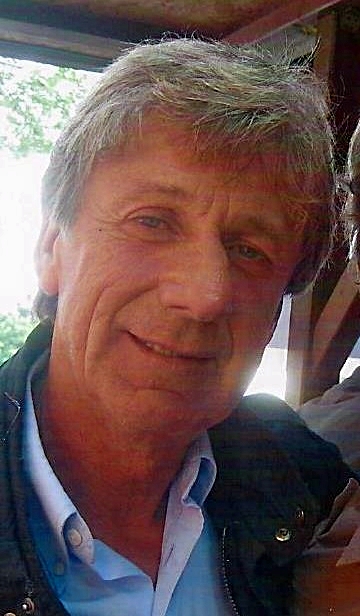
Frank Mill (born 23 July 1958) is a German former professional footballer who primarily played as a forward. Born in Essen, West Germany, Mill had a distinguished career playing for several prominent German clubs, including Rot-Weiss Essen, Borussia Mönchengladbach, Borussia Dortmund, and Fortuna Düsseldorf. A key highlight of his career was being a member of the West Germany squad that won the 1990 FIFA World Cup. He also represented West Germany in two Olympic Games, securing a bronze medal at the 1988 Summer Olympics. Known for his prolific goal-scoring in his early career and later for his role as an assist provider, Mill's career spanned over two decades, leaving a notable mark on German football.
2. Early Life and Background
Frank Mill was born on 23 July 1958 in Essen, West Germany. His father was a junk dealer, and his mother owned a flower shop. Mill began his football journey at the age of six, joining the local club Eintracht Essen. In 1972, at the age of 14, he moved to the youth ranks of Essen's largest football club, Rot-Weiss Essen. While pursuing his football ambitions, Mill also undertook professional training to become a florist, reflecting his family's business background. In 1976, he signed his first professional contract with Rot-Weiss Essen, marking the official start of his senior football career.
3. Club Career
Frank Mill's professional football career spanned over two decades, during which he played for four major German clubs, making significant contributions to each team.
3.1. Rot-Weiss Essen
Mill began his professional career with his hometown club, Rot-Weiss Essen, signing his first contract in 1976. In his debut season, Rot-Weiss Essen was a Bundesliga side. Mill made 19 appearances and scored three goals, but his efforts were not enough to prevent the team from being relegated to the 2. Bundesliga North. In the 2. Bundesliga, Mill established himself as a reliable goalscorer. Over the next four seasons, he scored 71 goals for Rot-Weiss Essen, often playing alongside Horst Hrubesch. Notably, during the 1979-80 season, he scored 40 goals in just 38 appearances, making him the top goalscorer of the 2. Bundesliga Nord. Across his tenure at Rot-Weiss Essen from 1975 to 1981, he made 120 appearances, scoring a total of 74 goals. His impressive scoring record made him a prime transfer target for Bundesliga clubs.
3.2. Borussia Mönchengladbach
In 1981, Mill returned to the Bundesliga, signing with Borussia Mönchengladbach under manager Jupp Heynckes. He continued his strong scoring form, netting 14 goals in his first year with the club. Only eight months into his time at Bökelberg, he received his first call-up to the West German national team. On 21 March 1982, he made his international debut in a friendly match against Brazil in Rio de Janeiro. A back injury, however, forced him out of the West German squad for the 1982 FIFA World Cup and also impacted his goal-scoring abilities in the subsequent season. In the 1983-84 Bundesliga season, Mill rediscovered his form, becoming Mönchengladbach's top scorer with 19 goals. That season, the club narrowly missed out on the Bundesliga title on goal difference to VfB Stuttgart on the final day. They also suffered a defeat in the DFB-Pokal final against Bayern Munich on penalties, where Mill scored Mönchengladbach's only goal in regular time. During his period at Borussia Mönchengladbach from 1981 to 1986, he made 157 appearances and scored 71 goals.
3.3. Borussia Dortmund
At the end of the 1985-86 Bundesliga season, Mill transferred to fellow Bundesliga side Borussia Dortmund. The transfer fee was 1.30 M DEM. This move was briefly uncertain as Dortmund had to secure their Bundesliga status through three relegation play-off matches. Once confirmed, Mill quickly became an influential player. In the 1986-87 season, his 17 goals in 31 appearances were instrumental in guiding Dortmund to a fourth-place finish, securing a berth in the UEFA Cup for the following season. His scoring prowess made him an instant fan favorite at Westfalenstadion, leading to his appointment as team captain. Mill's increasing popularity and status as a role model led to a disagreement between the club's chairman, Dr. Gerd Niebaum, and manager, Reinhard Saftig, regarding his captaincy and role within the squad. This eventually resulted in Saftig being replaced by Horst Köppel, confirming the chairman's view on Mill's importance.
Although his impressive scoring rate began to decline after Köppel took over, Mill remained a crucial player. He was part of the Dortmund team that lifted the DFB-Pokal trophy in the 1989 final, defeating favorites Werder Bremen. In 1990, despite being an "ageing marksman," Franz Beckenbauer selected him for the West German squad for the 1990 FIFA World Cup. However, with Rudi Völler, Jürgen Klinsmann, and Karlheinz Riedle ahead of him in the pecking order, he remained an unused fourth-choice striker throughout the successful tournament in Italy.
At club level, Mill underwent a transformation from a pure goalscorer to a provider of assists as his goal-scoring touch faded. Despite this, he found himself on the fringes of the Borussia Dortmund first team. When Ottmar Hitzfeld succeeded Köppel as manager in 1991, he reshaped the club's frontline with Stéphane Chapuisat and Flemming Povlsen becoming regular starters. Mill was often used as a substitute. In Hitzfeld's first season in charge, the 1991-92 Bundesliga campaign, Dortmund missed out on the Bundesliga title for the second time in Mill's career under almost identical circumstances: on goal difference and due to final day results, with VfB Stuttgart finishing as champions. The following season, Dortmund entered the UEFA Cup and reached the final, ultimately losing to Juventus. Mill played for Borussia Dortmund from 1986 to 1994, making 187 appearances and scoring 47 goals.
3.4. Fortuna Düsseldorf
After his contract with Borussia Dortmund ended in 1994, Mill, still a fan favorite, joined the newly promoted club Fortuna Düsseldorf in the 2. Bundesliga. He enjoyed two more seasons in professional football. In his first season at Rheinstadion, he scored five goals, helping Fortuna achieve promotion back to the Bundesliga. His final twelve months as a professional, during the 1995-96 season, started brightly with two goals in the first three matches. However, he was unable to score further in his next 26 appearances for Düsseldorf. Across his Bundesliga career with Borussia Mönchengladbach, Borussia Dortmund, and Fortuna Düsseldorf, Frank Mill amassed a total of 123 goals in 387 appearances. For Fortuna Düsseldorf specifically, he played 55 matches and scored 7 goals.
4. International Career
Frank Mill represented the West German national team from 1982 to 1990, earning 17 caps. His international debut came on 21 March 1982 in a friendly against Brazil. Although a back injury prevented him from participating in the 1982 FIFA World Cup, he became a regular presence in the national setup.
Mill participated in two Olympic Games. At the 1984 Summer Olympics in Los Angeles, he was part of the West German squad. Four years later, he featured in the 1988 Summer Olympics in Seoul, where the West German team secured the bronze medal.
His most significant international achievement came in 1990, when he was selected by manager Franz Beckenbauer to be part of the West German squad for the 1990 FIFA World Cup in Italy. Despite being part of the winning team, Mill remained an unused substitute throughout the tournament, as other forwards like Rudi Völler, Jürgen Klinsmann, and Karlheinz Riedle were preferred.
5. Playing Style and Notable Incidents
Initially, Frank Mill was known as a prolific and reliable goalscorer, particularly evident during his time in the 2. Bundesliga with Rot-Weiss Essen and his early years at Borussia Mönchengladbach. As his career progressed, especially during his later years at Borussia Dortmund, his playing style evolved from being a pure marksman to an assist provider. This transformation allowed him to remain an important player even as his goal-scoring punch faded.
Mill's career is famously associated with a notable open-goal miss that occurred on the opening day of the 1986-87 Bundesliga season in a match against Bayern Munich. After rounding the goalkeeper, Mill had an empty net before him but incredibly hit the post. This highly publicized incident became widely discussed in football circles and is sometimes referred to as the "century's miss." Despite this specific moment of misfortune, Mill's overall career was one of considerable success and impact.
6. Post-Playing Career
Following his retirement from professional football in 1996, Frank Mill briefly transitioned into a management role. He was offered a position as a director at his final club, Fortuna Düsseldorf. However, this tenure was short-lived, and he eventually left the role by mutual consent due to a lack of desired success.
7. Honours
Frank Mill achieved several significant honours throughout his club and international career.
7.1. Club Honours
- Borussia Mönchengladbach
- DFB-Pokal: Runner-up: 1983-84
- Borussia Dortmund
- DFB-Pokal: Winner: 1988-89
- UEFA Cup: Runner-up: 1992-93
7.2. International Honours
- West Germany
- FIFA World Cup: Winner: 1990
- Olympic Games: Bronze Medal: 1988
7.3. Individual Honours
- 2. Bundesliga: Top Scorer: 1979-80 (2. Bundesliga Nord)
- Kicker Team of the Year: 1986-87
8. Legacy and Evaluation
Frank Mill's football career is characterized by both prolific goal-scoring in his prime and a unique transition to an assist-oriented player. Despite a notable open-goal miss that gained considerable attention, his career was marked by significant achievements, including a DFB-Pokal victory with Borussia Dortmund and a World Cup winner's medal with West Germany. His leadership as captain at Borussia Dortmund, his contributions to the club's resurgence, and his participation in two Olympic Games underscore his importance in German football during his era. Mill's ability to adapt his playing style and remain a valuable asset to his teams, even as his primary role evolved, highlights his versatility and dedication to the sport. His career is viewed as a blend of individual scoring prowess and team success, leaving a lasting legacy as a respected German footballer.