1. Player Career
Eric Gerets' career as a professional footballer was marked by his defensive prowess, exceptional leadership, and significant contributions to the clubs and national team he represented. He was known for his offensive-minded play from the right-back position.
1.1. Early Career and Standard Liège
Gerets began his playing career as an amateur for his local team, AA Rekem, before joining the then-titleholders Standard Liège. He made his professional debut on 16 April 1972, coming on for Silvester Takač against FC Diest. In the 1972-73 season, Standard reached the Belgian Cup final, where Gerets started despite not being an established first-team member, as Standard lost 1-2 to rivals Anderlecht. The following season, Gerets replaced 29-year-old Jacques Beurlet and became the first-choice right-back for the Rouches. In 1975, he made his debut for the Belgian national team.
In the 1980s, a new generation of players emerged at Standard Liège, with Gerets serving as captain. Under the guidance of managers like Ernst Happel and Raymond Goethals, and alongside key players such as Arie Haan, Guy Vandersmissen, Michel Preud'homme, Walter Meeuws, Jos Daerden, and Simon Tahamata, Standard achieved significant success. In 1980, Standard finished as league runners-up. The club then won the National Cup in 1981 with a 4-1 win over Lokeren SC. In 1982, Standard secured the league title by defeating Waterschei SV Thor in the final match of the season. Days later, they faced FC Barcelona in the European Cup Winners' Cup final, which they lost 2-1. Gerets' influence on Standard's success was recognized when he was awarded the Belgian Golden Shoe in 1982. The following year, he captained Standard to another league title, their ninth overall, which would be their last until 2007-08. With Standard Liège, Gerets won two national titles, one National Cup, one Belgian Super Cup, and one Belgian League Cup.
1.2. AC Milan and MVV Maastricht
In 1983, Gerets signed with Italian giants AC Milan. However, his contract was prematurely terminated due to his involvement in a match-fixing scandal from his time at Standard Liège. It was discovered that, in order to secure the championship title and to spare players from injuries for the European final against Barcelona, Standard had approached the Waterschei players in 1982 to take it easy in their final league match against Standard. Several Standard players at the time and trainer Raymond Goethals were subsequently suspended for this.
After this period, MVV Maastricht contracted Gerets in 1984. He played only four matches for the club, three of which were against PSV Eindhoven. These performances convinced PSV, and they quickly signed him in the summer of 1985.
1.3. PSV Eindhoven
Gerets joined PSV Eindhoven in 1985, playing alongside notable players such as Ruud Gullit, Frank Arnesen, Huub Stevens, and Willy van de Kerkhof, later joined by Brazilian star Romário. In 1986, Gerets won the Eredivisie title with PSV. After Gullit's departure in 1987, Gerets became the new captain. Under coach Guus Hiddink, PSV achieved consecutive league and cup doubles for three seasons. Gerets scored twice in the 1987-88 KNVB Cup final against Roda JC.
In 1988, PSV reached the UEFA European Cup final after eliminating Real Madrid in the semi-finals. The final match against Benfica ended 0-0 after 120 minutes, with PSV ultimately winning on penalties.
In 1990, Bobby Robson was appointed as Hiddink's successor. Under Robson, Gerets won another two Eredivisie titles with PSV before retiring at the end of the 1991-92 season at the age of 38. In his seven seasons at the club, Gerets won six national titles, three national cups, and one European Cup. In the years that followed, Gerets was regularly honored as a true club icon, being recognized in "PSV's All-Time XI", "PSV player of the century", and on the "PSV Walk of Fame".
1.4. Playing Style and Nickname
Gerets was known as an offensively-minded right-back, characterized by his exceptional stamina, tactical discipline, grit, and mental toughness. His physical appearance, often with hair blowing in the wind and a full, elegant beard, contributed to his distinctive image on the field. He was also noted for his long-distance throw-ins, which could be a significant offensive weapon.
His fierce and determined playing style earned him the nickname "The Lion". This moniker was often extended to "The Lion of Flanders", referencing the historical symbol of the Flanders region in Belgium, further emphasizing his strong, courageous, and unyielding presence on the field. Johan Cruyff notably called him "The best right back in the world."
1.5. Club Career Statistics
| Club | Season | League | National cup | Europe | Other | Total | ||||||
|---|---|---|---|---|---|---|---|---|---|---|---|---|
| Division | Apps | Goals | Apps | Goals | Apps | Goals | Apps | Goals | Apps | Goals | ||
| Standard Liège | 1971-72 | Belgian First Division | 1 | 0 | - | - | - | 1 | 0 | |||
| 1972-73 | 9 | 0 | 2 | 0 | - | - | 11 | 0 | ||||
| 1973-74 | 30 | 1 | - | 12 | 0 | 2 | 0 | 44 | 1 | |||
| 1974-75 | 37 | 5 | 3 | 1 | 1 | 0 | 2 | 0 | 43 | 6 | ||
| 1975-76 | 34 | 6 | - | 1 | 0 | - | 35 | 6 | ||||
| 1976-77 | 31 | 1 | 2 | 0 | 6 | 1 | - | 39 | 2 | |||
| 1977-78 | 25 | 2 | 3 | 0 | 6 | 0 | - | 34 | 2 | |||
| 1978-79 | 33 | 4 | 3 | 0 | 4 | 0 | - | 40 | 4 | |||
| 1979-80 | 27 | 3 | 6 | 0 | 9 | 0 | - | 42 | 3 | |||
| 1980-81 | 29 | 0 | 6 | 0 | 10 | 0 | - | 45 | 0 | |||
| 1981-82 | 31 | 3 | - | 10 | 0 | - | 41 | 3 | ||||
| 1982-83 | 33 | 2 | 1 | 0 | 1 | 1 | - | 35 | 3 | |||
| Total | 320 | 27 | 26 | 1 | 60 | 2 | 4 | 0 | 410 | 30 | ||
| AC Milan | 1983-84 | Serie A | 13 | 1 | 7 | 0 | - | - | 20 | 1 | ||
| Total | 13 | 1 | 7 | 0 | 0 | 0 | 0 | 0 | 20 | 1 | ||
| MVV Maastricht | 1984-85 | Eredivisie | 2 | 0 | 2 | 0 | - | - | 4 | 0 | ||
| Total | 2 | 0 | 2 | 0 | 0 | 0 | 0 | 0 | 4 | 0 | ||
| PSV Eindhoven | 1985-86 | Eredivisie | 29 | 0 | 2 | 0 | 3 | 0 | - | 34 | 0 | |
| 1986-87 | 30 | 1 | 3 | 0 | 2 | 0 | - | 35 | 1 | |||
| 1987-88 | 30 | 4 | 5 | 2 | 9 | 0 | - | 44 | 6 | |||
| 1988-89 | 31 | 1 | 5 | 0 | 5 | 0 | 2 | 0 | 43 | 1 | ||
| 1989-90 | 33 | 1 | 5 | 0 | 6 | 0 | - | 44 | 1 | |||
| 1990-91 | 24 | 0 | 3 | 0 | 1 | 0 | - | 28 | 0 | |||
| 1991-92 | 23 | 1 | 1 | 0 | 3 | 0 | - | 27 | 1 | |||
| Total | 200 | 8 | 24 | 2 | 29 | 0 | 2 | 0 | 225 | 10 | ||
| Career total | 535 | 36 | 59 | 3 | 89 | 2 | 6 | 0 | 689 | 41 | ||
1.6. International Career
Eric Gerets was a consistent and key player for the Belgium national football team for over a decade, making significant contributions in major international tournaments.
1.7. Belgium National Team Appearances
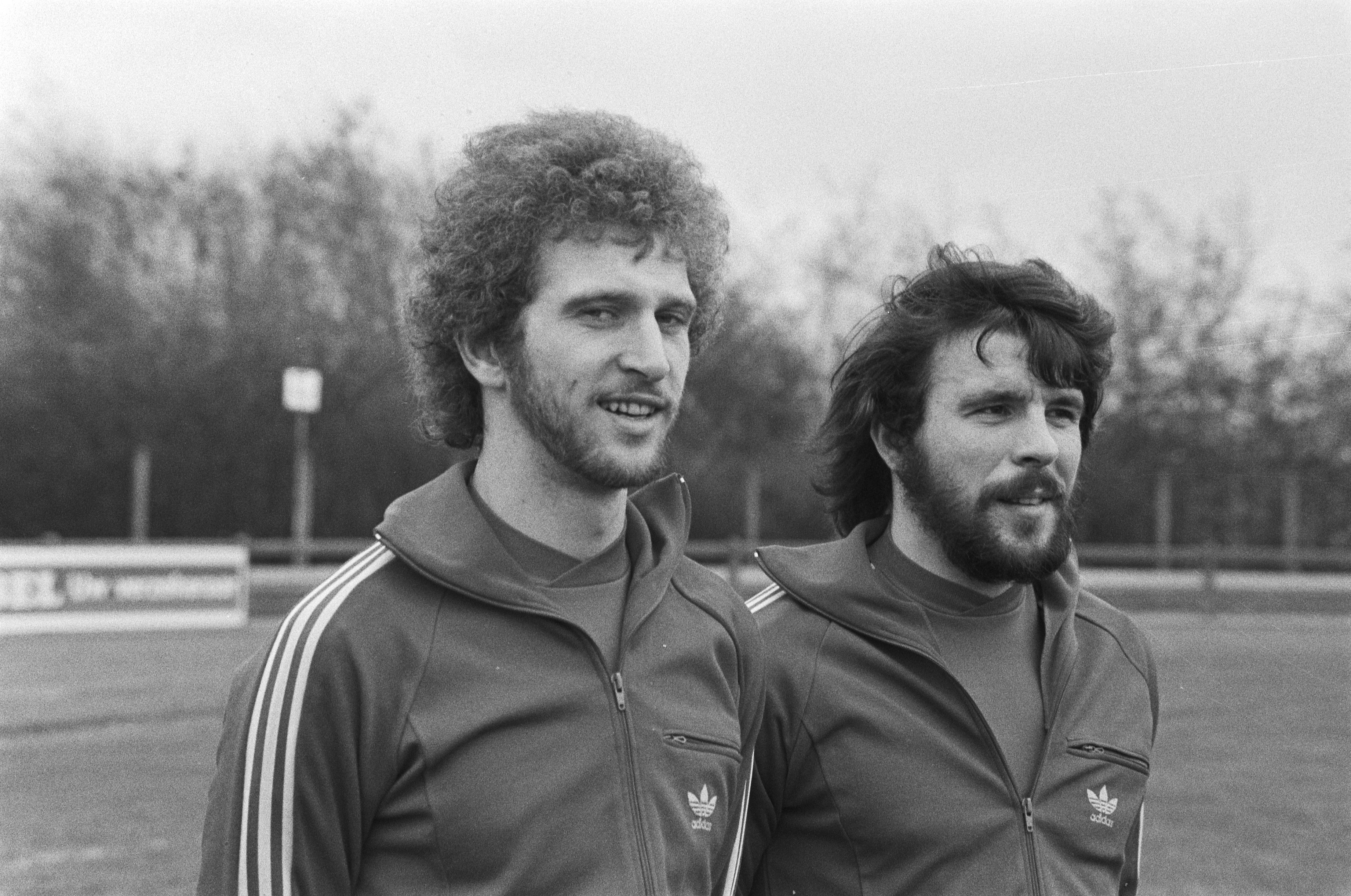
Gerets registered 86 caps for the Belgium national team, making him one of the most capped players in the nation's history. He made his debut for the squad in 1975 and remained a prominent figure until his retirement from international football in early 1991. He scored two goals for the national team during his career.
1.8. Participation in Major Tournaments
Gerets played in four major tournaments for Belgium: the 1980 European Championship, 1982 World Cup, 1986 World Cup, and 1990 World Cup.
At the 1980 European Championship in Italy, Gerets scored the opening goal in a 2-1 win against Spain, which ensured Belgium qualified as group winners. The tournament is remembered for the inspired performance of the offensively-minded Belgium squad, featuring rising stars such as Jan Ceulemans, Eric Gerets, Jean-Marie Pfaff, and Erwin Vandenbergh, who unexpectedly reached the final, only losing to West Germany 1-2 by a Hrubesch goal two minutes from time.
At the 1982 FIFA World Cup, Belgium, captained by Gerets, recorded one of their most famous victories with a 1-0 win over defending champions Argentina in the first game of the tournament held at Camp Nou. The goal was scored by Erwin Vandenbergh, and Belgium's excellent defensive display held off a young Diego Maradona.
Four years later, Belgium achieved their best World Cup run at that time in 1986, placing fourth under the command of players like Jan Ceulemans, Jean-Marie Pfaff, and captain Gerets. Belgium surprisingly won against favorites the Soviet Union, which included stars such as Igor Belanov and Rinat Dasayev, with a 3-4 score after extra time. Belgium also beat Spain on penalties in the quarter-finals. However, they lost to eventual champions Argentina in the semi-final 0-2, with Argentina's performance inspired by Maradona.
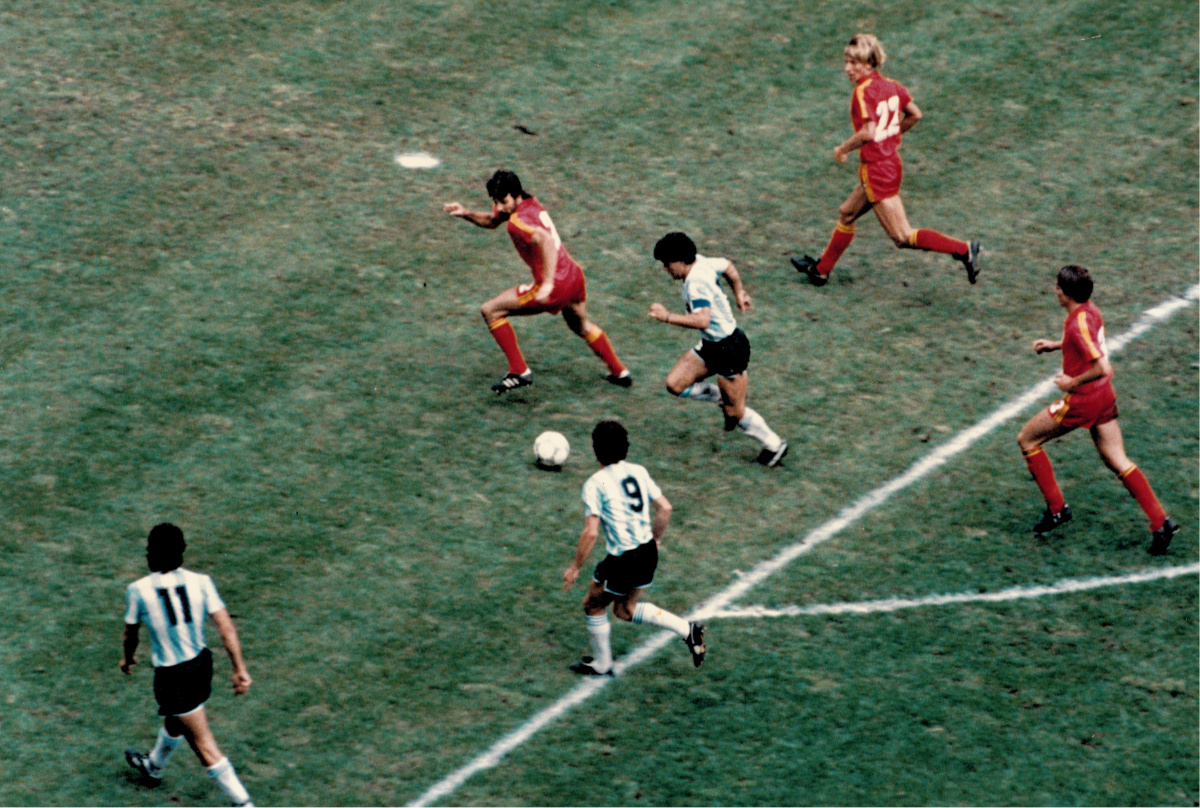
Despite their defeat, Belgium finished in fourth place, their best finish in World Cup competition until it was surpassed in 2018 when they reached third place.
Aged 36, Gerets also captained his nation to the 1990 FIFA World Cup finals. Belgium failed to convert their chances against England in the second round, losing in the last minute of extra time after a goal by David Platt. After a few qualification matches for the 1992 European Championship, Gerets decided to quit international football in early 1991 to focus on his club career with PSV Eindhoven. For decades, he was the third-most capped player for the Belgium national team.
1.9. International Career Statistics
| National Team | Year | Friendlies | World Cup | European Championships | Total | ||||
|---|---|---|---|---|---|---|---|---|---|
| Apps | Goals | Apps | Goals | Apps | Goals | Apps | Goals | ||
| Belgium | 1975 | 0 | 0 | 1 | 0 | 0 | 0 | 1 | 0 |
| 1976 | 0 | 0 | 1 | 0 | 2 | 0 | 3 | 0 | |
| 1977 | 2 | 0 | 0 | 0 | 2 | 0 | 4 | 0 | |
| 1978 | 2 | 0 | 2 | 0 | 0 | 0 | 4 | 0 | |
| 1979 | 1 | 0 | 6 | 0 | 0 | 0 | 7 | 0 | |
| 1980 | 4 | 0 | 4 | 1 | 3 | 0 | 11 | 1 | |
| 1981 | 1 | 0 | 0 | 0 | 4 | 0 | 5 | 0 | |
| 1982 | 4 | 0 | 2 | 0 | 3 | 0 | 9 | 0 | |
| 1983 | 2 | 0 | 4 | 0 | 0 | 0 | 6 | 0 | |
| 1984 | 0 | 0 | 0 | 0 | 0 | 0 | 0 | 0 | |
| 1985 | 0 | 0 | 0 | 0 | 3 | 0 | 3 | 0 | |
| 1986 | 3 | 0 | 2 | 1 | 6 | 0 | 11 | 1 | |
| 1987 | 2 | 0 | 3 | 0 | 0 | 0 | 5 | 0 | |
| 1988 | 0 | 0 | 0 | 0 | 1 | 0 | 1 | 0 | |
| 1989 | 1 | 0 | 0 | 0 | 5 | 0 | 6 | 0 | |
| 1990 | 4 | 0 | 0 | 0 | 3 | 0 | 8 | 0 | |
| 1991 | 1 | 0 | 1 | 0 | 0 | 0 | 2 | 0 | |
| Total | 27 | 0 | 27 | 2 | 32 | 0 | 86 | 2 | |
| # | Date | Venue | Opponent | Score | Result | Competition |
|---|---|---|---|---|---|---|
| 1. | 15 June 1980 | Stadio Giuseppe Meazza, Milan | Spain | 1-0 | 2-1 | Euro 1980 |
| 2. | 14 October 1986 | Stade Municipal, Luxembourg | Luxembourg | 1-0 | 6-0 | Euro 1988 qualifier |
2. Managerial Career
Eric Gerets transitioned from a decorated playing career to an equally successful managerial one, winning league titles in multiple countries and coaching various club and national teams. He is one of only six managers to have won top domestic league championships in at least four countries.
2.1. Early Managerial Career
Gerets began his coaching career with RFC Liège from 1992 to 1994. He then moved to Lierse, where he achieved his first significant managerial success, winning the Belgian championship in the 1996-97 season. Following this, he took charge of Club Brugge in 1997, where he reprised the feat, winning another Belgian championship in the 1997-98 season and the Belgian Super Cup in 1998.
In July 1999, Gerets returned to PSV Eindhoven, this time as manager. He continued his winning ways, securing two consecutive Eredivisie titles in the 1999-2000 and 2000-01 seasons. He also led PSV to two Dutch Super Cup victories in 2000 and 2001.
2.2. European and Middle Eastern Clubs
After his successful spell at PSV, Gerets moved to Germany, managing 1. FC Kaiserslautern from September 2002 to February 2004, and then VfL Wolfsburg from April 2004 to May 2005.
In June 2005, he joined Turkish club Galatasaray, where he won the Turkish Premier Super League in the 2005-06 season. He left Galatasaray in May 2007.
On 25 September 2007, Gerets became the coach of French club Olympique de Marseille. In his first year, he remarkably guided the team from the bottom of the league to a third-place finish in the 2007-08 season. In 2009, he was offered the position of coach for the Belgian national team by the RBFA after René Vandereycken was sacked, but he turned down the offer due to a low salary proposal. On 29 April 2009, he confirmed he would not be in charge of Marseille after his contract expired that summer, despite the desire of fans and players for him to stay. He was awarded the Ligue 1 Manager of the Year award for the 2008-09 season.
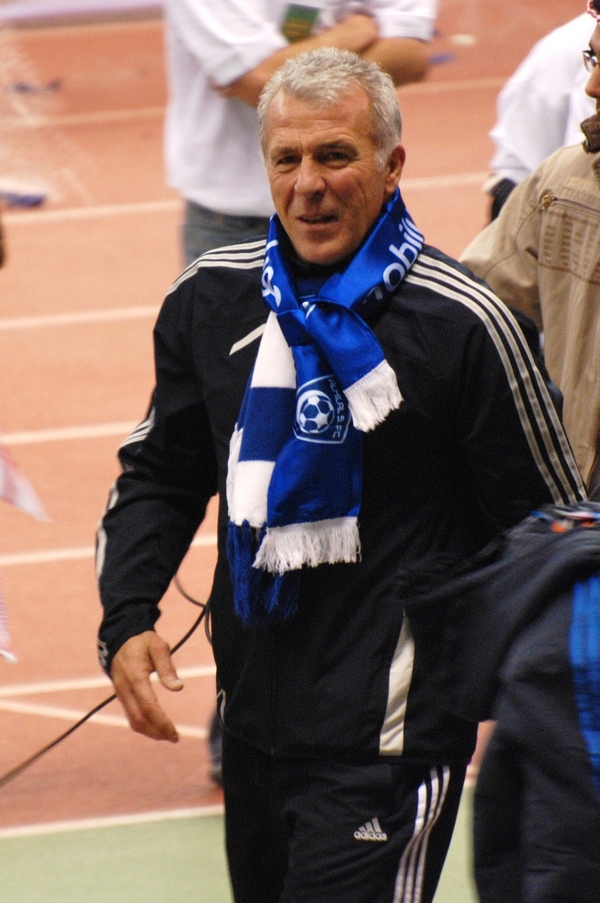
On 26 May 2009, Gerets signed a two-year contract to become the head coach of Saudi club Al-Hilal for an annual fee of 1.80 M EUR. He led Al-Hilal to win the Saudi Professional League and the Saudi Crown Prince Cup in 2010. He was approached by the Ivory Coast national football team in February 2010 but declined due to insufficient preparation time.
After his stint in Saudi Arabia, on 9 October 2012, Gerets accepted a contract offer to become the head coach of Qatari defending champions Lekhwiya. In the 2013-14 season, he brought another Qatari championship title to Lekhwiya, along with the Qatar Crown Prince Cup in 2013.
Gerets departed Lekhwiya and became the head coach of the United Arab Emirates team Al Jazira Club on 20 May 2014. He completed his two-year contract and decided to retire as a club coach, hinting that he might only be active as a national team coach. He was subsequently regularly mentioned as a top candidate for the position of head coach of Belgium, but health problems prevented this from happening.
2.3. National Team Manager
On 6 July 2010, Eric Gerets signed a four-year contract with the Morocco national football team. He initially worked part-time until he completed his Asian Champions League campaign with Al Hilal, where they were eliminated in the semi-finals. He was in charge of Morocco for almost two years, leading them to win the Arab Cup in 2012. However, he was sacked on 15 September 2012 after Morocco's 2-0 defeat against Mozambique in the first-leg of the 2013 Africa Cup of Nations qualification.
2.4. Managerial Career Statistics
| Team | From | To | Record | ||||
|---|---|---|---|---|---|---|---|
| G | W | D | L | Win % | |||
| Liège | July 1992 | June 1994 | 20|19|32|28.17 | ||||
| Lierse | July 1994 | June 1997 | 55|29|29|48.67 | ||||
| Club Brugge | June 1997 | June 1999 | 60|15|16|65.93 | ||||
| PSV | July 1999 | May 2002 | 86|29|26|60.99 | ||||
| 1. FC Kaiserslautern | September 2002 | February 2004 | 19|13|26|32.76 | ||||
| VfL Wolfsburg | April 2004 | May 2005 | 18|5|21|40.91 | ||||
| Galatasaray | June 2005 | May 2007 | 50|22|19|54.95 | ||||
| Marseille | September 2007 | June 2009 | 47|23|27|48.45 | ||||
| Al-Hilal | July 2009 | November 2010 | 35|7|6|72.92 | ||||
| Morocco | July 2010 | September 2012 | 7|5|6|38.89 | ||||
| Lekhwiya | October 2012 | May 2014 | 44|13|20|57.14 | ||||
| Al-Jazira | June 2014 | June 2015 | 16|3|8|59.26 | ||||
| Total | 457|183|236|52.17 | ||||||
3. Honours
Eric Gerets' career as both a player and a manager was marked by numerous team titles and individual accolades, cementing his status as one of Belgian football's most successful figures.
3.1. Player Honours
Standard Liège
- Belgian First Division: 1981-82, 1982-83
- Belgian Cup: 1980-81
- Belgian Super Cup: 1981
- Belgian League Cup: 1975
- European Cup Winners' Cup runner-up: 1981-82
- UEFA Intertoto Cup group winner: 1980, 1982
PSV Eindhoven
- Eredivisie: 1985-86, 1986-87, 1987-88, 1988-89, 1990-91, 1991-92
- KNVB Cup: 1987-88, 1988-89, 1989-90
- European Cup: 1987-88
Belgium National Team
- UEFA European Championship runner-up: 1980
- FIFA World Cup fourth place: 1986
- Belgian Sports Merit Award: 1980
Individual Player Awards
- Belgian Golden Shoe: 1982
- Bronze Shoe: 1981
- Ballon d'Or nominations: 1982, 1983
- Don Balón World Cup All-Star team: 1982
- Onze de Onze: 1982, 1983, 1988
- France Football + La Gazzetta dello Sport World Cup All-Star team: 1986
- Belgian Golden Shoe of the 20th Century 8th place: 1995
- Voetbal International's 50 World Stars by Raf Willems: 1999
- PSV Player of the Century: 1999
- Platina 11 (Best Team in 50 Years Golden Shoe Winners): 2003
- UEFA Jubilee Poll: #81 (2004)
- The Best Golden Shoe Team Ever: 2011
- RBFA 125 Years Icons Team: 2020
- AD The Best PSV Team Ever: 2020
- IFFHS All Time Belgium Dream Team: 2021
- Standard Liège Hall of Fame: 2024
- Belgian Pro League Hall of Fame: 2024
- PSV Walk of Fame: 2024
3.2. Manager Honours
Lierse SK
- Belgian First Division: 1996-97
Club Brugge KV
- Belgian First Division: 1997-98
- Belgian Super Cup: 1998
PSV Eindhoven
- Eredivisie: 1999-2000, 2000-01
- Johan Cruyff Shield: 2000, 2001
Galatasaray SK
- Süper Lig: 2005-06
Al-Hilal FC
- Saudi Professional League: 2009-10
- Saudi Crown Prince Cup: 2010
Morocco National Football Team
- Arab Cup: 2012
Lekhwiya SC
- Qatar Stars League: 2013-14
- Crown Prince Cup: 2013
Individual Managerial Awards
- Belgian Professional Manager of the Year: 1996-97, 1997-98
- Ligue 1 Manager of the Year: 2008-09
- Raymond Goethals award: 2011
4. Personal Life and Health
In recent years, Gerets has faced significant health challenges. In 2013, he suffered a brain hemorrhage. Since then, his health has gradually deteriorated, leading to difficulties with speaking and walking. In 2022, he was diagnosed with cerebral calcification, a condition involving the abnormal accumulation of calcium in the brain.
5. Legacy and Recognition
Eric Gerets holds a lasting impact on football, particularly in Belgium and the Netherlands, where he is revered as a club icon. His leadership as captain of PSV Eindhoven during their historic 1988 European Cup win cemented his legendary status at the club. He has been recognized as "PSV player of the century" and has a tile on the "PSV Walk of Fame".
His contributions to Belgian football are also widely acknowledged, with his inclusion in the RBFA 125 Years Icons Team in 2020 and the IFFHS All Time Belgium Dream Team in 2021. He was also inducted into the Standard Liège Hall of Fame in 2024 and the Belgian Pro League Hall of Fame in 2024. His success as a manager, winning league titles in four different countries, further solidifies his legacy as one of the most distinguished figures in modern football history.