1. Overview
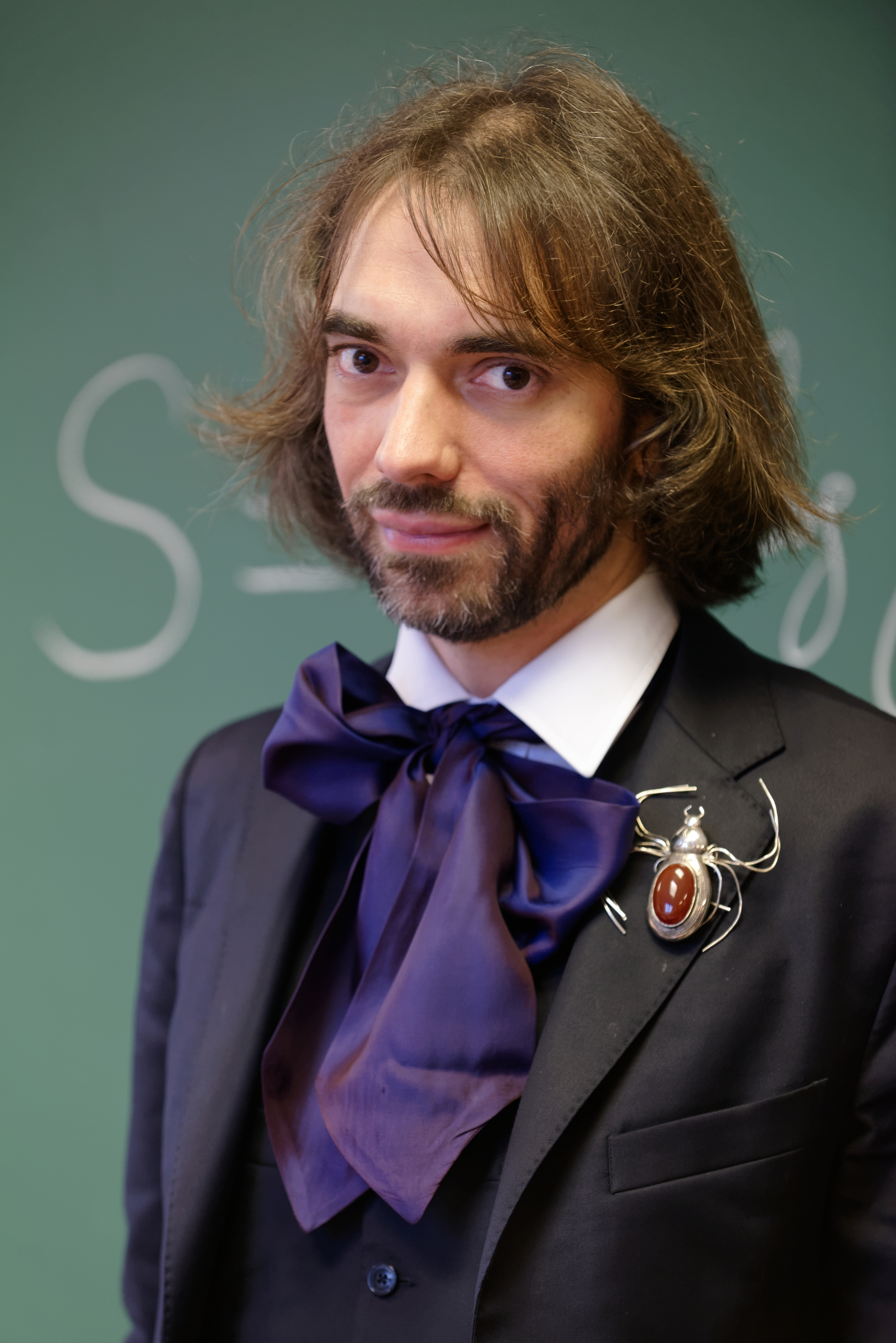
Cédric Patrice Thierry Villani (Cédric Patrice Thierry Villanisedʁik patʁis tjeʁi vilaniFrench), born on 5 October 1973, is a prominent French mathematician and politician. His career is distinguished by significant contributions to the fields of partial differential equations, statistical mechanics, and optimal transport, for which he was awarded the prestigious Fields Medal in 2010. Beyond his academic pursuits, Villani transitioned into public service, serving as a Member of Parliament in the French National Assembly for Essonne's 5th constituency from 2017 to 2022. He is known for his distinctive public persona, often characterized by his spider brooch, and his efforts to bridge the gap between scientific research and public policy. This article explores his early life and education, his groundbreaking mathematical work, his journey into politics, his published writings, and the various awards and honors he has received throughout his multifaceted career.
2. Biography
Cédric Villani's life journey spans from his early education in France to his distinguished academic career and his later entry into the political arena.
2.1. Early Life and Education
Villani was born on 5 October 1973, in Brive-la-Gaillarde, Corrèze, France. He attended the renowned Lycée Louis-le-Grand before being admitted to the École Normale Supérieure in Paris. He studied there from 1992 to 1996, after which he was appointed an agrégé préparateur, a type of assistant professor, at the same institution.
2.2. Academic Career
Cédric Villani pursued his doctoral studies at Paris Dauphine University, completing his PhD in 1998 under the supervision of Pierre-Louis Lions, a fellow Fields Medalist. Following his doctorate, he became a professor at the École normale supérieure de Lyon in 2000. He currently holds a professorship at the University of Lyon and, as of September 2022, is also a professor at the Institut des Hautes Études Scientifiques (IHES). From 2009 to 2017, Villani served as the director of the Institut Henri Poincaré in Paris. His academic career has also included several visiting positions at notable institutions, such as Georgia Tech in the Fall of 1999, the University of California, Berkeley in the Spring of 2004, and the Institute for Advanced Study in Princeton in the Spring of 2009. Villani is fluent in French, English, and Italian.
On 19 October 2014, Villani participated in a conversation with Nobel Prize-winning mathematician John Forbes Nash Jr. as part of the inaugural Albertine festival hosted by the Cultural Services of the French Embassy. Several months later, on 23 May 2015, Nash and his wife, Alicia, tragically died in a car crash. Speaking at the Hay Festival just days after Nash's death, Villani revealed that Nash had told him in Norway on 20 May that he had discovered a "replacement equation" for Einstein's theory of relativity.
3. Mathematical Work
Cédric Villani's mathematical work is characterized by its depth and its impact on various subfields, leading to significant advancements and international recognition.
3.1. Research Areas
Villani's primary research areas include the theory of partial differential equations, particularly those involved in statistical mechanics. He has extensively studied the Boltzmann equation, where he, along with Laurent Desvillettes, was the first to prove the rate of convergence for initial values not near equilibrium. He has also collaborated with Giuseppe Toscani on this subject. His work with Clément Mouhot focused on nonlinear Landau damping. Additionally, Villani has made significant contributions to the theory of optimal transport and its applications to differential geometry. In collaboration with John Lott, he defined a notion of bounded Ricci curvature for general measured length spaces.
3.2. Key Contributions
Among Villani's specific mathematical achievements is his work proving Cercignani's conjecture, which he described in his autobiographical book Théorème vivant (Living Theorem). A particularly notable accomplishment is the "Mouhot-Cédric Theorem," which he completed in December 2009 with his colleague Clément Mouhot. This theorem addressed the regularity problem of inhomogeneous Boltzmann equations and mathematically substantiated Lev Davidovich Landau's concept of Landau damping, a phenomenon in plasma physics first proposed by Landau, a Nobel Prize laureate in Physics in 1962.
3.3. Fields Medal Award
In 2010, Cédric Villani was awarded the prestigious Fields Medal, often regarded as the Nobel Prize of mathematics. The award recognized his profound work on Landau damping and the Boltzmann equation. He received the medal at the International Congress of Mathematicians (ICM) held in 2010, alongside fellow mathematicians Elon Lindenstrauss, Ngô Bảo Châu, and Stanislav Smirnov. Villani detailed the development of his theorem in his autobiographical book Théorème vivant (2012), which was later published in English translation as Birth of a Theorem: A Mathematical Adventure (2015).
3.4. Other Academic Recognition
Beyond the Fields Medal, Villani has received numerous other academic distinctions. He has been a plenary lecturer at major international conferences, including the International Congress of Mathematical Physics in Lisbonne in 2003 and an invited lecturer at the International Congress of Mathematicians in Madrid in 2006. He also delivered a TED talk titled "What's so sexy about math?" at the 2016 conference in Vancouver. Villani has given two lectures at the Royal Institution in London: "Birth of a Theorem" on 22 April 2015, which shares its title with the English translation of his book, and "The Extraordinary Theorems of John Nash" on 2 November 2016. He also served on the Mathematical Sciences jury for the Infosys Prize in 2015 and 2016.
4. Political Career
Cédric Villani's political career began with his entry into the French National Assembly, marking a significant shift from his academic life.
4.1. Entry into Politics and Election
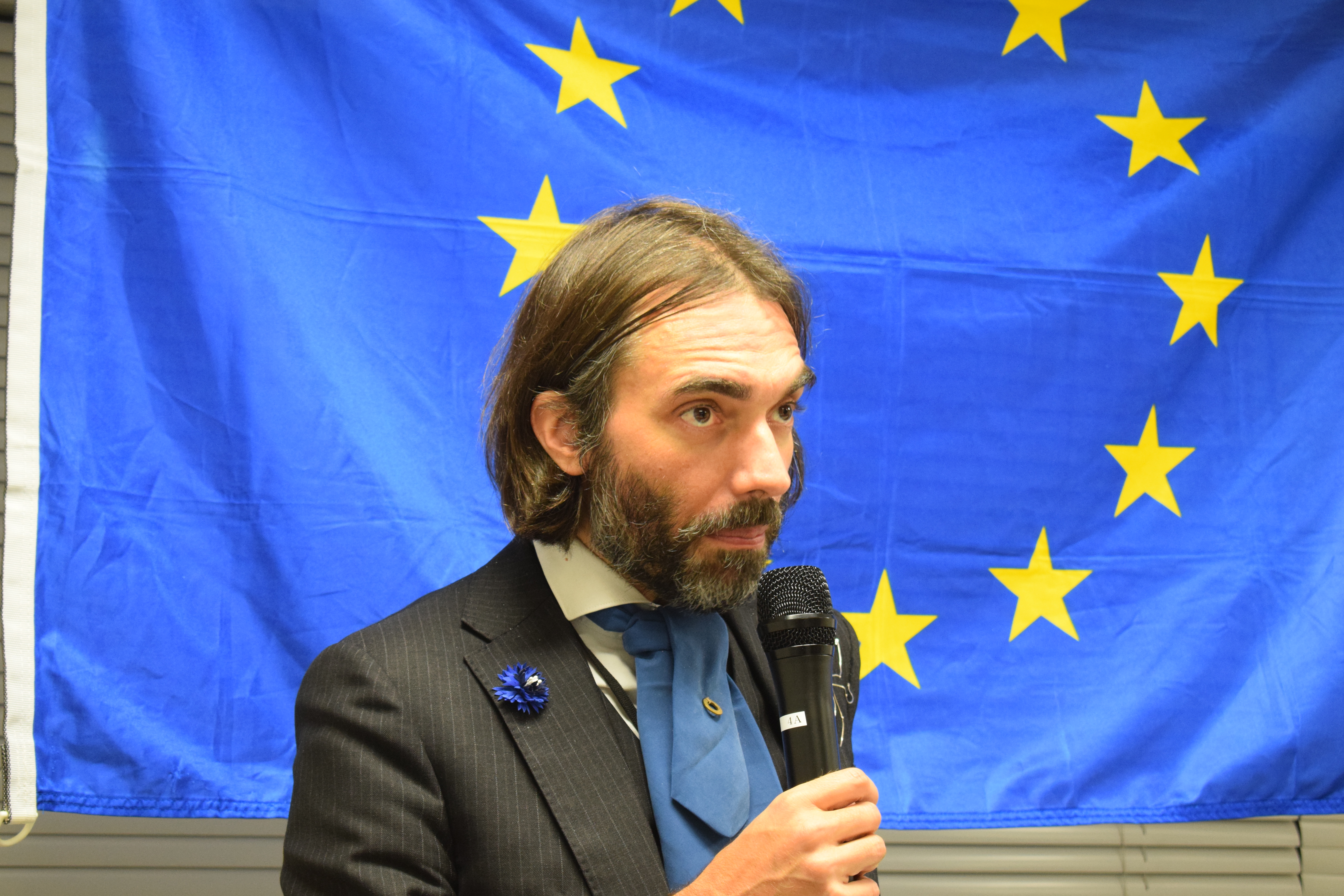
In 2017, Villani was selected as a candidate for La République En Marche! (LREM), the political party founded by Emmanuel Macron, to contest the Essonne's 5th constituency in the 2017 French legislative election. In the first round of voting, Villani secured 47% of the votes, positioning him strongly for the second round. He subsequently won the second round with 69.36% of the vote, becoming a deputy in the National Assembly, the lower house of the French Parliament. He served in this role from 21 June 2017 to 21 June 2022, succeeding Maud Olivier and being succeeded by Paul Midy.
4.2. Party Affiliations and Political Stances
Initially elected as a member of La République En Marche! (LREM), Villani's political affiliations evolved. In May 2020, he left LREM to co-found a new parliamentary group, Ecology, Democracy, Solidarity (EDS). Following the dissolution of EDS, Villani joined Ecology Generation. For the 2022 French legislative election, he ran for re-election under the banner of the NUPES (Nouvelle Union Populaire écologique et sociale), a broad left-wing and green political coalition. His decision to run for the 2020 Paris municipal election against the official LREM candidate led to his expulsion from the ruling party.
4.3. Parliamentary Role and Activities
As a Member of Parliament, Villani took on significant responsibilities. In July 2017, he was elected as the Vice President of the French Parliamentary Office for the Evaluation of Scientific and Technological Choices. This role allowed him to leverage his scientific expertise in legislative discussions and policy-making related to science and technology.
4.4. Electoral Campaigns
Villani's political ambitions extended to local elections. In 2019, he sought to lead the LREM candidate slate for the 2020 French municipal elections in Paris. By July 2019, he was one of three LREM deputies vying for the position, alongside Benjamin Griveaux and Hugues Renson. However, the party's nomination committee ultimately chose Griveaux on 10 July. Despite this, Villani officially announced his independent candidacy for the Paris municipal election on 4 September 2019. In the 2022 French legislative election, he sought re-election but lost his seat to La République En Marche! candidate Paul Midy by a narrow margin of 19 votes.
5. Writings and Publications
Cédric Villani has authored several influential books and numerous academic papers, reflecting his deep engagement with mathematics and his efforts to communicate complex scientific ideas to a broader audience.
His selected academic papers and books include:
- Limites hydrodynamiques de l'équation de Boltzmann, Séminaire Bourbaki, June 2001; Astérisque vol. 282, 2002.
- A Review of Mathematical Topics in Collisional Kinetic Theory, in Handbook of Mathematical Fluid Dynamics, edited by Susan Friedlander and D. Serre, vol. 1, Elsevier, 2002.
- Topics in Optimal Transportation, volume 58 of Graduate Studies in Mathematics, American Mathematical Society, 2003.
- Optimal transportation, dissipative PDE's and functional inequalities, pp. 53-89 in Optimal Transportation and Applications, edited by Luis Caffarelli and S. Salsa, volume 1813 of Lecture Notes in Mathematics, Springer, 2003.
- Cercignani's conjecture is sometimes true and always almost true, Communications in Mathematical Physics, vol. 234, No. 3 (March 2003), pp. 455-490.
- On the trend to global equilibrium for spatially inhomogeneous kinetic systems: the Boltzmann equation (with Laurent Desvillettes), Inventiones Mathematicae, vol. 159, #2 (2005), pp. 245-316.
- Mathematics of Granular Materials, Journal of Statistical Physics, vol. 124, #2-4 (July/August 2006), pp. 781-822.
- Optimal transport, old and new, volume 338 of Grundlehren der mathematischen Wissenschaften, Springer, 2009.
- Ricci curvature for metric-measure spaces via optimal transport (with John Lott), Annals of Mathematics vol. 169, No. 3 (2009), pp. 903-991.
- Hypocoercivity, volume 202, No. 950 of Memoirs of the American Mathematical Society, 2009.
- On Landau damping (with Clément Mouhot), Acta Mathematica, vol. 207, 2009, pp. 29-201.
- Théorème vivant, Bernard Grasset, Paris 2012. This autobiographical book describes his research life from 2008 to 2010. Its English translation, Birth of a Theorem: A Mathematical Adventure, was published in 2015 by Farrar, Straus and Giroux, translated by Malcolm DeBevoise. A Japanese translation, also titled Birth of a Theorem, was published in 2014 by Hayakawa Shobo.
- Les Coulisses de la création, Flammarion, Paris 2015 (with composer and pianist Karol Beffa).
- Freedom in Mathematics, Springer India, 2016 (with Pierre Cartier, Jean Dhombres, Gerhard Heinzmann). This is a translation from the French language edition: Mathématiques en liberté, La Ville Brûle, Montreuil 2012.
- De mémoire vive, Une histoire de l'aventure numérique, Philippe Dewost, Cédric Villani, Éditions Première Partie, 2022.
6. Awards and Honors
Cédric Villani has received numerous awards and honors throughout his career, recognizing his exceptional contributions to mathematics and his broader societal impact.
6.1. Academic Awards
In addition to the prestigious Fields Medal received in 2010, Villani's academic accolades include:
- 1998**: PhD Thesis (under P.-L. Lions)
- 2000**: Habilitation dissertation
- 2001**: Louis Armand Prize of the French Academy of Sciences
- 2003**: Peccot-Vimont Prize and Cours Peccot of the Collège de France
- 2004**: Harold Grad lecturer
- 2004**: Visiting Miller Professor, University of California, Berkeley
- 2006**: Institut Universitaire de France
- 2007**: Grand Prix Jacques Herbrand of the French Academy of Sciences
- 2008**: Prize of the European Mathematical Society
- 2009**: Henri Poincaré Prize
- 2009**: Fermat Prize
- 2013**: Gibbs lecturer for "On Disorder, Mixing and Equilibration"
- 2014**: Joseph L. Doob Prize by the American Mathematical Society for his book Optimal Transport: Old and New (Springer Verlag 2009)
- 2014**: Pius XI Medal
6.2. Other Social Honors
Beyond his academic achievements, Villani has been recognized with several extra-academic distinctions:
- 2009**: Knight of the National Order of Merit (France)
- 2011**: Knight of the Legion of Honor
- 2013**: Member of the French Academy of Sciences
- 2016**: Ordinary member of the Pontifical Academy of Sciences
- 2022**: Fellow of the International Science Council
7. Other Activities and Affiliations
Cédric Villani's influence extends beyond his core mathematical and political roles, encompassing various organizations and public engagements. He was a former member of the Strategic Committee for the France China Foundation. In 2018, the French economics magazine Challenges reported that Villani had been approached by the Europanova think tank. He presided over the jury of Digital In-Pulse, a startup program designed to support entrepreneurs and startups, which is managed by the Chinese corporation Huawei. The magazine also noted that Villani remains the President of the endowment fund for the French Institut Henri Poincaré, with Huawei being among its top private donors. The article indicated that French counter-intelligence services had described Villani as "too naive" regarding these opportunities.
In 2020, a new spider species belonging to the family Araneidae, named Araniella villanii, was formally named after him, a testament to his public recognition and distinctive image.
8. Impact and Evaluation
Cédric Villani's impact spans both the academic and public spheres. His mathematical work, particularly on the Boltzmann equation and Landau damping, has significantly advanced the field of kinetic theory and earned him the highest honor in mathematics, the Fields Medal. His books, such as Théorème vivant (Birth of a Theorem), have not only documented his scientific journey but also made complex mathematical concepts accessible to a wider audience, contributing to public engagement with science.
In his political career, Villani aimed to bring scientific rigor and a fresh perspective to the French Parliament. His role as Vice President of the Parliamentary Office for the Evaluation of Scientific and Technological Choices underscores his commitment to informing policy with scientific understanding. However, his political journey has also faced challenges, including his departure from La République En Marche! and his unsuccessful bid for the mayoralty of Paris, indicating the complexities of transitioning from an academic to a political role. The assessment by French counter-intelligence services, describing him as "too naive" in his engagements with certain entities like Huawei, highlights a critical perspective on his public activities and judgment in the realm of international relations and corporate affiliations. His unique public image, often featuring a spider brooch, has made him a recognizable figure, further contributing to his public impact.
9. External Links
- [http://cedricvillani.org/ Cédric Villani's website]
- [http://gonitsora.com/video-interview-cedric-villani/ Video Interview by ICTP]
- [http://gonitsora.com/book-review-birth-of-a-theorem-by-cedric-villani/ Review of 'Birth of a Theorem']