1. Early Life and Education
Oh Keo-don's personal background includes his birth in Busan, his family's connection to a major steel company, and his extensive academic journey and success in public examinations.
1.1. Birth and Family Background
Oh Keo-don was born on October 28, 1948, in Jung-gu, Busan, South Korea. He is the fourth son of Oh Woo-young, the founder of Daehan Steel, a prominent South Korean steel manufacturer.
1.2. Education
Oh Keo-don pursued a comprehensive formal education, earning multiple degrees from prestigious universities. He graduated from Namil Elementary School, Gyeongnam Middle School, and Gyeongnam High School. In 1971, he received a Bachelor of Arts in Philosophy from the Seoul National University College of Humanities. He continued his studies at Seoul National University, earning a Master of Public Administration from the Graduate School of Public Administration in 1973, with a thesis on the job dissatisfaction and turnover factors of public officials. The same year, he successfully passed the 14th Public Administration Examination, a highly competitive civil service examination in South Korea. He later obtained a Doctor of Public Administration degree from Dong-a University Graduate School of Public Administration in 2003, with a dissertation on the methods and realities of office distribution in the Korean government. In 2006, he also earned a Master's degree from Pusan National University Graduate School of International Studies.
2. Public and Political Career
Oh Keo-don's career progression spanned various significant roles in both public administration and elected political office, demonstrating a consistent trajectory within South Korean governance.
2.1. Early Administrative Career
Oh Keo-don began his career as a public servant, holding a series of increasingly responsible positions. Following his success in the Public Administration Examination in 1973, he joined the Busan Metropolitan City Government as an administrative official in October 1974. He later served in the Ministry of Government Administration, including the Civil Defense Bureau and Local Administration Bureau, and was a budget officer until July 1985. From August 1985 to June 1988, he was the Sports Support Officer for the Busan Metropolitan City Government. He then served as an administrative officer in the Policy Advisor Office of the Presidential Secretariat until July 1989.
Upon returning to the Ministry of Government Administration, he held positions as section chief of the Organization and Management Division and section chief of the National Movement Support Division until January 1992. He then returned to Busan, serving as Director of the Finance Bureau from January to March 1992, and later as Director of the Transportation and Tourism Bureau and Director of the Internal Affairs Bureau until July 1997. From March to December 1993, he served as the appointed Mayor of Dong-gu, Busan. He also held the positions of Head of the Development Project Promotion Team until April 1999 and Head of the Waterworks Business Headquarters for Busan Metropolitan City. On April 30, 1999, he was appointed Director of the Planning and Management Office for Busan Metropolitan City. His roles within the Busan Metropolitan City Government culminated in his appointment as Political Affairs Vice Mayor from November 2000 to November 2001, and then as Administrative Vice Mayor from October 2001 to October 2003. Following the resignation of Mayor Ahn Sang-young, Oh Keo-don served as the Acting Mayor of Busan Metropolitan City from October 2003 to May 2004.
2.2. Minister of Oceans and Fisheries
From January 5, 2005, to March 26, 2006, Oh Keo-don served as the 13th Minister of Oceans and Fisheries under President Roh Moo-hyun. In this capacity, he was responsible for overseeing national policies related to maritime affairs, fisheries, and the development of coastal regions.
2.3. Busan Mayoral Candidacy
Oh Keo-don made multiple attempts to be elected Mayor of Busan, a position he eventually secured after several campaigns. He ran for the mayoral office three times unsuccessfully before his eventual victory. His prior campaigns included:
- The June 5, 2004 by-election for the 33rd Mayor of Busan, where he ran as a candidate for the Uri Party (Open Our Party) and lost, receiving 343,110 votes (37.7%) and finishing second.
- The 2006 local elections for the 34th Mayor of Busan, again as an Uri Party candidate, where he received 329,470 votes (24.12%) and finished second.
- The 2014 local elections for the 36th Mayor of Busan, running as an independent candidate, where he garnered 777,225 votes (49.34%) and finished second, narrowly losing to Suh Byung-soo.
In his fourth attempt, on June 13, 2018, Oh Keo-don finally succeeded in being elected the 37th Mayor of Busan. Running as a candidate for the Democratic Party of Korea, he defeated Suh Byung-soo of the Liberty Korea Party in the 2018 South Korean local elections, securing 946,597 votes (55.23%). His victory marked a historic shift, as he became the first liberal mayor of Busan since the direct election system for local heads began in 1995, effectively bringing about a change in political control in the traditionally conservative region. He officially took office on July 1, 2018.
2.4. Mayor of Busan
As the 37th Mayor of Busan, Oh Keo-don focused on specific administrative goals and initiatives, while also engaging with significant urban issues and controversies during his term.
2.4.1. Key Policies and Administrative Activities
During his tenure as mayor, Oh Keo-don adopted the city slogan "Busan, a happy Northeast Asian maritime capital for citizens." His administration focused on transforming Busan into a leading maritime city in Northeast Asia, emphasizing citizen well-being and regional development.
2.4.2. Involvement in Major City Issues
Oh Keo-don's mayoral term also saw his involvement in several high-profile issues and controversies:
- Comfort Women Statue: The issue of a comfort women statue installed by civic groups in front of the Japanese Consulate in Busan in 2016 continued to be a point of contention. While the Busan City Council passed an ordinance to protect the statue, the city authorities initially viewed it as a violation of road regulations. Despite remaining silent on the statue's legality since taking office, Oh Keo-don publicly declared on March 1, 2019, during the 100th-anniversary ceremony of the March 1st Movement, that the city would protect the comfort women statue. This statement later drew significant criticism due to his own subsequent sexual harassment scandal, highlighting a perceived contradiction between his public stance on protecting vulnerable individuals and his private actions.
- Shifts in Japan-South Korea Relations: In July 2019, relations between Japan and South Korea rapidly deteriorated due to Japan's review of trade rules, including its export control system. In response, on July 23, Oh Keo-don announced that the city would reconsider or suspend exchange programs and events involving Japan, leading to a halt in inter-municipal exchanges.
- Cho Kuk Scholarship Controversy: In August 2019, suspicions arose regarding the scholarship received by the daughter of Cho Kuk, who was then expected to be appointed Minister of Justice. On August 29, prosecutorial authorities raided the Busan Mayor's Office on suspicion that Oh Keo-don was involved in the decision to grant the scholarship. Oh Keo-don publicly countered the investigation, asserting that the scholarship official was appointed fairly.
3. Sexual Misconduct and Resignation
Oh Keo-don's public and political career concluded abruptly due to allegations of sexual misconduct, which led to his resignation, expulsion from his political party, and a subsequent criminal conviction.
3.1. Background and Initial Allegations
In October 2019, the Garo Sero Research Institute, a YouTube channel operated by Kang Yong-seok and Kim Se-eui, raised "Me Too" allegations against Oh Keo-don, claiming he had sexually harassed a female public official. In response, Oh Keo-don's side announced the next day that they had filed a lawsuit seeking 500.00 M KRW in damages against the three YouTubers for defamation, citing the spread of "groundless false information." He formed a legal team to combat "fake news."
However, this was distinct from the incident that led to his resignation. On April 7, 2020, Oh Keo-don sexually harassed a female aide during a meeting in his office. The victim demanded his resignation from the mayoral position, to which Oh Keo-don pledged to resign by the end of April and had this promise notarized. According to the police investigation, Oh lured the victim to his office by falsely claiming that his SNS account password had been changed and he could not log in, then proceeded to touch her body inappropriately.
3.2. Resignation and Political Fallout
On April 23, 2020, Oh Keo-don publicly announced his resignation as Mayor of Busan Metropolitan City, tearfully confessing to sexually harassing a female aide during a recent five-minute meeting. Following his resignation, Byeon Sung-wan, the Administrative Mayor of Busan Metropolitan City, assumed the role of acting mayor.
Immediately after Oh Keo-don's announcement, the victim released a statement through the Korea Sexual Violence Counseling Center, expressing regret and clarifying that while the situation was a punishable crime, she did not report it to the police. In her statement, the victim recounted being summoned by Oh's executive assistant during working hours earlier that month under the pretext of a business call, and subsequently being sexually harassed in his office. She expressed fear of being perceived as an "unusual person" regardless of the severity of the act, and firmly stated that there was no political pressure or conciliation involved, denying any connection between the incident and the general election timing.
The Democratic Party of Korea initially struggled to hold an ethics committee meeting due to a lack of quorum but unanimously decided to expel Oh Keo-don from the party on April 27, 2020. Despite this, the then-United Future Party (now People Power Party) raised suspicions that the ruling party had prior knowledge of the incident, citing the notarization of Oh Keo-don's resignation pledge by a law firm associated with President Moon Jae-in. They also accused Oh Keo-don of mobilizing public officials to manage the situation and filed a complaint against him for violating election laws.
Following his resignation, Oh Keo-don remained in seclusion, with only sporadic sightings reported, such as at a rest stop on the Geoga Bridge. A Busan Ilbo news team eventually located him at a guesthouse run by an acquaintance on Geoje Island. When confronted by reporters about the various allegations, including forced molestation and illegal solicitations in the handling of the incident, he denied being the person they were looking for before leaving in a black car. The police investigation faced challenges in obtaining victim testimony, as the victim initially did not file a formal complaint.
On June 2, 2020, during a pre-arrest warrant interrogation at the Busan District Court, Oh Keo-don admitted to the criminal act but claimed he could not recall specific details, emphasizing that it was an impulsive act. The court rejected the arrest warrant, citing no risk of evidence destruction or flight. This decision sparked controversy as it was revealed that Oh Keo-don's lawyer, Choi In-seok, and the presiding judge, Cho Hyun-cheol, had worked together at the Busan High Court for two years and had a close professional relationship, leading to accusations of preferential treatment.
3.3. Criminal Trial and Sentencing
The judicial process for Oh Keo-don's sexual misconduct allegations culminated in his conviction and imprisonment. On January 28, 2021, the Busan District Prosecutors' Office indicted Oh Keo-don without detention on charges of forced molestation, including the sexual assault of two female employees.
On June 29, 2021, the Busan District Court's Criminal Division 6 sentenced Oh Keo-don to three years in prison for forced molestation and bodily injury. The court also mandated his completion of 40 hours of a sexual violence treatment program and imposed a five-year employment restriction in facilities for children, adolescents, and persons with disabilities. The court rejected Oh Keo-don's defense claims that his actions could be excused due to alleged dementia and cognitive problems. The court ruled that "the power-based sexual assault committed by former Mayor Oh Keo-don caused significant mental trauma to the female public officials, leading to post-traumatic stress disorder. Therefore, former Mayor Oh Keo-don, who poses a risk of flight, is to be immediately detained in court." He was taken into custody in the courtroom following the verdict.
Oh Keo-don appealed the first-instance verdict, but on February 9, 2022, the Busan High Court dismissed his appeal, upholding the original sentence. On February 22, 2022, Oh Keo-don decided not to appeal to the Supreme Court, making the three-year prison sentence final and rendering him a convicted prisoner.
3.4. Civil Lawsuit and Damages
Following his criminal conviction, the victim of Oh Keo-don's sexual assault filed a civil lawsuit against him for damages. On September 13, 2023, the Civil Agreement Division of the Busan District Court ruled that Oh Keo-don was liable for compensation to the victim, ordering him to pay 50.00 M KRW in damages.
3.5. Incarceration and Release
Oh Keo-don began serving his prison sentence on June 29, 2021, the day of his first-instance conviction and subsequent court detention. He was incarcerated at Busan Detention Center. His full sentence is expected to conclude, and he is projected to be released from detention, on June 26 or June 28, 2024.
4. Other Professional Activities
Beyond his roles in direct government administration, Oh Keo-don also engaged in various professional and academic pursuits throughout his career. He served as an adjunct professor in the Department of Public Administration at Hansung University in 2003 and later as a visiting professor and then chair professor at Pusan National University in 2004 and 2014, respectively.
He served as the 5th President of Korea Maritime and Ocean University from March 2008 to March 2012, and during this period, he also held the position of Chairman of the World Maritime University Presidents' Association from April 2010 to April 2012. Additionally, he was a trustee of the World Maritime University from June 2008.
Oh Keo-don also held significant leadership roles in maritime and industry organizations, including co-chairman of the Korea Institute of Maritime and Fisheries Technology (now Korea Institute of Ocean Science and Technology) and chairman of the Busan-Ulsan-Gyeongnam-Jeju Regional University Presidents' Association from March 2009 to February 2010. He served as the 6th President of the Korea Maritime League from March 2012 to March 2014 and later as the 7th President from February 2015 to March 2017, also holding the position of advisor.
Furthermore, he was a member of the Presidential Special Committee on Small and Medium Enterprises in September 2004, a member of the Organizing Committee for Expo 2012 Yeosu Korea in March 2008, and a member of the High-Level Advisory Group for the expo in March 2008. From March 2012, he served as an outside director for BS Financial Group (now BNK Financial Group).
From February 2016 to March 2017, he was the 8th President of Dongmyeong University. He was also vice president of the Korea Water and Wastewater Works Association and an advisor to the Korea Maritime League.
5. Awards and Honors
Throughout his career, Oh Keo-don received several awards and honors for his contributions to public service and various sectors.
- 1999: Order of Service Merit, Red Treetop (홍조근정훈장)
- 2006: Order of Service Merit, Blue Treetop (청조근정훈장)
- 2011: Busan Culture Grand Prize (Maritime sector)
6. Electoral History
Oh Keo-don's electoral history includes several campaigns for the position of Mayor of Busan:
| Year | Election | Office | District | Party | Votes | Percentage | Result |
|---|---|---|---|---|---|---|---|
| 2004 | June 5 By-election | Mayor of Busan | Busan Metropolitan City | Uri Party | 343,110 | 37.7% | 2nd Place (Lost) |
| 2006 | Local Election | Mayor of Busan | Busan Metropolitan City | Uri Party | 329,470 | 24.12% | 2nd Place (Lost) |
| 2014 | Local Election | Mayor of Busan | Busan Metropolitan City | Independent | 777,225 | 49.34% | 2nd Place (Lost) |
| 2018 | Local Election | Mayor of Busan | Busan Metropolitan City | Democratic Party of Korea | 946,597 | 55.23% | 1st Place (Won) |
7. Legacy and Public Reception
Oh Keo-don's legacy is marked by both his political achievements and the profound controversy stemming from his sexual misconduct, which ultimately shaped public perception of his career.
7.1. Evaluations and Criticisms
Oh Keo-don's political career is noted for his perseverance, particularly his four attempts to win the Busan mayoral election, culminating in a historic victory in 2018 that ended decades of conservative dominance in the city. His supporters lauded his administrative experience and his vision for Busan as a Northeast Asian maritime hub. He was regarded as a key figure within the ruling Democratic Party and a close associate of President Moon Jae-in, symbolizing a shift in the political landscape of a traditionally conservative region.
However, his achievements were severely overshadowed by the sexual misconduct scandal. Critics pointed to the hypocrisy of his public image, especially his declaration to protect the comfort women statue, which seemed to contradict his private actions involving sexual harassment. The scandal raised serious ethical concerns about his conduct as a high-ranking public official and led to widespread condemnation.
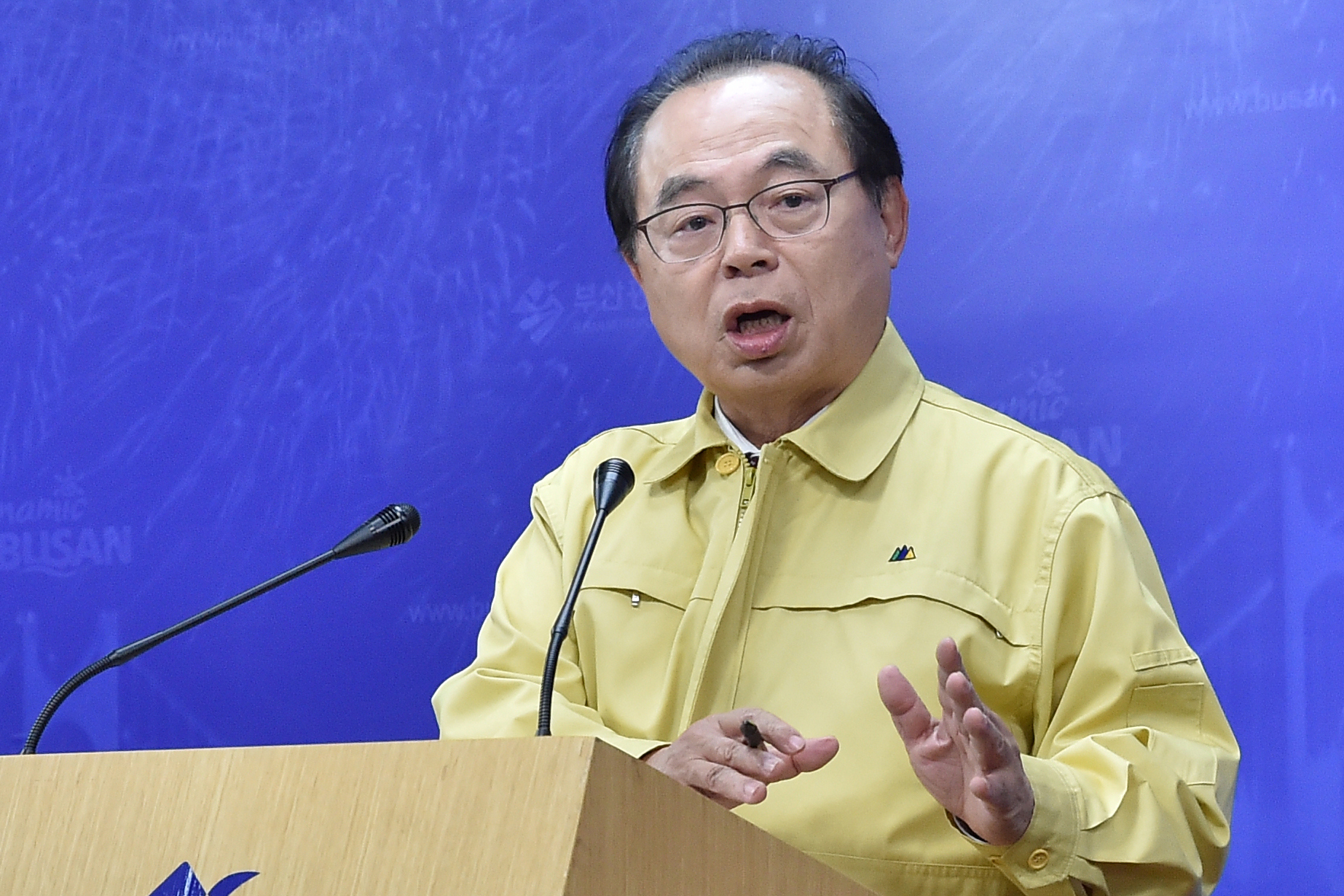
7.2. Impact on Public Trust and Governance
The sexual misconduct scandal involving Oh Keo-don, along with similar incidents involving other prominent figures from the ruling Democratic Party, such as Ahn Hee-jung and Park Won-soon, had a significant negative impact on public confidence in governmental institutions and the integrity of local governance in South Korea. The incident highlighted issues of power abuse and a perceived lack of accountability, leading to a decline in public trust in the political establishment.
The controversy surrounding the initial handling of the case, including the notarized resignation pledge and the rejected arrest warrant, further fueled public skepticism about transparency and fairness in the justice system. The scandal necessitated a by-election for the Busan mayoral position, consuming public resources and diverting attention from critical urban issues. Oh Keo-don's downfall became a symbol of how personal misconduct by high-ranking officials can erode public faith in the political system and undermine efforts toward social progress and gender equality. His case underscored the importance of ethical leadership and accountability in maintaining the integrity of public service.