1. Early Life and Education
Mary Corinna Putnam Jacobi's early life was shaped by her family's transatlantic movements and her unique educational experiences, which laid the groundwork for her pioneering career.
1.1. Birth and Family Background
Mary Corinna Putnam was born on August 31, 1842, in London, England. She was the eldest of eleven children born to George Palmer Putnam, an American father, and Victorine Haven Putnam, a British mother originally from New York City. At the time of Jacobi's birth, her family resided in London because her father, George, was establishing a branch office for his New York City publishing company, Wiley & Putnam. In 1848, at the age of six, Jacobi and her family relocated from London to New York, where she spent the remainder of her childhood and adolescence.
1.2. Education
Jacobi's early education was primarily conducted at home by her mother. She later attended a private school in Yonkers before enrolling in a public school for girls on 12th Street in Manhattan, from which she graduated in 1859. After her graduation, facing a lack of formal educational institutions that admitted women, she pursued private studies in Greek, science, and medicine with prominent figures, including Elizabeth Blackwell, who was instrumental in her early intellectual development.
1.3. Early Literary Pursuits
During her teenage years, Mary Corinna Putnam Jacobi demonstrated an early talent for writing. She began publishing short stories in The Atlantic Monthly from the age of fifteen. Her literary work also appeared in the New York Evening Post. In 1859, the same year she graduated from public school, she wrote a notable short story titled "Found and Lost."
2. Medical Career
Mary Corinna Putnam Jacobi's medical career was marked by groundbreaking achievements in education, dedicated practice, significant research, and tireless advocacy for women in the medical field.
2.1. Medical Education and Training
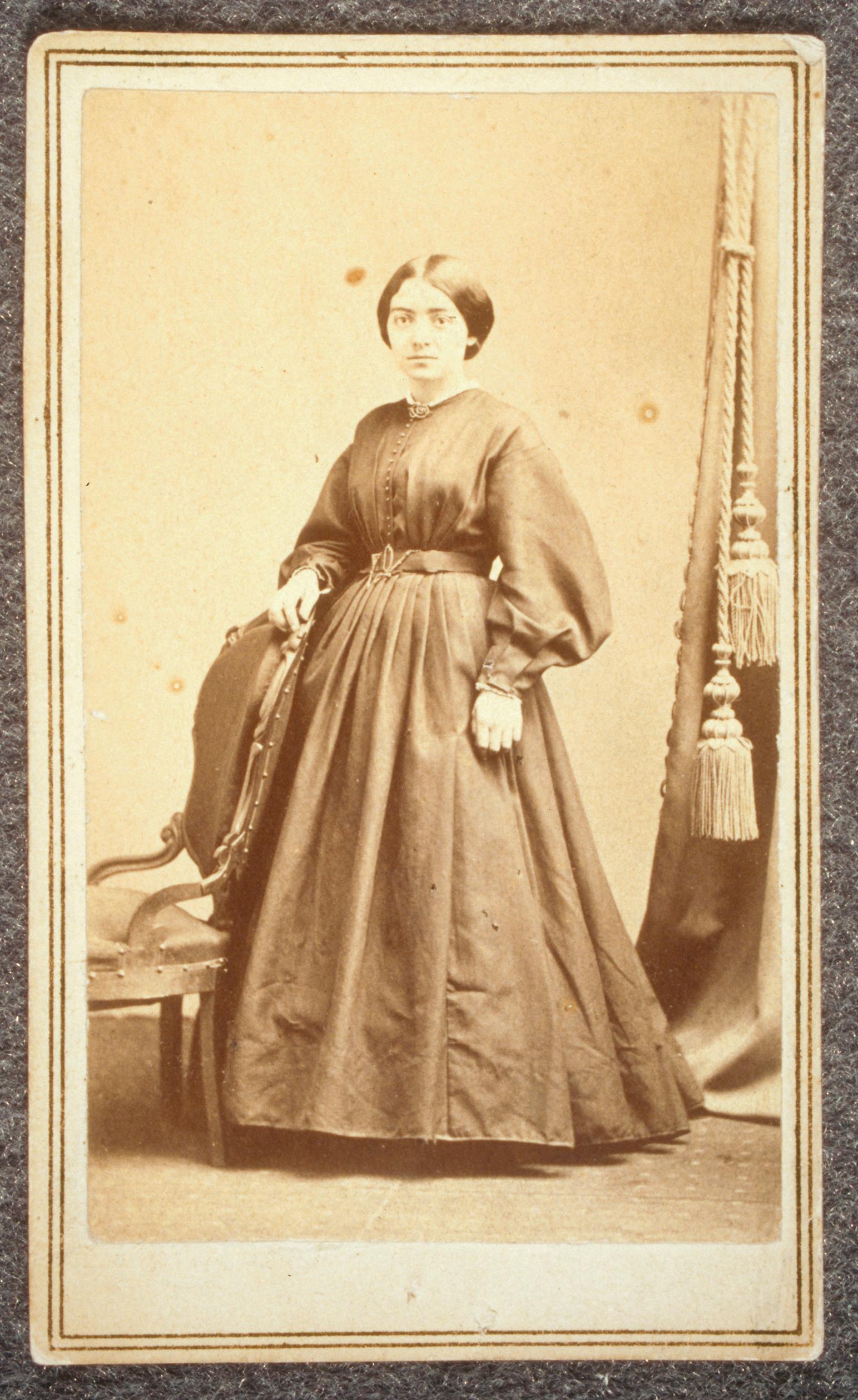
Despite her father George Putnam's initial belief that a career in medicine was a "repulsive pursuit," he eventually agreed to financially support his daughter's ambition, which she had held since childhood. During the American Civil War, Jacobi served as a medical aide, gaining practical experience. In 1863, she graduated from the New York College of Pharmacy, making her the first woman to graduate from an American school of pharmacy. The following year, in 1864, she earned her Doctor of Medicine from the Female Medical College of Pennsylvania. For several months, she practiced clinical medicine at the New England Hospital for Women and Children alongside renowned physicians Marie Elizabeth Zakrzewska and Lucy Ellen Sewall.
Recognizing the need for further advanced medical study, Jacobi decided to apply to the École de Médecine of the University of Paris. After extensive negotiation and with the crucial assistance of psychiatrist Benjamin Ball, she was admitted in 1868, becoming the first woman student at the prestigious institution. Due to the prevailing societal norms, she was required to enter lectures through a separate door and sit at the front near the professor. In July 1871, Jacobi graduated with honors, becoming the second woman to receive a degree from the École de Médecine of the University of Paris. She was also awarded a bronze medal for her thesis. Her studies in Paris coincided with the Franco-Prussian War, and in August 1871, she published an account of the new French political leadership that emerged after the conflict in Scribner's Monthly.
2.2. Medical Practice and Research
After five years of study in Paris, Jacobi returned to the United States in the fall of 1871, establishing her own private medical practice in New York City. She also became a professor at the new Women's Medical College of the New York Infirmary and Mount Sinai Hospital. She achieved further professional recognition by becoming the second woman member of the Medical Society of the County of New York and gaining admission to the American Medical Association. However, her teaching at the Medical College often exceeded what her students were prepared for, leading her to resign in 1888.
In 1876, Jacobi received Harvard University's prestigious Boylston Prize for an original essay, later published as a book, titled The Question of Rest for Women during Menstruation. She was the first woman to ever win the Boylston Prize. This influential essay was a direct response to Dr. Edward H. Clarke's earlier publication, Sex in Education; or, A Fair Chance for the Girls (1875), which controversially claimed that any physical or mental exertion during menstruation could lead to women becoming infertile. Jacobi, a proponent of scientific empiricism, refuted this notion by collecting extensive physiological data on women throughout their menstrual cycles, including muscle strength tests conducted before and after menstruation. She definitively concluded that "there is nothing in the nature of menstruation to imply the necessity, or even desirability, of rest," thereby scientifically debunking a widespread myth that had been used to justify restricting women's educational and professional opportunities.
Jacobi was a prolific writer, authoring over 120 medical articles and nine books after ceasing her fiction writing in 1871. In 1891, she contributed a significant paper titled "Woman in Medicine" to the volume Women's Work in America, edited by Annie Nathan Meyer. This paper provided a historical account of women physicians in the United States and included a bibliography of writings by American female physicians, mentioning over forty of her own works.
2.3. Advocacy for Women in Medical Fields
Mary Corinna Putnam Jacobi was a tireless advocate for women's full inclusion and equality within the medical profession. In 1872, she played a pivotal role in co-founding the Women's Medical Association of New York City, an organization she presided over from 1874 to 1903. She consistently campaigned for the admission of women to leading medical schools, including the prestigious Johns Hopkins School of Medicine, pushing for equal educational opportunities.
Her perspective on women's role in medicine differed significantly from that of her mentor, Elizabeth Blackwell. While Blackwell viewed medicine primarily as a means for social and moral reform and believed that women would succeed in the field due to their "humane feminine values," Jacobi maintained that women's contributions to all medical specialties should be considered equivalent to men's. Jacobi's focus was on curing disease and advancing medical science, advocating for a professional equality that transcended gender-based stereotypes of capability. This distinction highlights Jacobi's progressive stance on achieving true parity for women in professional spheres.
3. Marriage and Personal Life
In 1873, Mary Corinna Putnam married Abraham Jacobi, a distinguished New York physician and researcher who is widely recognized today as the "father of American pediatrics." The couple had three children: two daughters and one son. Tragically, their first daughter died at birth, and their only son passed away at the age of seven. Their only child to survive to adulthood was their daughter, Marjorie Jacobi McAneny. Reflecting her strong beliefs in progressive education, Jacobi personally educated her daughter according to her own unique educational theories.
4. Thought and Social Activism
Mary Corinna Putnam Jacobi's intellectual contributions and her active engagement in social and political movements were deeply intertwined, particularly concerning women's rights and health, which she approached with a rigorous scientific methodology.
4.1. Scientific Approach to Women's Health and Education
As a leading feminist of her time, Jacobi rejected traditional notions of female fragility and challenged the prevailing unscientific approaches to women's health. She critically examined the medical questions of her era, advocating for scientific empiricism and evidence-based practices over anecdotal experience and traditional methods. Her most influential work in this area was her 1876 essay, The Question of Rest for Women during Menstruation. This seminal work scientifically debunked the widely held belief that menstruation rendered women physically or mentally incapable of rigorous study or activity. This misconception had been used to justify restricting women's access to higher education and professional opportunities. Jacobi's meticulous research and clear conclusions were instrumental in dismantling these barriers, establishing her as a prominent voice for women's health and educational equality during the Progressive Era.
4.2. Women's Suffrage and Political Engagement
Jacobi was a dedicated participant in the women's suffrage movement. In 1894, she authored Common Sense Applied to Women's Suffrage, a significant work that expanded upon an address she had delivered at a constitutional convention in Albany that same year. This publication became a crucial theoretical support for the women's suffrage movement in the United States, being reprinted in 1915 and contributing to the final successful push for women's voting rights. Following the defeat of the women's suffrage amendment to the New York State Constitution in 1894, Jacobi was one of six prominent suffragists who co-founded the League for Political Education, further demonstrating her commitment to political reform.
Her approach to medicine, which focused primarily on the scientific treatment of disease, contrasted with her mentor Elizabeth Blackwell's view of medicine as a means for broader social and moral reform. This philosophical difference also extended to their views on women's roles within the medical profession. While Blackwell believed that women were uniquely suited to medicine due to their "humane feminine values," Jacobi staunchly advocated for women's equal participation in all medical specialties, asserting that their contributions should be considered equivalent to men's. This perspective underscored her deep commitment to full professional and societal equality for women.
5. Death and Legacy
Mary Corinna Putnam Jacobi's life concluded with a testament to her scientific dedication, leaving behind a profound legacy in both medicine and women's rights.
5.1. Death
After being diagnosed with a brain tumor, Mary Corinna Putnam Jacobi meticulously documented her own symptoms and observations. She published this detailed account in a paper titled Descriptions of the Early Symptoms of the Meningeal Tumor Compressing the Cerebellum. From Which the Writer Died. Written by Herself. She died in New York City on June 10, 1906. Mary Corinna Putnam Jacobi is interred at Green-Wood Cemetery in Brooklyn, New York.
5.2. Legacy and Recognition
Mary Corinna Putnam Jacobi left an enduring and significant impact on the fields of medicine and women's rights. Her pioneering efforts in medical education for women, her rigorous scientific research that debunked gender-based medical myths, and her unwavering advocacy for women's full professional equality significantly advanced the cause of women's rights and intellectual freedom. Her profound contributions were formally recognized in 1993 when she was inducted into the National Women's Hall of Fame, solidifying her place as a transformative figure in American history.
6. Selected Works
- De la graisse neutre et des acides gras (Paris thesis, 1871)
- The Question of Rest for Women during Menstruation (1876), her Boylston Prize-winning essay.
- Acute Fatty Degeneration of New Born (1878)
- The Value of Life (New York, 1879)
- Cold Pack and Anæmia (1880)
- The Prophylaxis of Insanity (1881)
- "Some Considerations on the Moral and on the Non Asylum Treatment of Insanity" (1882), published in The Prevention of Insanity and the Early and Proper Treatment of the Insane.
- "Studies in Endometritis" in the American Journal of Obstetrics (1885)
- Articles on "Infantile Paralysis" and "Pseudo-Muscular Hypertrophy" in Pepper's Archives of Medicine (1888)
- Hysteria, and other Essays (1888)
- Physiological Notes on Primary Education and the Study of Language (1889)
- "Common Sense" Applied to Women's Suffrage (1894), which expanded on an address she made that same year before a constitutional convention in Albany. It was reprinted in 1915 and contributed to the final successful push for women's suffrage.
- Found and Lost (1894)
- From Massachusetts to Turkey (1896)
- Description of the Early Symptoms of the Meningeal Tumor Compressing the Cerebellum. From Which the Writer Died. Written by Herself. (1906), her self-documented account of her final illness.