1. Early life
Johnny Green's early life was marked by a late physical development that initially kept him from basketball, followed by military service where he discovered his athletic potential.
1.1. Childhood and school days
John Michael Green was born in Dayton, Ohio, on December 8, 1933. He attended Paul Laurence Dunbar High School. During his high school years, Green was under 6 ft tall and did not play basketball. After graduating, he worked part-time at a bowling alley in Dayton and later for a construction company and at a junkyard for six months.
1.2. Military service
Green joined the U.S. Marine Corps during the Korean War. It was during his military service that he experienced a significant growth spurt at age 20, reaching a height of 6 ft 5 in. This led him to play basketball on the Marine base's team. His athletic ability was recognized by Dick Evans, the Marine base football coach and an alumnus of Michigan State University. Evans wrote a letter of recommendation to Michigan State basketball coach Forddy Anderson, leading Green to visit MSU while on leave in October 1955, at the age of 21.
2. College career
Johnny Green's college career at Michigan State University was highly successful, establishing him as one of the top rebounders in Big Ten history and earning him multiple All-American honors.
2.1. Michigan State University
After completing his military commitment, Green enrolled at Michigan State in 1955. He played on the Spartans' freshman team during the 1955-56 season and became eligible to play on the varsity team in January 1957, at the age of 23.
In his first varsity season (1956-57), Green played in 18 games as a power forward. He set a new Michigan State rebounding record, averaging 14.6 rebounds per game, as the Spartans became Big Ten champions. The team advanced to the NCAA tournament semifinal game, where they lost in triple overtime to the eventual champion, North Carolina, despite Green's impressive performance of 19 rebounds and eight blocked shots. The Spartans concluded the season with a 16-10 overall record, winning 12 of their last 13 games.
As a junior in the 1957-58 season, Green further improved his performance, increasing his per-game rebounding average to 17.8 rebounds per game while also averaging 18.0 points per game on 53.8 percent field goal shooting. His exceptional play earned him second-team All-American honors from the NABC and The Sporting News, and third-team All-American honors from the Associated Press (AP), United Press International (UPI), and the Helms Foundation.
In the 1958-59 season, he led the Spartans to another Big Ten title and a 19-4 record, narrowly missing the NCAA Final Four. Averaging 18.5 points per game and 16.6 rebounds per game, he was named first-team All-American by the Helms Foundation and received second-team All-American recognition from the AP, UPI, NABC, and The Sporting News.
Green's career rebounding average at Michigan State was 16.4 rebounds per game, a mark surpassed in Big Ten history only by Jerry Lucas's 17.2 rebounds per game. He remains third on the Spartans' all-time career rebounding list with 1,036 rebounds, achieved in less than three seasons. He also averaged 16.9 points per game, scoring 1,062 points overall during his collegiate career.
He was named first-team All-Big Ten for three consecutive years and was honored as the Big Ten MVP in 1958-59. Michigan State recognized Green's contributions by naming an annual rebounding award in his honor and retiring his jersey number 24. In 1992, he was inducted into the MSU Athletics Hall of Fame.
During his time in college, Green was married, and in 1957, his wife gave birth to their sons, Jeffery and Johnny.
3. Professional career
Johnny Green's professional career in the National Basketball Association (NBA) spanned 14 seasons, marked by his exceptional rebounding, multiple All-Star selections, and a remarkable resurgence late in his career.
3.1. NBA draft and New York Knicks era
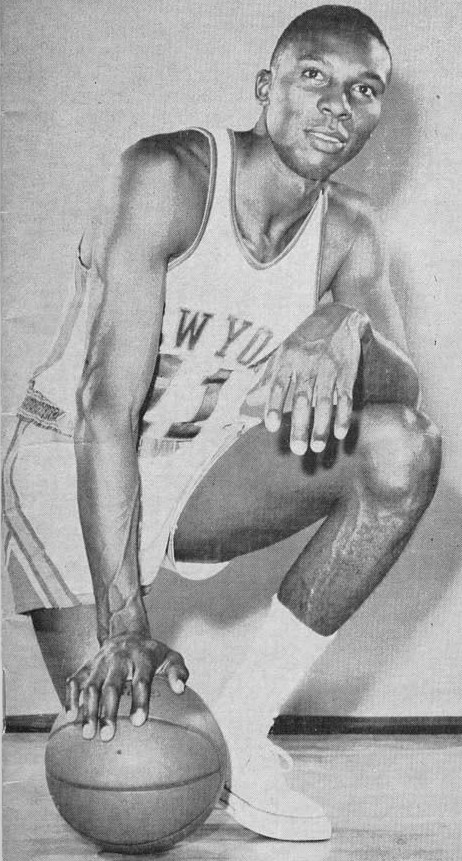
Green was a first-round draft pick, selected fifth overall, in the 1959 NBA draft by the New York Knicks. In his rookie season of 1959-60, at age 26, he played nearly 18 minutes per game, averaging 7.0 points per game and 7.8 rebounds per game. On February 26, 1960, against the Philadelphia Warriors, he set a Knicks rookie record that still stands with 25 rebounds.
His playing time increased in the 1960-61 season, where he averaged 10.2 points per game and 10.7 rebounds per game, achieving his first season with an average double-double. In the 1961-62 season, he became a full-time starter, averaging 15.9 points per game and 13.3 rebounds per game, leading the team in rebounds with 1,066. He was named to his first NBA All-Star Game. In February 1962, he set a Knicks team record by recording 20 or more rebounds in three consecutive games, a feat since tied by Walt Bellamy, Willis Reed, and Tyson Chandler.
In the 1962-63 season, Green achieved a career-high scoring average of 18.1 points per game, along with 12.1 rebounds per game, and again led the Knicks with 964 rebounds. He was named an NBA All-Star for the second time.
Green's playing time saw a slight dip in the 1963-64 season, but he still averaged 14.5 points per game and 10.0 rebounds per game. He recorded a season-high 27 points on November 16, 1963, against the Cincinnati Royals. He also led the Knicks in rebounding for a third consecutive season with 799 rebounds.
In the 1964-65 season, he averaged 11.0 points per game and 7.0 rebounds per game and was named an NBA All-Star for the third time in his career. He scored a season-high 33 points on December 30, 1964, against the San Francisco Warriors. Despite his individual success, the Knicks experienced a period of decline during his tenure, and he never advanced to the playoffs with the team.
3.2. Trades and other teams
On November 1, 1965, Green was traded from the Knicks to the Baltimore Bullets along with Johnny Egan, Jim Barnes, and cash, in exchange for Walt Bellamy. For the 1965-66 season, he averaged 11.6 points per game and 8.2 rebounds per game, and his .536 field goal percentage ranked second in the league. During his time with the Bullets, he experienced his first NBA playoff appearances. In the 1966-67 season with the Bullets, in a part-time role, he averaged 8.2 points per game and 6.5 rebounds per game.
On May 1, 1967, he was drafted by the San Diego Rockets in the NBA expansion draft. During the 1967-68 season, he played in 42 games for the Rockets, averaging over 25 minutes per game. On January 11, 1968, he was traded to the Philadelphia 76ers, for whom he played 35 games in a reduced role, averaging just over 10 minutes per game. For the combined season, he averaged 13.9 points per game and 10.1 rebounds per game. With the 76ers, he again made playoff appearances and played alongside Wilt Chamberlain.
In the 1968-69 season, at age 35, he averaged just over 10 minutes per game with the 76ers, recording career-low averages of 4.7 points per game and 4.5 rebounds per game. After the season, he was released by the 76ers.
3.3. Cincinnati Royals / Kansas City-Omaha Kings era
Just as his NBA career seemed to be winding down after 10 seasons, Green initiated a remarkable career resurgence. In September 1969, he contacted Cincinnati Royals coach Bob Cousy and requested a tryout. He subsequently signed as a free agent with the Royals and had an outstanding 1969-70 season. He became a starter for the Royals, averaging 15.6 points per game and 10.8 rebounds per game while leading the NBA in field goal percentage at .559. He scored a season-high 32 points on March 11, 1970, against the Boston Celtics and averaged 23.5 points per game over the final seven games of the season.
The resurgence continued into the 1970-71 season. At age 37, he once again led the NBA in field goal percentage at .587, while averaging 16.7 points per game and 8.7 rebounds per game. This performance earned him his fourth NBA All-Star selection, his first in six seasons. On December 20, 1970, he had one of his best-ever games, scoring a career-high 39 points in a one-point double-overtime loss to the Detroit Pistons.
There was little decline in his performance during the 1971-72 season. Although he turned 38, he played in all 82 games, averaging 9.8 points per game and 6.8 rebounds per game.
The following season, 1972-73, the Royals franchise relocated and became the Kansas City-Omaha Kings. Despite turning 39, Green remained a significant contributor, playing nearly 19 minutes per game and averaging 7.1 points per game and 5.5 rebounds per game. This marked his final NBA season.
Over his 14-year career, Johnny Green tallied 12,281 points and 9,083 rebounds in 1,057 games. His per-game averages were 11.6 points per game and 8.6 rebounds per game, with a career field goal percentage of .493.
4. Major achievements and awards
Johnny Green's distinguished career was marked by numerous individual and collegiate honors:
- 4× NBA All-Star: 1962, 1963, 1965, 1971
- Consensus second-team All-American: 1959
- First-team All-Big Ten: 3 times
- Big Ten MVP: 1958-59
- NBA field goal percentage leader: 1970, 1971
- Michigan State University jersey number 24 retired
- Michigan State University Athletics Hall of Fame: Inducted in 1992
- Michigan State University annual rebounding award named in his honor
5. Life outside basketball
After concluding his professional basketball career, Johnny Green successfully transitioned into the restaurant business. He owned one of the most popular McDonald's franchises globally, located in Springfield Gardens, New York, near John F. Kennedy International Airport. Green resided in Dix Hills, New York.
6. Death
Johnny Green died at a hospital in Huntington, New York, on November 16, 2023, at the age of 89.
7. Career statistics
7.1. NBA regular season statistics
| Year | Team | GP | GS | MPG | FG% | FT% | RPG | APG | PPG |
|---|---|---|---|---|---|---|---|---|---|
| 1959 | New York | 69 | - | 17.9 | .447 | .406 | 7.8 | .8 | 7.0 |
| 1960 | New York | 78 | - | 22.9 | .430 | .522 | 10.7 | 1.2 | 10.2 |
| 1961 | New York | 80 | - | 34.9 | .436 | .601 | 13.3 | 2.4 | 15.9 |
| 1962 | New York | 80 | - | 31.9 | .462 | .638 | 12.1 | 1.9 | 18.1 |
| 1963 | New York | 80 | - | 26.7 | .470 | .497 | 10.0 | 2.0 | 14.5 |
| 1964 | New York | 78 | - | 22.1 | .469 | .548 | 7.0 | 1.7 | 11.0 |
| 1965 | New York | 7 | - | 29.7 | .544 | .484 | 10.6 | 1.6 | 14.4 |
| 1965 | Baltimore | 72 | - | 20.0 | .535 | .524 | 7.9 | 1.3 | 11.3 |
| 1966 | Baltimore | 61 | - | 15.5 | .465 | .464 | 6.5 | .9 | 8.2 |
| 1967 | San Diego | 42 | - | 25.5 | .458 | .472 | 10.1 | 1.4 | 13.9 |
| 1967 | Philadelphia | 35 | - | 10.5 | .460 | .470 | 3.5 | .6 | 5.1 |
| 1968 | Philadelphia | 74 | - | 10.7 | .518 | .456 | 4.5 | .6 | 4.7 |
| 1969 | Cincinnati | 78 | - | 29.2 | .559 | .592 | 10.8 | 1.4 | 15.6 |
| 1970 | Cincinnati | 75 | - | 28.6 | .587 | .617 | 8.7 | 1.2 | 16.7 |
| 1971 | Cincinnati | 82 | - | 23.3 | .569 | .564 | 6.8 | 1.5 | 9.8 |
| 1972 | Kansas City-Omaha | 66 | - | 18.9 | .599 | .679 | 5.5 | .9 | 7.1 |
| Career | 1,057 | - | 23.3 | .493 | .553 | 8.6 | 1.4 | 11.6 | |
| All-Star | 4 | 0 | 18.0 | .684 | .750 | 2.3 | .0 | 8.0 | |
7.2. NBA playoffs statistics
| Year | Team | GP | GS | MPG | FG% | FT% | RPG | APG | PPG |
|---|---|---|---|---|---|---|---|---|---|
| 1966 | Baltimore | 3 | - | 32.0 | .588 | .125 | 9.0 | 1.3 | 13.7 |
| 1968 | Philadelphia | 12 | - | 18.3 | .585 | .465 | 5.5 | .7 | 8.0 |
| 1969 | Philadelphia | 5 | - | 8.8 | .563 | .556 | 2.8 | .2 | 4.6 |
| Career | 20 | - | 18.0 | .583 | .433 | 5.4 | .7 | 8.0 | |