1. Overview
Anders Börje Salming (Anders Börje Salmingˈbœrjɛ ˈsâlːmɪŋSwedish; 17 April 1951 - 24 November 2022) was a Swedish ice hockey player who achieved significant recognition as a trailblazing defenceman for 23 seasons, primarily in the National Hockey League (NHL) with the Toronto Maple Leafs. His career, spanning from 1973 to 1990 in the NHL and later in Swedish leagues, profoundly impacted perceptions of European players in North American hockey. Salming, who identified as Indigenous Sámi, not only excelled on the ice but also used his platform to support Indigenous rights and, later in his life, to raise critical awareness and funds for amyotrophic lateral sclerosis (ALS) research following his own diagnosis. His legacy is celebrated through numerous awards, Hall of Fame inductions, and the establishment of a foundation dedicated to combating ALS.
2. Early life
Börje Salming's formative years were deeply rooted in his family and the unique environment of northern Sweden, which profoundly shaped his identity.
2.1. Birth and family background
Salming was born on 17 April 1951, in the village of Salmi, located within what is now Kiruna Municipality, near Torneträsk in Jukkasjärvi Parish, Sweden. His heritage was diverse: his father, Erland (1921-1956), was of Indigenous Sámi origin, while his mother, Karin (née Persson, 1927-2022), was Swedish. The family name 'Salming' was adopted by his paternal grandfather, Anders Nikolaus, who changed it from 'Sarri' after the village that he and Börje's great-grandfather had established. Tragically, Salming's father, a miner, died in a mining accident when Börje was just five years old. Salming strongly identified with his Indigenous Sámi heritage, reflecting this by often wearing a traditional Sámi pewter bracelet. He was also included in the electoral roll for Sametinget (the Sámi Parliament of Sweden) and publicly spoke about his experiences growing up as an Indigenous person in Kiruna, advocating for Indigenous peoples' human rights on national television. His older brother, Stig Salming (born 1947), who became a significant role model for Börje, also pursued a career in hockey, playing for Brynäs IF from 1968 to 1981 and winning six Swedish championships.
2.2. Childhood and formative years
The Salming family lived near the Matojärvi hall, an ice skating rink where Börje began skating at the age of six. In addition to ice hockey, he also played handball during his childhood, demonstrating an early athletic versatility that contributed to his later success in professional sports.
3. Playing career
Börje Salming's ice hockey career spanned over two decades, leaving an indelible mark on both Swedish and North American professional leagues, as well as on the international stage.
3.1. Swedish leagues
Salming initiated his professional hockey career in Sweden, playing for Kiruna AIF in Sweden's Division 2 from 1967 to 1970. His talent quickly became evident, leading him to join Brynäs IF in the top division, then known as Division 1, where he played from 1970 to 1973. During his tenure with Brynäs, the team secured league championships in 1971 and 1972. This success drew the attention of Toronto Maple Leafs scout Gerry McNamara, who was initially dispatched to observe another Swedish player, Inge Hammarström, but was ultimately more impressed by Salming's performance. Consequently, the Maple Leafs signed Salming as a free agent on 12 May 1973. After concluding his impactful NHL career, Salming returned to Sweden, finishing his professional hockey career with AIK IF in the Swedish Elite League (SEL). During his time at AIK, he played against a young defenceman named Nicklas Lidström, who later credited Salming with inspiring and encouraging his own career.
3.2. National Hockey League (NHL)
Salming made his NHL debut with the Toronto Maple Leafs at the beginning of the 1973-74 NHL season in a game against the Buffalo Sabres. Following a 7-4 victory, he was named the best player of the game, an early indication of his significant impact. By the end of his rookie season, Salming had accumulated 39 points.
Prior to Salming's arrival, European players, particularly Swedes, were often stereotyped in North America as being "too soft" for the physically demanding NHL, which was played on a smaller rink and frequently involved hockey fights. European ice hockey, in contrast, emphasized speed and skill on larger ice surfaces. NHL sources even referred to players from Sweden as "Chicken Swedes." Salming's robust and skilled performances on the ice were instrumental in permanently dispelling this negative reputation.
Throughout his 16 seasons with the Toronto Maple Leafs, Salming recorded 768 points, comprising 148 goals and 620 assists, holding several franchise records. The Toronto players affectionately nicknamed him 'The King'. After his long and distinguished career with the Maple Leafs, he signed as a free agent with the Detroit Red Wings in 1989, playing one season with them before concluding his NHL career. In total, Salming played 1,148 regular season NHL games (1,099 with the Maple Leafs) and 81 playoff games, scoring 150 goals and 637 assists. He was recognized as a First Team All-Star in 1977 and a Second Team All-Star in 1975, 1976, 1978, 1979, and 1980. He was also a finalist for the James Norris Memorial Trophy, awarded to the league's best defenceman, on several occasions.
3.3. International play
Salming had an extensive and decorated international career representing the Sweden men's national ice hockey team. He participated in the Ice Hockey World Championships in 1972 and 1973, earning a silver and a bronze medal, respectively. He also competed in three Canada Cup tournaments (1976, 1981, and 1984) and the 1992 Winter Olympics. During the 1976 Canada Cup, held at Maple Leaf Gardens in Toronto, Salming received an emotional standing ovation from the Canadian crowd during a game against Team USA. Reflecting on this moment, Salming stated, "I'll never forget our game in Toronto. The fans gave me a standing ovation during the introductions. I was representing my country and Canadian fans gave me a standing ovation. Sometimes hockey has no country." In recognition of his distinguished international career, Salming was inducted into the IIHF Hall of Fame in 1998 and was named to the IIHF Centennial All-Star Team in 2008 as one of only five players to receive this honor.
3.4. Notable achievements and playing style
Börje Salming was renowned for his distinctive playing style as a defenceman, combining toughness, offensive prowess, and exceptional skating ability. He was a trailblazer, fundamentally changing how European players were perceived in the NHL through his strong and skilled performances. His overall on-ice accomplishments include being named to multiple NHL All-Star Teams and being a finalist for the James Norris Memorial Trophy. His impact extended beyond statistics, earning him the nickname 'The King' among his Toronto Maple Leafs teammates, signifying his revered status and leadership.
3.5. Incidents and controversies
Salming's career was also marked by a couple of notable incidents outside of regular play. On 4 September 1986, the NHL suspended him for eight regular season games and fined him 500 USD after he was quoted in a Toronto newspaper in May, admitting to having used cocaine "five, six years ago, but not since and I feel good about saying no." The league initially imposed a season-long suspension, which was later commuted.
On 26 November 1986, during a game between the Maple Leafs and the Detroit Red Wings, Salming sustained a severe facial injury when he was accidentally cut by a skate blade from Red Wings player Gerard Gallant while knocked down in front of the net. The injury necessitated extensive facial cosmetic surgery, requiring over 200 stitches.
On 4 January 1988, Salming achieved another milestone, becoming the first European-born and trained player to appear in 1,000 career NHL games. To commemorate this achievement, a surprise pre-game ceremony was held on 27 January (his 1,011th game), where he was presented with a car driven onto the ice by his parents and friend Inge Hammarström. This tribute was inspired by a similar ceremony held for Bill Barber by the Philadelphia Flyers.
4. Retirement and later life
Following his illustrious playing career, Börje Salming remained active in various ventures and maintained a prominent public profile.
4.1. Post-playing career activities
After retiring from professional hockey, Salming ventured into business, launching an eponymous brand of sports underwear. He also engaged in artistic projects; in 2007, at the age of 56, he posed nude for a series of 31 paintings by Swedish graffiti artist Johan Wattberg. Ten of these paintings were exhibited in Sweden, while the remaining 21 (matching his retired jersey number) were displayed in Toronto.
4.2. Personal life
Early in his career with the Maple Leafs, Salming resided in the High Park neighborhood of Toronto with his first wife, Margitta, a children's-wear designer. They later divorced. In 2016, he married Pia Salming. Börje Salming had four children: Theresa and Anders from his marriage to Margitta, and Rasmus and Bianca from his relationship with ex-partner Katarina. His daughter, Bianca Salming, has pursued a successful athletic career as a heptathlete.
5. Health issues and death
In his later years, Börje Salming faced a profound personal battle with amyotrophic lateral sclerosis (ALS), which ultimately led to his passing.
5.1. ALS diagnosis and struggle
In February 2022, Salming began experiencing unusual muscle twitching, which progressed to the point where he had to prematurely exit an alumni game in March. By mid-July, he received a diagnosis of amyotrophic lateral sclerosis (ALS), also widely known as Lou Gehrig's Disease. On 10 August, Salming publicly disclosed his diagnosis through a statement released by the Toronto Maple Leafs organization. Following his diagnosis, Salming experienced severe depression. His condition worsened rapidly; by 17 October, during his first public appearance since his diagnosis, he revealed that he had lost the ability to speak and relied on a tablet computer for communication. He also required a feeding tube for nourishment.
5.2. Final public appearances and passing
Despite the severe progression of his ALS, Salming made an emotional final trip to Toronto on 11 November 2022, for the Maple Leafs' Hall of Fame induction weekend game. During a poignant pre-game ceremony, his lifelong friend Darryl Sittler helped him wave to the appreciative crowd, creating a deeply moving moment for fans and fellow legends. The following night, the Maple Leafs hosted a dedicated pre-game ceremony in Salming's honor before their game against the Vancouver Canucks. A tearful Salming dropped the puck for the ceremonial face-off, which was taken by two fellow Swedes, Toronto's William Nylander and Vancouver's Oliver Ekman-Larsson. To further honor Salming's career, the Maple Leafs selected a unique starting lineup consisting entirely of six Swedish players for that game.
One week later, on 17 November 2022, Salming was elected to the all-star team of the century and received the NHL's Honorary Award at a ceremony in Sweden. Following this event, Salming's wife announced that it would be the family's final public appearance, underscoring the severity of his condition.
Börje Salming died one week later, on 24 November 2022, at the age of 71, following his battle with ALS. His passing garnered national headlines in both Canada and Sweden, prompting a widespread outpouring of tributes from sports organizations, athletes, and celebrities worldwide. For the remainder of the 2022-23 NHL season, the Toronto Maple Leafs wore commemorative shoulder patches in his honor and made several donations to ALS research. On 30 November 2022, a moment of silence was observed at Scotiabank Arena during a game between the San Jose Sharks and the Toronto Maple Leafs to pay tribute to him. A private funeral service was held for Salming at Skogskyrkogården on 20 December 2022. Just three days prior to his funeral, his mother, Karin, also passed away at the age of 95.
6. Legacy and tributes
Börje Salming's lasting impact extends beyond his playing career, encompassing his pioneering role in hockey and his significant contributions to raising awareness and funding for ALS research.
6.1. Impact and influence
Salming's most profound influence on hockey was as a trailblazer for European players in the NHL. He shattered stereotypes about their ability to compete physically in North America, opening doors for countless European athletes who followed in his footsteps. His battle with ALS also created a significant wave of awareness and inspired philanthropic initiatives. One year after his death, the Börje Salming Courage Award was established. This award is presented annually to a European NHL alumnus who exemplifies Salming's legacy through positive influence in their community. Nicklas Lidström, who had considered Salming a personal hero, was honored with the inaugural award on 16 November 2023. Salming's death, along with that of Chris Snow, the Calgary Flames assistant general manager who also suffered from ALS, collectively motivated all seven Canadian NHL teams to unite in the fight against ALS by establishing the ALS Super Fund.
6.2. Börje Salming ALS Foundation
Two months before his death, Börje Salming and his family established the Börje Salming ALS Foundation. The foundation's primary mission is to advance medical scientific research aimed at increasing understanding and improving the treatment of amyotrophic lateral sclerosis (ALS). Each spring, the foundation, in collaboration with Berns, an iconic venue in Stockholm, hosts the "A Night for Börje" gala to support its research and awareness initiatives.
6.3. Awards and honours
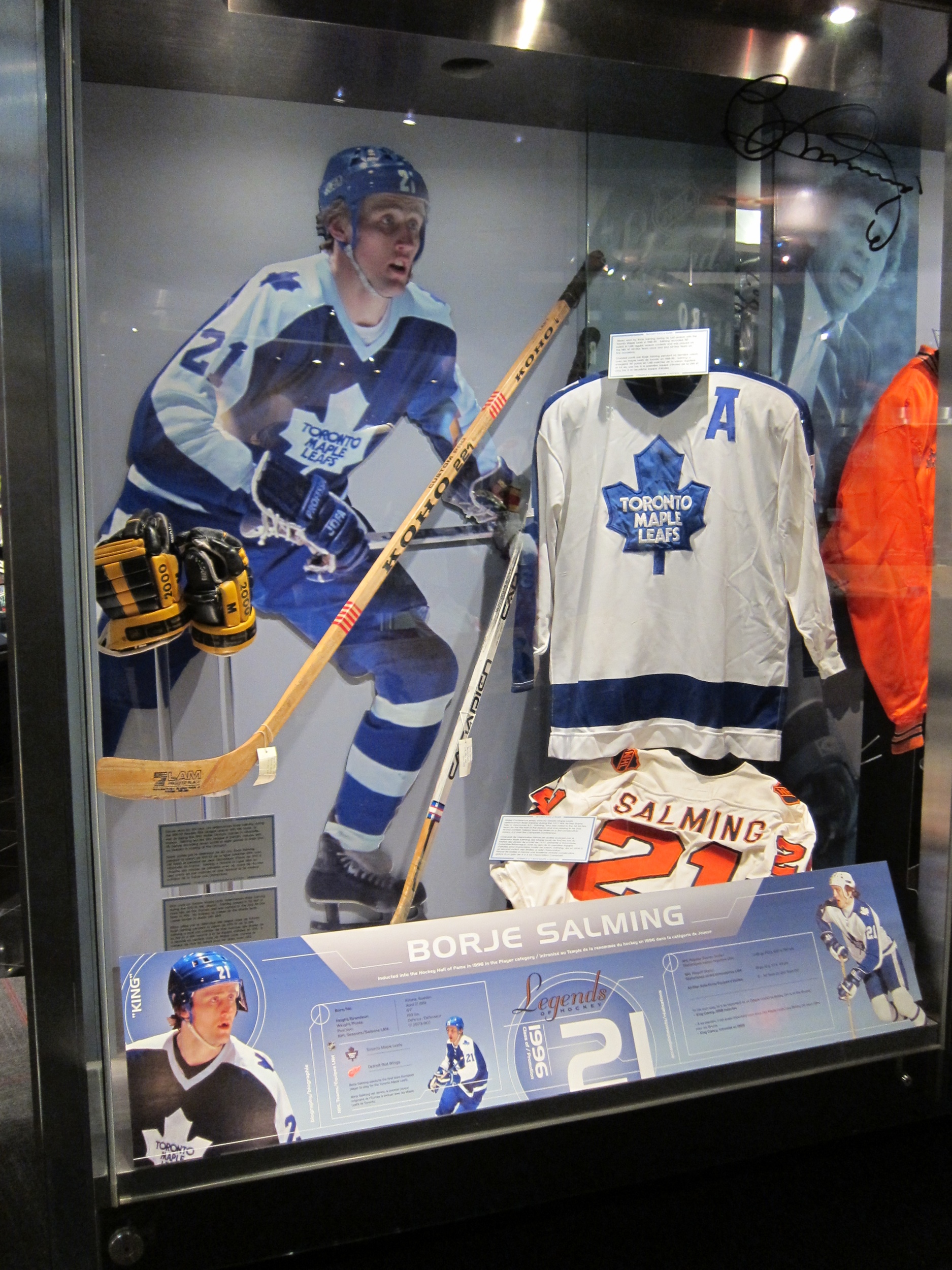
Börje Salming received numerous accolades and honors throughout and after his career, acknowledging his significant contributions to ice hockey. In November 1996, he made history by becoming the first Swedish player inducted into the Hockey Hall of Fame. In 2017, the NHL recognized his enduring legacy by naming him one of the "100 Greatest NHL Players" in the league's first century.
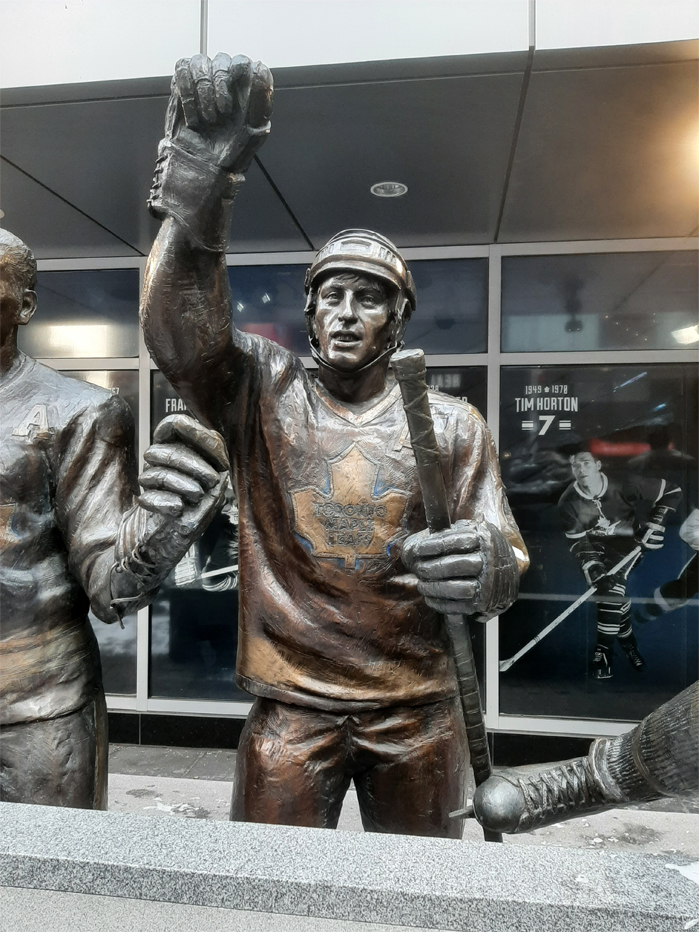
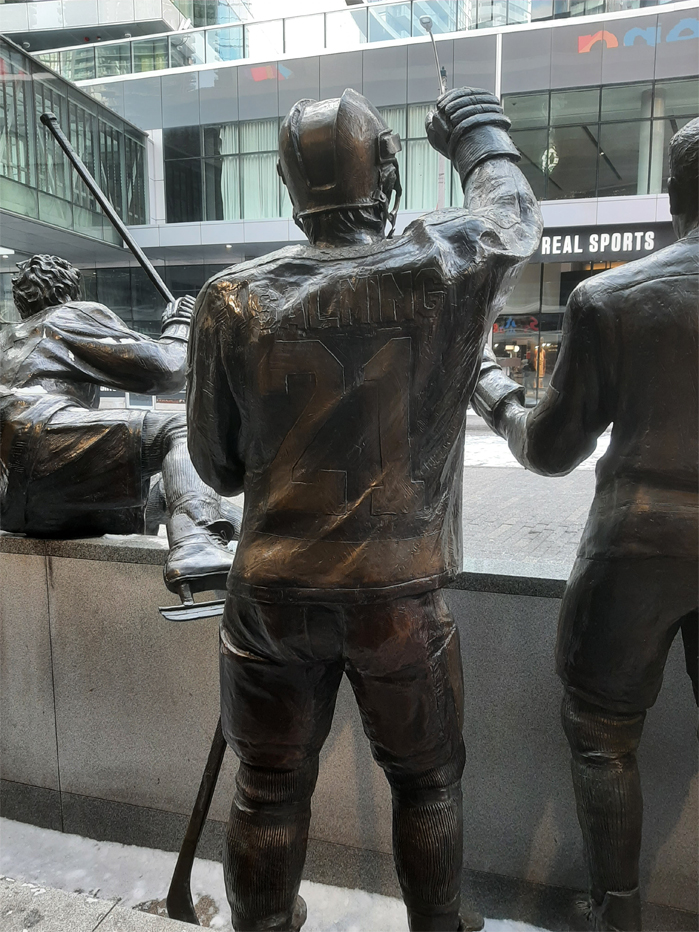
On 4 October 2006, the Toronto Maple Leafs honored Salming's jersey number 21 in a ceremony alongside numbers 4 (belonging to Red Kelly and Hap Day) before the start of the 2006-07 NHL season. On 15 October 2016, to commemorate the centennial season of the Maple Leafs franchise, Salming's number 21 was formally retired in a pre-game ceremony, an honor bestowed upon other franchise legends.
His other significant awards and honors include:
- Named to the All-Star Team at the 1973 Ice Hockey World Championships.
- Named to the Swedish All-Star Team in 1973 and 1989.
- Named to the NHL First All-Star Team in 1977.
- Named to the NHL Second All-Star Team in 1975, 1976, 1978, 1979, and 1980.
- Named to the 1976 Canada Cup All-Star Team.
- Named to the IIHF Centennial All-Star Team in 2008.
- Named to the Swedish All-Star Team of the Century in 2022.
- Awarded the Viking Award (Best Swede in North America) in 1976, 1977, and 1979.
- Awarded the Molson Cup (Most 3 Star Selections) in 1974, 1977, 1978, and 1980.
- Awarded the Charlie Conacher Humanitarian Award in 1982.
- Awarded the NHL Honorary Award in 2022.
- Played in and won the NHL All-Star Games of 1976, 1977, and 1978.
- Played for Team NHL in the 1979 Challenge Cup.
- James Norris Memorial Trophy runner-up twice, and finished top 5 in voting seven times.
- Inducted into the IIHF Hall of Fame in 1998.
- Recognized as one of the "100 Greatest NHL Players" in NHL history.
- Named to the Swedish Ice Hockey Association All-Century Team.
6.4. Records
Börje Salming holds several significant career and single-season records, particularly with the Toronto Maple Leafs:
- He holds six career and single-season Toronto Maple Leaf records, including most career points by a defenceman, most career goals by a defenceman, most career assists (any position), most assists in a season by a defenceman, and best career plus-minus.
- He was the first Swedish player (and the second European player, after Vladislav Tretiak) to be inducted into the Hockey Hall of Fame.
7. Career statistics
7.1. Regular season and playoffs
| Regular season | Playoffs | |||||||||||
|---|---|---|---|---|---|---|---|---|---|---|---|---|
| Season | Team | League | GP | G | A | Pts | PIM | GP | G | A | Pts | PIM |
| 1967-68 | Kiruna AIF | SWE II | 8 | - | - | - | - | - | - | - | - | - |
| 1968-69 | Kiruna AIF | SWE II | 13 | - | - | - | - | - | - | - | - | - |
| 1969-70 | Kiruna AIF | SWE II | 16 | 5 | - | 5 | - | - | - | - | - | - |
| 1970-71 | Brynäs IF | SWE | 14 | 0 | 5 | 5 | 6 | 13 | 2 | 1 | 3 | 16 |
| 1971-72 | Brynäs IF | SWE | 14 | 1 | 1 | 2 | 20 | 14 | 0 | 4 | 4 | 30 |
| 1972-73 | Brynäs IF | SWE | 14 | 2 | 3 | 5 | 20 | 12 | 3 | 1 | 4 | 24 |
| 1973-74 | Toronto Maple Leafs | NHL | 76 | 5 | 34 | 39 | 48 | 4 | 0 | 1 | 1 | 4 |
| 1974-75 | Toronto Maple Leafs | NHL | 60 | 12 | 25 | 37 | 34 | 7 | 0 | 4 | 4 | 6 |
| 1975-76 | Toronto Maple Leafs | NHL | 78 | 16 | 41 | 57 | 70 | 10 | 3 | 4 | 7 | 9 |
| 1976-77 | Toronto Maple Leafs | NHL | 76 | 12 | 66 | 78 | 46 | 9 | 3 | 6 | 9 | 6 |
| 1977-78 | Toronto Maple Leafs | NHL | 80 | 16 | 60 | 76 | 70 | 6 | 2 | 2 | 4 | 6 |
| 1978-79 | Toronto Maple Leafs | NHL | 78 | 17 | 56 | 73 | 76 | 6 | 0 | 1 | 1 | 8 |
| 1979-80 | Toronto Maple Leafs | NHL | 74 | 19 | 52 | 71 | 94 | 3 | 1 | 1 | 2 | 2 |
| 1980-81 | Toronto Maple Leafs | NHL | 72 | 5 | 61 | 66 | 154 | 3 | 0 | 2 | 2 | 4 |
| 1981-82 | Toronto Maple Leafs | NHL | 69 | 12 | 44 | 56 | 170 | - | - | - | - | - |
| 1982-83 | Toronto Maple Leafs | NHL | 69 | 7 | 38 | 45 | 104 | 4 | 1 | 4 | 5 | 10 |
| 1983-84 | Toronto Maple Leafs | NHL | 68 | 5 | 38 | 43 | 92 | - | - | - | - | - |
| 1984-85 | Toronto Maple Leafs | NHL | 73 | 6 | 33 | 39 | 76 | - | - | - | - | - |
| 1985-86 | Toronto Maple Leafs | NHL | 41 | 7 | 15 | 22 | 48 | 10 | 1 | 6 | 7 | 14 |
| 1986-87 | Toronto Maple Leafs | NHL | 56 | 4 | 16 | 20 | 42 | 13 | 0 | 3 | 3 | 14 |
| 1987-88 | Toronto Maple Leafs | NHL | 66 | 2 | 24 | 26 | 82 | 6 | 1 | 3 | 4 | 8 |
| 1988-89 | Toronto Maple Leafs | NHL | 63 | 3 | 17 | 20 | 86 | - | - | - | - | - |
| 1989-90 | Detroit Red Wings | NHL | 49 | 2 | 17 | 19 | 52 | - | - | - | - | - |
| 1990-91 | AIK IF | SEL | 36 | 4 | 9 | 13 | 46 | - | - | - | - | - |
| 1991-92 | AIK IF | SEL | 38 | 6 | 14 | 20 | 98 | 3 | 0 | 2 | 2 | 6 |
| 1992-93 | AIK IF | SEL | 6 | 1 | 0 | 1 | 10 | - | - | - | - | - |
| SWE totals | 42 | 3 | 9 | 12 | 46 | 39 | 5 | 6 | 11 | 70 | ||
| NHL totals | 1,148 | 150 | 637 | 787 | 1,344 | 81 | 12 | 37 | 49 | 91 | ||
| SEL totals | 80 | 11 | 23 | 34 | 154 | 3 | 0 | 2 | 2 | 6 | ||
7.2. International play
| Year | Team | Event | GP | G | A | Pts | PIM |
|---|---|---|---|---|---|---|---|
| 1968 | Sweden | EJC | 5 | 1 | 0 | 1 | 4 |
| 1969 | Sweden | EJC | 5 | 0 | 0 | 0 | 8 |
| 1972 | Sweden | WC | 4 | 0 | 0 | 0 | 6 |
| 1973 | Sweden | WC | 10 | 4 | 6 | 10 | 4 |
| 1976 | Sweden | CC | 5 | 4 | 3 | 7 | 2 |
| 1981 | Sweden | CC | 5 | 0 | 2 | 2 | 10 |
| 1989 | Sweden | WC | 8 | 1 | 1 | 2 | 8 |
| 1991 | Sweden | CC | 6 | 0 | 0 | 0 | 10 |
| 1992 | Sweden | OG | 8 | 4 | 3 | 7 | 4 |
| Junior totals | 10 | 1 | 0 | 1 | 12 | ||
| Senior totals | 46 | 13 | 15 | 28 | 48 | ||