1. Overview
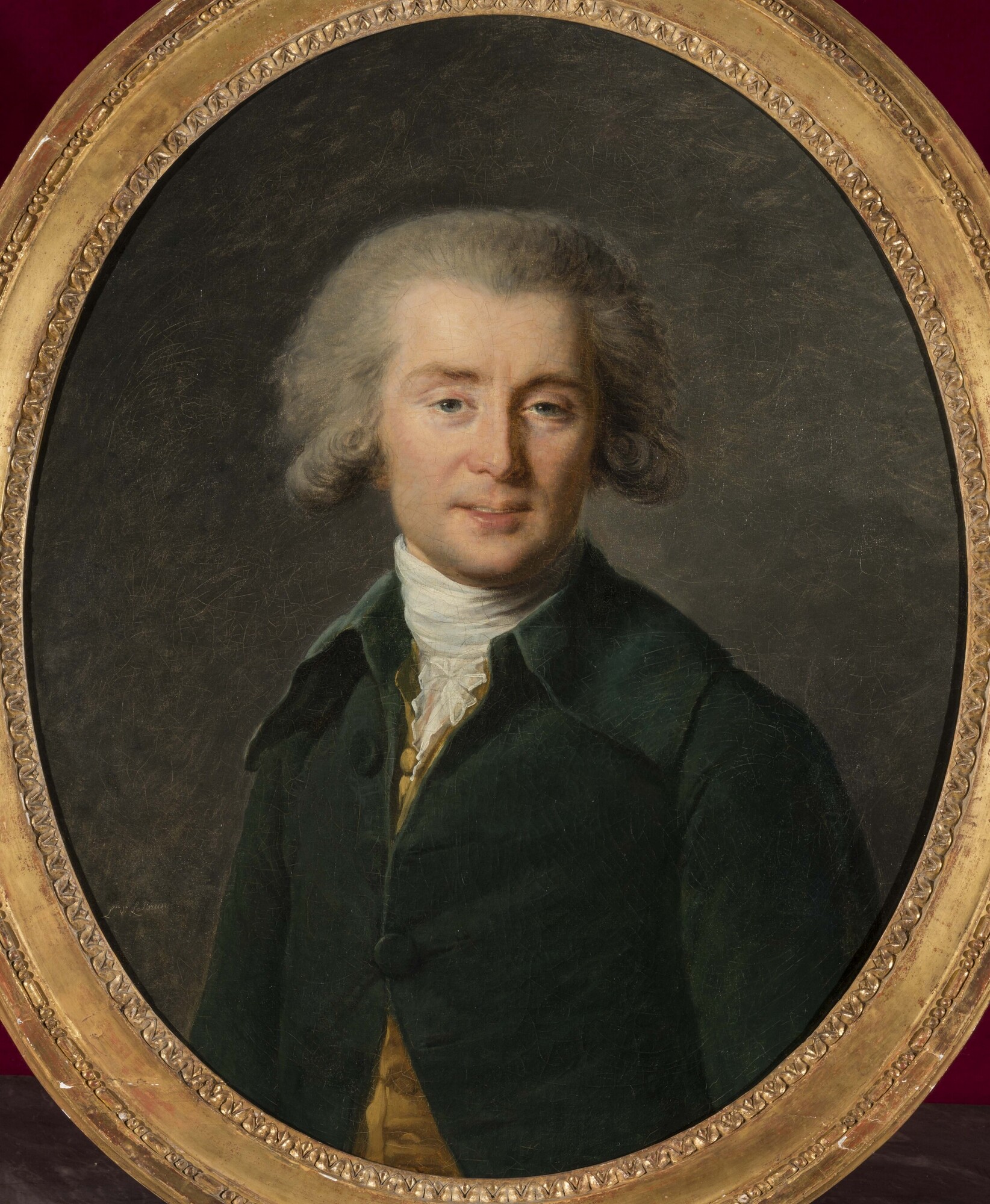
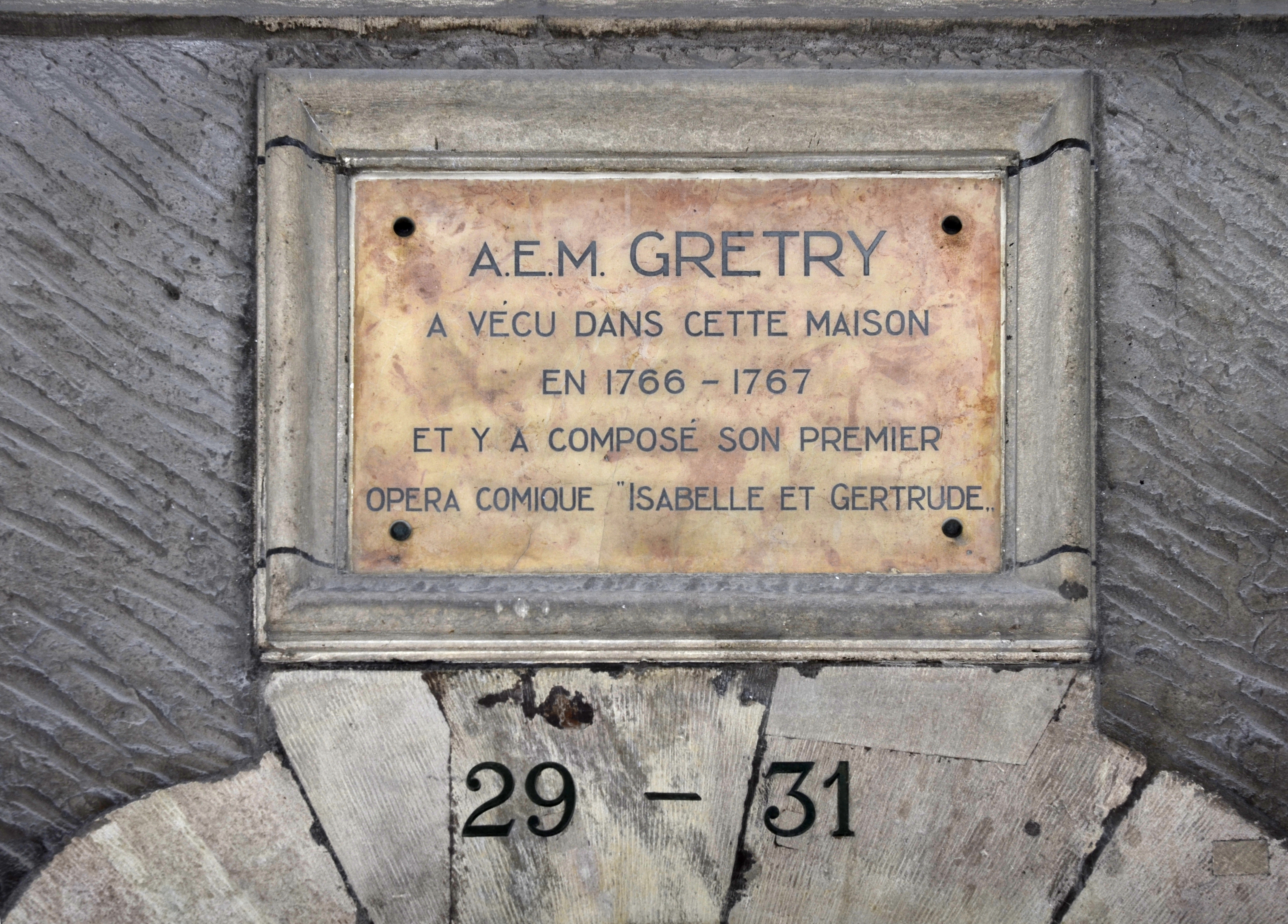
André Ernest Modeste Grétry (baptised 11 February 1741; died 24 September 1813) was a prominent composer of opéra comique from the Prince-Bishopric of Liège (present-day Belgium). He established his career in France from 1767 onwards, eventually taking French nationality. Grétry is celebrated for his significant contributions to French musical theater, particularly his lyrical melodies and clear expression, earning him the epithet 'French Pergolesi'. His innovative approach to vocal forms and instrumentation, including the early use of the tuba curva and mandolin in his compositions, profoundly influenced subsequent composers such as Mozart and Beethoven. Grétry's career spanned a period of significant social and political transformation in France, including the French Revolution, to which he adapted his musical output.
2. Early Life and Education
André Ernest Modeste Grétry was born in Liège, then part of the Prince-Bishopric of Liège, into a family of modest means; his father, Jean-Joseph (or François) Grétry, was a violinist, and his mother was Marie-Jeanne Desfossés. He had an elder brother, Jean-Joseph. Grétry showed early musical talent and began his training as a choirboy at the church of St. Denis in Liège. He continued his studies under local musicians, including Jean-Pantaléon Leclerc and Nicolas Rennekin, the organist at St-Pierre de Liège, for keyboard and composition. Henri Moreau, the music master at the collegiate church of St. Paul, also served as his teacher.
A pivotal influence on Grétry's formative years was his exposure to an Italian opera company performing in Liège. Hearing the works of masters like Baldassarre Galuppi and Giovanni Battista Pergolesi ignited in him a strong desire to complete his musical education in Italy. To fund this ambition, he composed a mass in 1759, dedicating it to the canons of the Liège Cathedral. With financial support from Canon Hurley, Grétry departed for Italy in March 1759.
He resided in Rome for five years, continuing his studies at the Collège de Liège under Giovanni Battista Casali. Despite his dedication, Grétry himself admitted that his proficiency in harmony and counterpoint remained moderate throughout his life. During his time in Italy, he achieved his first significant success with La vendemmiatrice, an Italian intermezzo or operetta composed for the Aliberti Theatre in Rome, which was met with widespread acclaim. It was in Rome that Grétry's focus shifted towards French comic opera after he studied the score of one of Monsigny's operas, lent to him by a secretary of the French embassy. He also graduated from the Bologna Academy of Music and received a scholarship from the Lambert-Darchis foundation, supporting his studies from April 1761 to February 1766.
3. Career in France
On New Year's Day 1767, Grétry left Rome, embarking on a journey that would lead him to the heart of the French music scene. After a brief stay in Geneva, where he made the acquaintance of the renowned philosopher Voltaire and produced another operetta, he proceeded to Paris.
His initial two years in Paris were marked by challenges, including poverty and obscurity. However, Grétry was not without supporters. Through the intercession of Count Gustaf Philip Creutz, the Swedish ambassador, he secured a libretto from Jean-François Marmontel. Grétry composed the music for this libretto in less than six weeks, resulting in the opera Le Huron. Its performance in August 1768 was an unparalleled success, marking his triumphant debut in the French capital.
The success of Le Huron was quickly followed by two more popular works, Lucile and Le tableau parlant. These early triumphs firmly established Grétry's reputation as the leading composer of opéra comique in France. His ability to craft engaging melodies and clear dramatic expressions resonated deeply with Parisian audiences, securing his prominent position in the French music scene.
4. Grétry and the French Revolution
The turbulent period of the French Revolution significantly impacted Grétry's life and career. While he lost much of his property during the Revolution, he managed to adapt to the changing political landscape. Successive French governments, regardless of their political differences, vied to favor the celebrated composer.
Under the old court, Grétry had received numerous distinctions and rewards. With the advent of the Republic, he was appointed an inspector of the newly established Conservatoire. Later, Napoleon further honored him with the cross of the Legion d'Honneur and a pension, acknowledging his artistic importance even amidst political upheaval. In 1803, he became a member of the French Institute.
Grétry's musical output during this era reflected the revolutionary spirit of the time, though often as "occasional music" (pièces de circonstance). Titles such as La rosière républicaine and La fête de la raison indicate their connection to the epoch. However, contemporary critics noted that the republican enthusiasm displayed in these works was not always perceived as genuinely heartfelt.
One of Grétry's most famous works, Richard Cœur-de-lion, became indirectly linked to a major historical event. The celebrated romance from the opera, "O Richard, O mon Roi, l'univers t'abandonne" ("Oh Richard, Oh my King, the universe abandons you"), was famously sung at a banquet given by the bodyguard to the officers of the Versailles garrison on 3 October 1789. This display of loyalty to the monarchy was starkly contrasted by the emergence of La Marseillaise shortly thereafter, which became the people's anthem in response.
5. Musical Style and Characteristics
Grétry's musical style is characterized by its distinctive qualities, which brought a new level of refinement and clarity of expression to French music. He was often referred to as the 'French Pergolesi' due to his lyrical melodies and vivid, frank musical expressions. His genuine strength lay in his ability to delineate character through music and to convey tender, quintessentially French sentiments.
He frequently employed smaller operatic forms, such as the arietta and romance, integrating them seamlessly into his works. Grétry was also noted for incorporating the nuances of spoken language into the vocal lines of his operas and for his innovative application of French recitative elements. This emphasis on vocal clarity and melodic charm contributed significantly to the popular appeal of his opéra comique works.
While his melodic and expressive qualities were highly praised, the structural integrity of his concerted pieces was sometimes considered flimsy. Furthermore, his instrumentation was often deemed weak, to the extent that orchestral parts of some of his compositions had to be re-orchestrated by other composers to meet the expectations of later audiences.
Grétry was also an innovator in his use of instruments. He was the first composer to write for the "tuba curva", an ancient Roman instrument, featuring it in the music he composed for Voltaire's funeral. He also effectively utilized the mandolin in his compositions, notably in the serenade "While all are sleeping" from his opera L'amant jaloux, which features a delicate accompaniment for two mandolins.
6. Major Works
Grétry composed approximately 50 to 60 operas throughout his prolific career, alongside various other compositions that showcased his versatility.
6.1. Major Operas
Grétry's most celebrated works primarily belong to the genre of opéra comique, a form that combines sung arias with spoken dialogue.
- La vendemmiatrice (1765): This Italian intermezzo or operetta marked Grétry's first significant success, earning universal applause at the Aliberti Theatre in Rome.
- Le Huron (1768): His Parisian debut and a groundbreaking success, this opera established his reputation as a leading composer of comic opera in France.
- Lucile (1769) and Le tableau parlant (1769): These two works quickly followed Le Huron, solidifying Grétry's position in the French music scene.
- Zémire et Azor (1771): Premiered in 1771, this opera is considered one of his masterpieces. It is a fairy-tale opera known for its enchanting melodies and dramatic storytelling.
- L'amant jaloux (1778): Also known as Les Fausses apparences ou L'Amant jaloux, this opera features the notable serenade "While all are sleeping," which includes a delicate accompaniment for two mandolins.
- La caravane du Caire (1783): An opera-ballet, this work premiered at the Palace of Fontainebleau and remained in the French repertory for 50 years. It features modest Turquerie exoticism, particularly in its use of harp and triangle accompaniment, and follows a rescue adventure theme akin to Mozart's Die Entführung aus dem Serail.
- Richard Cœur-de-lion (1784): Premiered in 1784, this is another of Grétry's masterpieces and became famously associated with the French Revolution through its romance "O Richard, O mon Roi, l'univers t'abandonne." It was later translated and adapted for the English stage by John Burgoyne.
Other notable operas include:
- Isabelle et Gertrude ou Les Sylphes supposés (1766)
- Les Mariages samnites (1768, revised 1776)
- Le Connaisseur (1768)
- Momus sur la terre (1769)
- Silvain (1770)
- Les Deux Avares (1770)
- L'Amitié à l'épreuve (1770)
- L'Ami de la maison (1771)
- Le Magnifique (1773)
- La Rosière de Salency (1773)
- Céphale et Procris ou L'Amour conjugal (1773)
- La Fausse Magie (1775)
- Pygmalion (1776)
- Amour pour amour (1777)
- Matroco (1777)
- Le Jugement de Midas (1778)
- Les Trois Âges de l'opéra (1778)
- Les Statues (1778)
- Les Événements imprévus (1779)
- Aucassin et Nicolette ou Les Mœurs du bon vieux temps (1779)
- Andromaque (1780)
- Emilie ou La Belle Esclave (1781)
- Colinette à la cour ou La Double Épreuve (1782)
- L'Embarras des richesses (1782)
- Électre (1782)
- Les Colonnes d'Alcide (1782)
- Thalie au nouveau théâtre (1783)
- Théodore et Paulin (1784)
- Panurge dans l'île des lanternes (1785)
- Œedipe à Colonne (1785)
- Amphitryon (1786)
- Le Mariage d'Antonio (1786)
- Les Méprises par ressemblance (1786)
- Le Comte d'Albert (1786)
- Toinette et Louis (1787)
- Le Prisonnier anglais (1787)
- Le Rival confident (1788)
- Raoul Barbe-bleue (1789)
- Aspasie (1789)
- Pierre le Grand (1790)
- Roger et Olivier (1790)
- Guillaume Tell (1791)
- Cécile et Ermancé ou Les Deux Couvents (1792)
- Basile ou À trompeur, trompeur et demi (1792)
- Séraphine ou Absente et présente (1792)
- Le Congrès des rois (1794)
- Joseph Barra (1794)
- Denys le tyran, maître d'école à Corinthe (1794)
- La fête de la raison (1794)
- Callias ou Nature et patrie (1794)
- Diogène et Alexandre (1794)
- Lisbeth (1797)
- Anacréon chez Polycrate (1797)
- Le Barbier du village ou Le Revenant (1797)
- Elisca ou L'Amour maternel (1799)
- Le Casque et les colombes (1801)
- Zelmar ou L'Asile (1801)
- Le Ménage (1803)
- Les Filles pourvues (1803)
6.2. Other Compositions
Beyond his extensive operatic output, Grétry also composed a variety of instrumental and sacred music:
- Orchestral Music:**
- Six symphonies.
- A flute concerto.
- A four-movement suite from Céphale et Procris, including a Gigue, Menuet, Gavotte, and Tambourin.
- Ronde pour la Plantation de l'Arbre de la Liberte (Round for the Planting of the Tree of Liberty).
- Chamber Music:**
- Six string quartets.
- Sacred Music:**
- Various requiems and motets.
- Instrumental Pieces:**
- Several sonatas.
- Numerous romances.
7. Musical Influence
Grétry's innovative approach and distinctive musical style had a profound impact on the development of French opéra comique and influenced several prominent composers of his time and thereafter. His emphasis on melodic clarity, expressive vocal writing, and the integration of spoken dialogue significantly shaped the genre.
Notably, his music influenced both Mozart and Beethoven, both of whom composed variations on themes from Grétry's works. This demonstrates the widespread recognition and admiration for his melodic inventiveness beyond France. Grétry's contributions were crucial in popularizing opéra comique and establishing its unique characteristics within the broader European musical landscape. He played a significant role in ensuring that French comic opera developed its own distinct identity, separate from Italian and German traditions.
8. Reception and Evaluation
During his lifetime, André Grétry enjoyed considerable critical and popular success, particularly in France. His early Italian operetta, La vendemmiatrice, was met with universal applause, and his Parisian debut, Le Huron, achieved unparalleled success, firmly establishing him as the leading composer of opéra comique. Critics and audiences alike appreciated his ability to create engaging melodies and clear, expressive dramatic narratives.
However, evaluations of his work have also highlighted certain weaknesses. While praised for his character delineation and the expression of tender, typically French sentiment, the structure of his concerted pieces was often considered flimsy. His instrumentation was sometimes regarded as feeble, to the extent that other composers occasionally had to rewrite the orchestral parts of his works to make them acceptable to contemporary audiences.
Posthumously, Grétry's historical significance has been consistently recognized. Scholars acknowledge his crucial role in the development and popularization of French opéra comique. Although some of his works composed during the French Revolution, such as La rosière républicaine and La fête de la raison, were considered mere "occasional music" (pièces de circonstance) with republican enthusiasm that was not always genuine, his enduring masterpieces like Zémire et Azor and Richard Cœur-de-lion continue to be studied and appreciated for their artistic merit and historical impact. His influence on major figures like Mozart and Beethoven further underscores his lasting legacy in classical music.
9. Later Life and Death
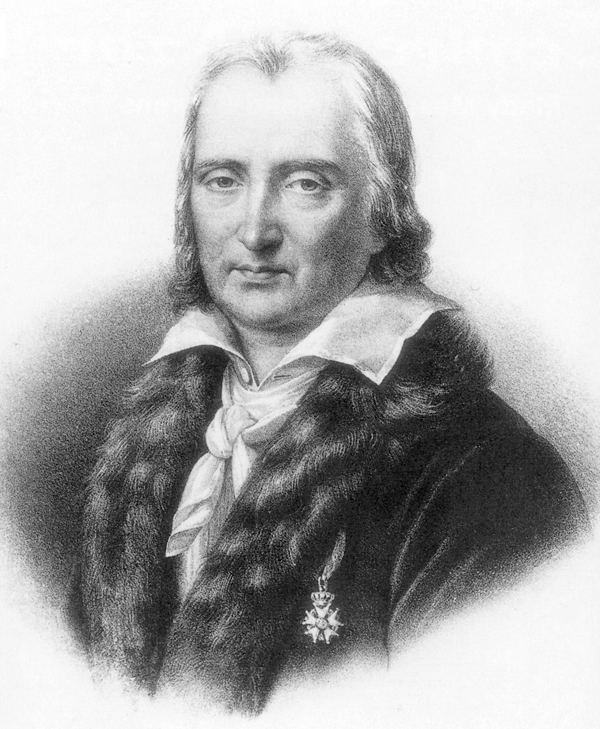
In his later years, André Grétry continued to receive significant honors and recognition from the French state, despite the political upheavals of the time. Having already received distinctions and rewards from the old court, the Republic appointed him an inspector of the Conservatoire in 1795. Later, Napoleon personally granted him the cross of the Legion d'Honneur and a pension, acknowledging his artistic contributions to France. In 1803, he was inducted as a member of the French Institute.
Grétry also took on students in opera composition, including his own daughter, Lucile Grétry, and Caroline Wuiet.
Grétry died on 24 September 1813, at the Hermitage in Montmorency, a house formerly owned by Jean-Jacques Rousseau. He was married to the painter Jeanne-Marie Grandon.
His burial arrangements became a subject of legal dispute after his death. While his body was interred in Père Lachaise Cemetery in Paris, his will expressed a wish for his heart to be returned to his birthplace in Liège. Fifteen years after his death, following a protracted lawsuit, permission was finally granted, and Grétry's heart was transferred to Liège.
10. Legacy and Commemoration
The legacy of André Ernest Modeste Grétry endures through his significant contributions to French opéra comique and his lasting influence on subsequent generations of composers. His works are still studied and performed, maintaining his place in musical history.
A notable aspect of his legacy is the unique commemoration of his heart. As per his wishes, and after a lengthy legal battle, his heart was transferred from Paris to his birthplace of Liège, Belgium, 15 years after his death. This act symbolized the deep connection he maintained with his origins despite his career flourishing in France.
In 1842, a large bronze statue of the composer was erected in Liège, a testament to his enduring fame and the pride his hometown held for him. His heart is said to be enshrined within this monument. Another commemorative statue of Grétry, sculpted in marble by Jean-Baptiste Stouf between 1804 and 1808, was commissioned by Hippolyte, comte de Livry. This statue was initially placed in the Opéra-Comique in 1809 and is now part of the collection at the Metropolitan Museum of Art in New York City.
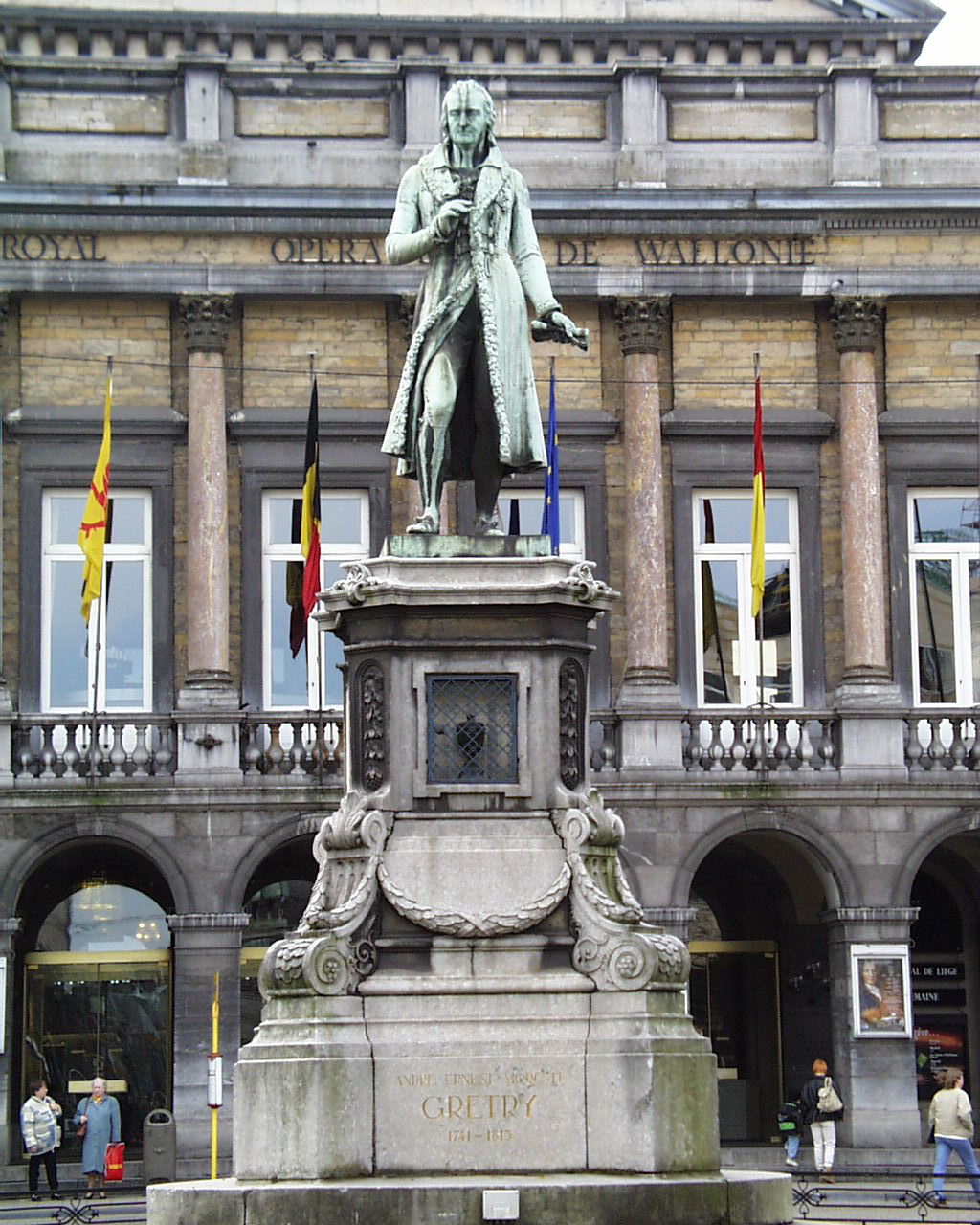
Grétry's influence extended beyond his own compositions, impacting figures like Mozart and Beethoven, who wrote variations on his themes. His role in shaping and popularizing French comic opera is widely acknowledged, ensuring his continued remembrance in musical culture. His name is also commemorated by the asteroid 1615 Grétry.